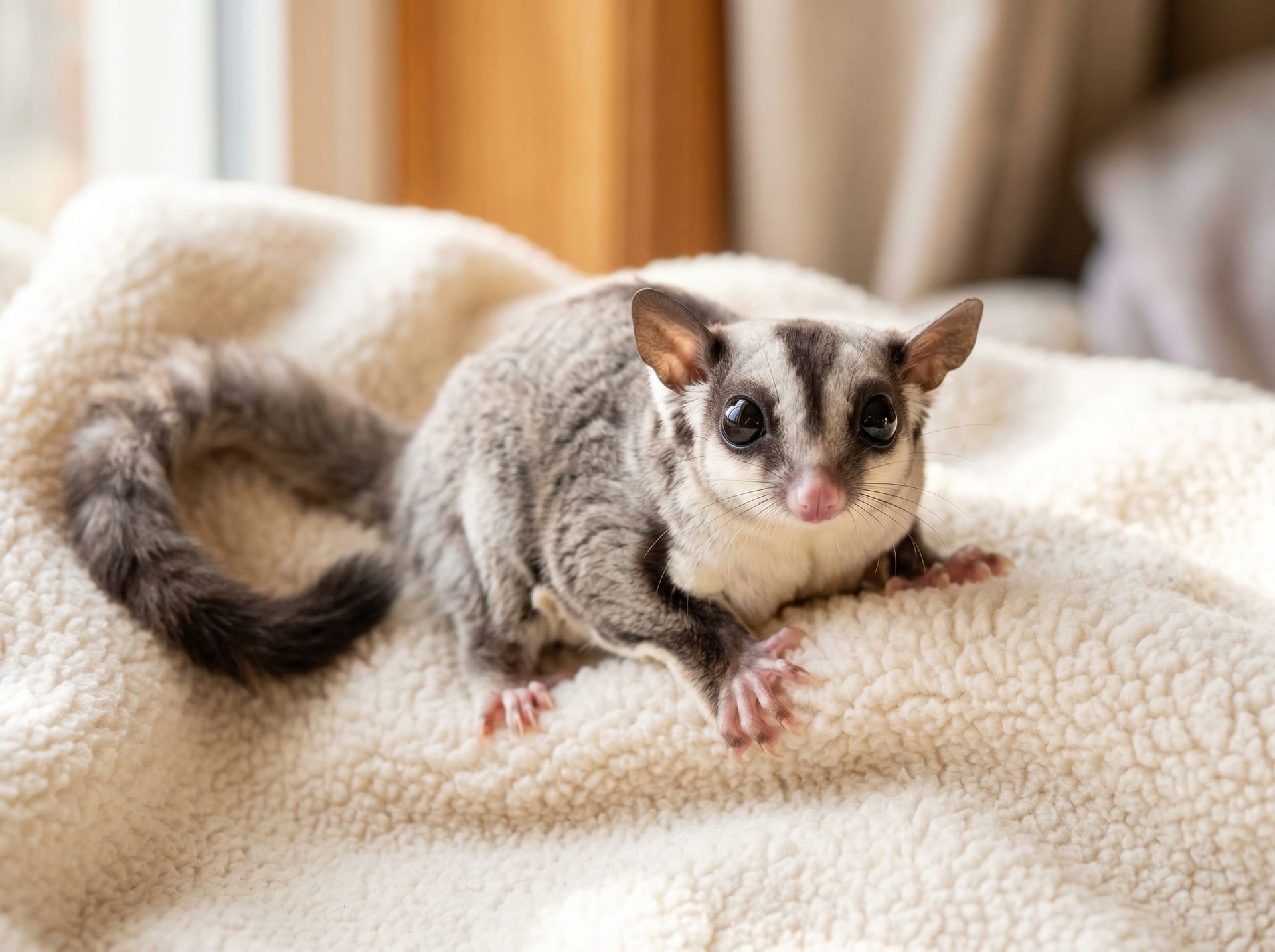
Small marsupial that glides using a membrane. Sweet-loving and bonds closely with owners. Nocturnal and highly social.
View 蜜袋鼯 encyclopedia →前3笔销售免佣金!在2026年7月31日前注册为繁殖者,前3笔销售免佣金!
繁殖者 招募中!
在BreederDirect发布商品,直接销售给全国客户!
上架小动物时,繁殖者公示以下信息。确保健康检查、疫苗接种、芯片植入等信息的完全透明。
价格区间
地区
属性
繁殖者正在陆续注册,即将上架。设置上架通知,不错过新商品。
「接收上架通知」需免费注册会员即可设置。当有符合您保存条件的新商品上架时,我们会通过邮件和站内通知提醒您。
想上架小动物吗?
注册成为繁殖者,即可与买家直接联系。
The sugar glider (Petaurus breviceps) is a small marsupial native to the forests of eastern Australia, Indonesia, and Papua New Guinea. It takes its name from its love of sweet foods and its ability to glide using a thin membrane—called the patagium—that stretches from wrist to ankle on each side. Adults typically weigh between 90 and 150 grams, with large round eyes, prominent ears, and a coat of grey-brown fur marked by a distinct black dorsal stripe. The pale underside provides camouflage against tree bark in the wild. In temperament, sugar gliders are inquisitive and playful; a well-bonded individual recognizes its owner as part of its colony and will sleep contentedly in a pocket or bonding pouch. Their strong social nature means they thrive best in pairs or small groups. For owners willing to invest time in patient, consistent bonding, the reward is a remarkably interactive companion—one that glides to your outstretched hand and curls up against you with complete trust.
1Nocturnal Lifestyle
Sugar gliders are nocturnal and most active at night. Disturbing them during the day can cause significant stress, as they spend daylight hours sleeping in a dark, quiet spot. Plan feeding and bonding sessions for evening hours to match their natural rhythm.
2Need for Vertical Space
Sugar gliders need tall enclosures — at least 90 cm in height — to climb and practice gliding. Furnish the cage with branches, ropes, and hanging pouches to create a stimulating three-dimensional environment. Cramped housing leads to stress and inadequate exercise.
3Temperature Sensitivity
Sugar gliders thrive at around 24–27°C and are vulnerable to hypothermia in cooler temperatures. A stable heat source is especially important in winter. Avoid placing the enclosure near drafts or areas with sudden temperature swings.
4Social Needs
In the wild, sugar gliders live in social groups, and solitary individuals can develop stress-related behaviors including self-mutilation. Keeping two or more together is recommended when possible. Single-glider owners should commit to extensive daily handling and bonding time.
5Diet Variety and Caution
Sugar gliders are omnivores that eat insects, fruit, nectar, and pollen in the wild. In captivity, a balanced diet combining quality commercial glider food, fresh fruit, and insects is essential. An imbalanced calcium-to-phosphorus ratio can lead to metabolic bone disease, so nutritional variety matters.
View 蜜袋鼯 encyclopedia entry →
Care difficulty, lifespan, size and diet — all basics covered.
6Vocalizations
Sugar gliders communicate through a range of vocalizations, including a sharp "crabbing" sound when alarmed and softer chirps when content. Learning to read these sounds helps owners understand their glider's mood and needs. Note that nighttime calls can be loud, which may require consideration in apartment settings.
7Costs and Exotic Vets
Initial setup costs including a cage and supplies typically run several tens of thousands of yen. Ongoing expenses include food and bedding. Veterinary care is a key consideration — not all clinics treat sugar gliders, so locating an exotic animal specialist before bringing one home is strongly advised. Routine checkups are recommended.