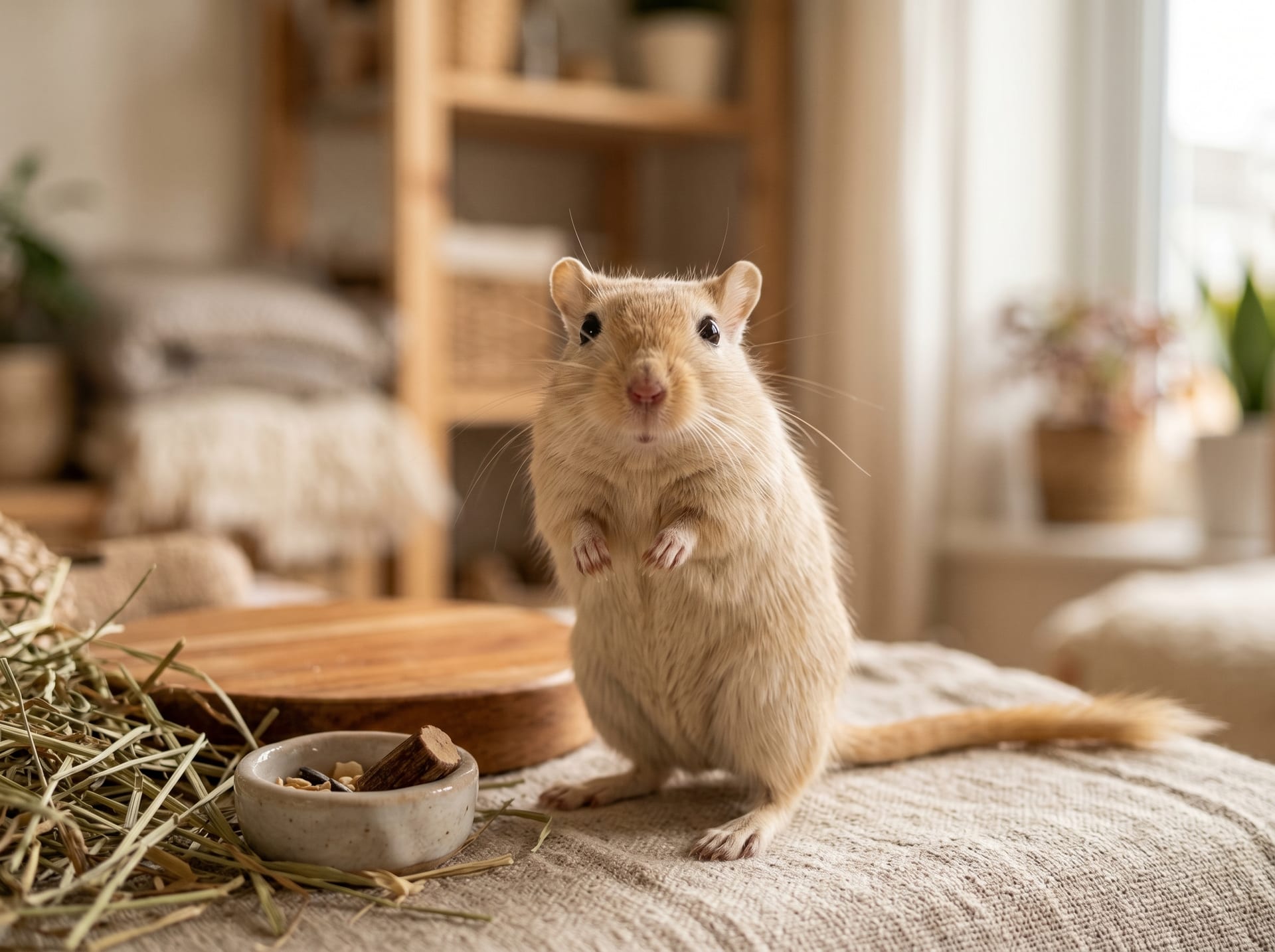
沙鼠
蒙古田鼠(仓鼠)原产于中亚沙漠地带,是一种小动物,以旺盛的好奇心和活泼的性格著称。社会性强,成对或群体饲养时能更好地展现其自然行为。体质强健,饲养难度相对较低,适合小动物初学者。
成交手续费0%!2026年9月30日前注册,前 2 笔成交免佣金!
繁殖者 招募中!
在BreederDirect发布商品,直接销售给全国客户!
我们的 6 大透明度承诺
上架小动物时,繁殖者公示以下信息。确保健康检查、疫苗接种、芯片植入等信息的完全透明。
- 驯化程度
- 健康检查
- 疫苗接种
- 芯片植入
- 实物照片
- 月龄说明
查看全部28个品种
小动物分类正在招募认证繁殖者
繁殖者正在陆续注册,即将上架。设置上架通知,不错过新商品。
「接收上架通知」需免费注册会员即可设置。当有符合您保存条件的新商品上架时,我们会通过邮件和站内通知提醒您。
已注册的繁殖者(抢先看)
关于沙鼠
Gerbils originate from the dry grasslands and deserts of Mongolia and northern China, where they live in family groups and dig extensive burrow systems. They were introduced to the United States in the 1950s as laboratory animals, and their hardiness and charm quickly made them popular as household pets worldwide. Excluding the tail, gerbils measure around 10–13 cm in body length; the tail is roughly equal in length and ends in a distinctive tufted tip. They come in a wide range of color varieties beyond the natural agouti, including white, black, and cinnamon. Curious and energetic, gerbils are active at various times throughout the day and night, making them entertaining to observe. They produce little odor and make minimal noise, making them a practical and appealing choice even in apartment living.
迎接沙鼠前需要了解的7件事
1两只或以上的群体饲养是基本要求
沙鼠在野生环境中也是群居的社会性动物。仅饲养一只会容易产生压力,孤独可能会影响健康。建议采用同性配对或小群体饲养。
2沙浴梳理
沙鼠不喜欢水浴,而是通过用专门的沙(如龙猫砂等细沙)沙浴来保持身体清洁。每周数次在笼子里放入沙浴容器,能够维持毛发健康。用水清洗会导致体温下降和压力增加,应该避免。
3小心挖掘和啃咬习性
沙鼠本能地喜欢挖掘和啃咬物品。笼子中应铺设足够深度的垫材(5~10cm以上)来创造挖掘隧道的环境。定期提供安全的啃咬物品,如啃咬木或卫生纸筒,这很重要。
4不要用力抓尾巴
该动物尾部皮肤较薄,用力握住会导致皮肤脱落,出现所谓的"脱皮症(脱皮)"现象。操作时应轻轻用手掌托住整个身体,绝对要避免抓住尾巴。在它们适应之前,在较低的位置操作可以降低跌落的风险。
5温度和干燥环境的管理
由于它们原生于沙漠气候,不适应高湿度。理想的饲养环境温度为20〜26℃,湿度50%以下。在炎热潮湿的夏季,要确保充分的通风,并将笼舍放在避免阳光直射,且冷暖风不会直接吹到的地方。
6注意癫痫发作
沙鼠遗传上容易发生癫痫样发作。突然的声音、光线或触觉变化可能会引发发作。发作期间不要强行制止,请静静观察。待其平静后,将其放在黑暗、安静的环境中休息。如果经常发生发作,请咨询兽医。
7初期费用与维护费用预估
饲养初期需要笼子、转轮、沙浴盒、垫料、饲料盒等,初期费用预计在1〜2万円左右。每月维护费用包括颗粒饲料、垫料和沙,预计在1,000〜2,000円左右。即使成对饲养,所需的空间和用品与单独饲养几乎没有差异,因此可以说沙鼠是成本效益很高的小动物。
沙鼠的常见问题
- Q.沙鼠能单独饲养吗?
- A.单独饲养在技术上是可行的,但沙鼠具有很强的社会性,单独饲养容易产生压力。建议尽可能采用同性对进行饲养。
- Q.什么类型的笼子比较适合?
- A.推荐使用能铺设较深床材的水族箱或玻璃笼,以满足其挖掘的天性。金属网笼容易导致脚被夹住,也会让床材飞散。建议至少预留60厘米宽的空间。
- Q.沙鼠和仓鼠有什么区别?
- A.沙鼠在白天也有活动时间,社会性较强,适合成对饲养,这与仓鼠差异很大。体型修长纤细,尾巴较长,动作也很迅速。相比之下,沙鼠比仓鼠更活跃,观察它们会更有乐趣。
- Q.沙鼠会变得很亲人吗?
- A.每天耐心地与它接触,许多个体会逐渐适应人的手,甚至可以在你的手上停留或从你手中进食。但因为它们动作很快,在习惯人类之前,最好在较低的地方进行互动以确保安全。
- Q.应该喂什么食物?
- A.以市售沙鼠专用颗粒饲料或小型动物混合饲料作为主食,配合少量蔬菜和干玉米等作为副食是基本原则。种子类和高脂肪食材会导致肥胖,注意不要过量喂食。应随时准备新鲜饮用水。