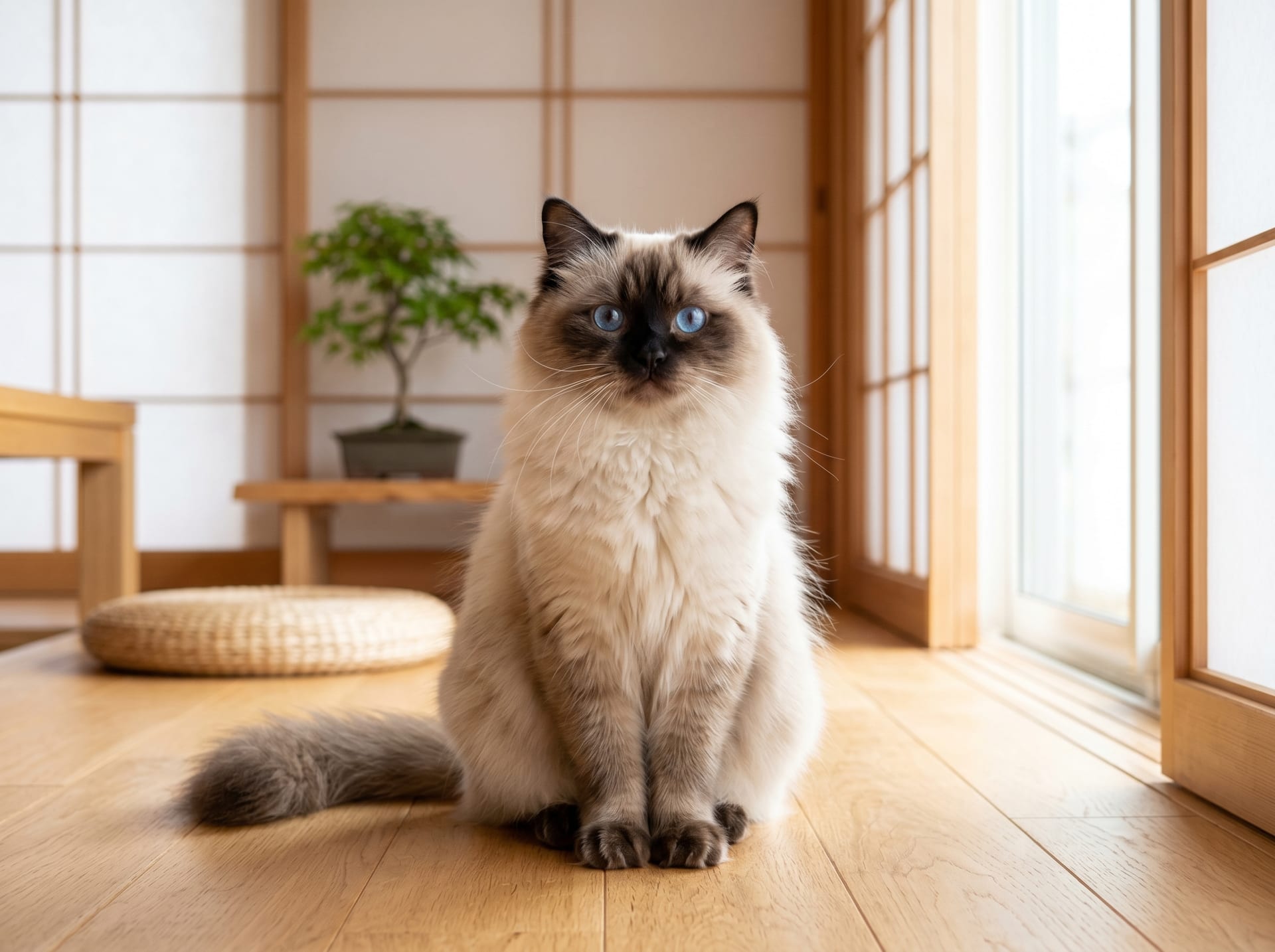
Persian-Siamese cross combining luxurious long coat with pointed coloring. Prefers calm, quiet environment.
View 喜马拉雅猫 encyclopedia →前3笔销售免佣金!在2026年7月31日前注册为繁殖者,前3笔销售免佣金!
繁殖者 招募中!
在BreederDirect发布商品,直接销售给全国客户!
在所有幼猫上市中,繁殖者均会明示以下信息。为确保直销交易的安全和透明,ブリちょく将法定义务项设为必需。
※根据《动物爱护法》(2022年6月实施),微芯片植入为繁殖业者出品的强制性要求(犬猫均适用)。
br-choku 的所有交易均受交易保障覆盖。万一无法迎接宠物将全额退款。健康保障在交付后也让您安心。
想上架kittens吗?
注册成为繁殖者,即可与买家直接联系。
价格区间
地区
属性
The Himalayan was officially established as a breed in the United States in the 1950s, developed through careful crossbreeding to combine the Persian's body type and coat with the Siamese's distinctive point coloration. The breed comes in a variety of point colors including seal, blue, and flame, and is immediately recognizable by its sapphire-blue eyes and magnificent long coat. Medium to large in build with the sturdy frame of the Persian, the Himalayan has a round, slightly flat face that adds to its soft expression. In temperament, it is gentle and easygoing, preferring to quietly stay close to its owner rather than demanding constant attention. Its relatively quiet voice makes it a practical choice for apartment living. While the breed's stunning coat requires dedicated daily grooming and regular health monitoring, those who invest the care find themselves rewarded with a deeply affectionate companion and a richly rewarding bond.
1Daily Brushing Is Essential
The Himalayan's long, dense coat mats quickly without daily brushing. Use a wide-tooth comb and a slicker brush, paying extra attention to the armpits and neck area. Regular professional grooming can also help keep the coat manageable.
2Regular Eye Cleaning Needed
Due to their brachycephalic (flat-faced) structure, Himalayans tend to accumulate eye discharge. Gently wipe around the eyes with a damp cotton pad daily or every few days. Neglecting this can lead to fur staining and potential skin irritation.
3Prefers a Calm Environment
Himalayans are gentle and quiet by nature, and can be easily stressed by loud noises or sudden changes in their environment. In homes with young children or large dogs, it's important to provide a dedicated quiet space for the cat. They adapt best to households with a calm, steady routine.
4Watch for Respiratory Issues
Their flat-faced structure can sometimes make breathing more difficult. Additionally, Himalayans carry a known genetic risk for hypertrophic cardiomyopathy (HCM), so regular veterinary cardiac checkups are recommended. Pay close attention to breathing during hot weather or after physical activity.
5Suited to Settled Indoor Life
Himalayans prefer a relaxed lifestyle over vigorous activity. They tend to enjoy lounging in sunny spots or quietly staying close to their owners rather than engaging in intense play. Because of their lower activity level, monitor their food intake carefully to prevent weight gain.
View 喜马拉雅猫 encyclopedia entry →
Care difficulty, lifespan, size and diet — all basics covered.
6Budget for Grooming Costs
In addition to daily home brushing, most owners find that regular professional grooming is necessary. Many opt for a summer trim during warmer months. It is wise to budget for grooming costs throughout the year when planning for a Himalayan.
7Check for PKD History
As a Persian-derived breed, Himalayans carry a genetic risk for polycystic kidney disease (PKD). When adopting from a breeder, it is strongly advisable to ask for PKD test results for the parent cats. Early detection allows for monitoring and lifestyle management that can support long-term health.