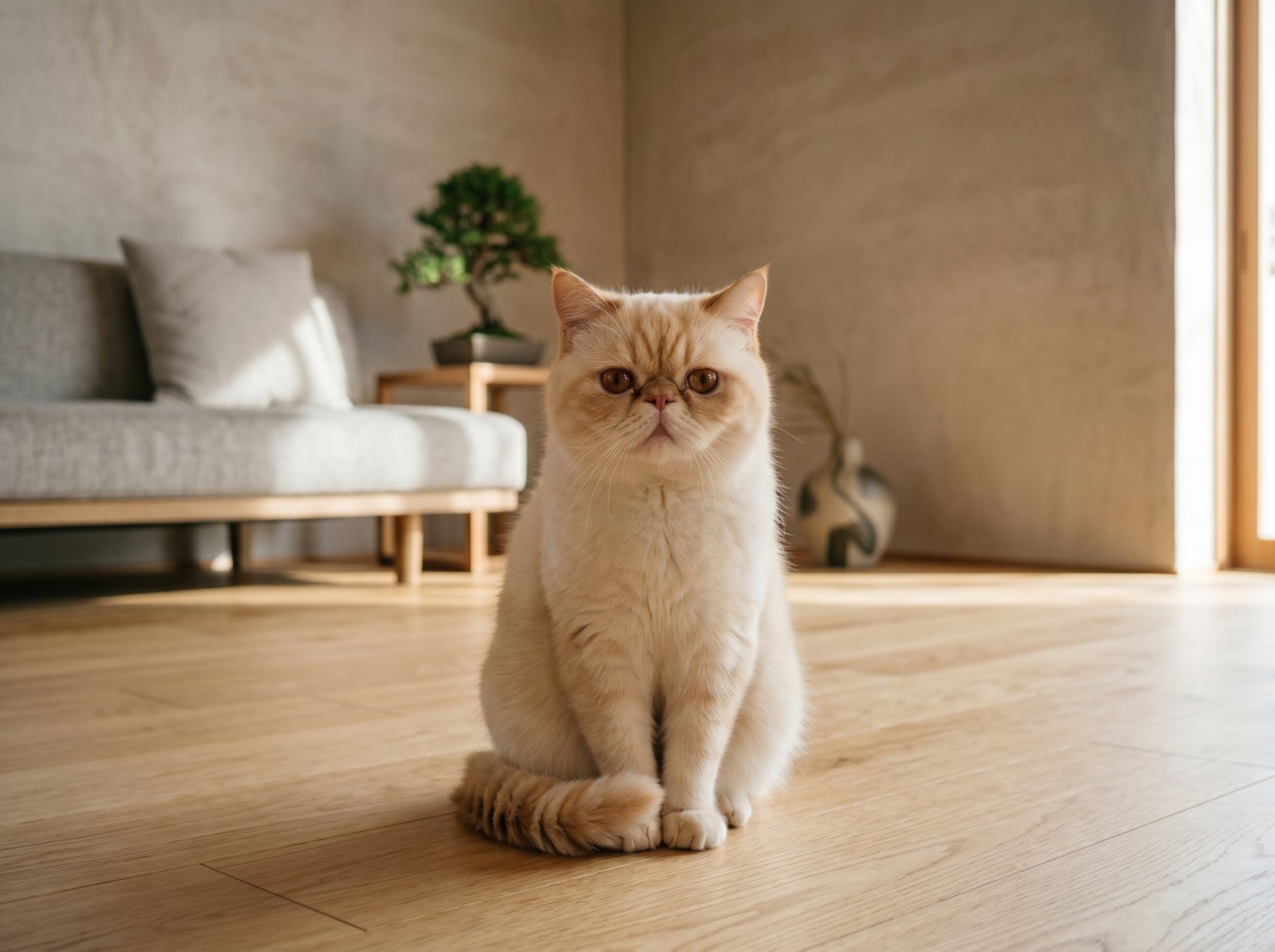
异国短毛猫
作为波斯猫的短毛版本而备受欢迎。扁平的面部和圆润的身体形似毛绒玩具,十分可爱。性格比波斯猫活跃,但基本温和沉静。
View 异国短毛猫 encyclopedia →- 价格范围
- ¥70,000〜¥238,000
成交手续费0%!2026年9月30日前注册,前 2 笔成交免佣金!
繁殖者 招募中!
在BreederDirect发布商品,直接销售给全国客户!
BreederDirect承诺的4大信任要点
在所有幼猫上市中,繁殖者均会明示以下信息。为确保直销交易的安全和透明,BreederDirect将法定义务项设为必需。
- 微芯片必需
- 疫苗接种
- 已进行健康检查
- 含血统证书
※根据《动物爱护法》(2022年6月实施),微芯片植入为繁殖业者出品的强制性要求(犬猫均适用)。
查看全部74个猫种
猫分类正在招募认证繁殖者
繁殖者正在陆续注册,即将上架。设置上架通知,不错过新商品。
「接收上架通知」需免费注册会员即可设置。当有符合您保存条件的新商品上架时,我们会通过邮件和站内通知提醒您。
异国短毛猫的基本数据
- 饲养难度
- 适合新手
- 寿命
- 12〜15年
- 体型
- 体重3~6.5kg
- 饮食
- 全面营养猫粮。使用专为短头种设计的浅盘可使进食更容易。
- 性格
- 温和且爱撒娇。比波斯猫更活泼好玩,但性格基本上很沉静。
- 运动量
- 在室内进行适度的玩耍就足够了。喜欢用玩具和逗猫棒玩耍。
- 被毛·护理
- 被毛密集且短。每周梳毛2次就足够了。还需要进行泪痕护理。
- 原产国
- 美国
- 注意事项
- 因为是短头种,容易出现呼吸道问题和泪痕。还需要留意多囊肾。
关于异国短毛猫
异国短毛猫诞生于1950年代至60年代的美国,通过将美国短毛猫与波斯猫杂交而来,目的是在易于打理的毛发中重现波斯猫可爱的外观。1967年,CFA将其公认为独立品种,自此以"懒波斯"的昵称在世界各地广受欢迎。其最大的特点是脸圆平、鼻子小、眼睛大而圆,呈现出典型的"扁脸",加之紧凑而沉实的身形。相比波斯猫,其被毛明显更短,密集光滑的绒毛质感是其魅力所在。性格温和粘人,叫声小,喜欢安静生活,非常适合公寓等集合住宅饲养。相比波斯猫,异国短毛猫稍显活泼,逗猫棒游戏的模样也很可爱。即使是首次养猫的人也容易上手,但短头种特有的健康管理和日常面部护理是不可或缺的。
迎接异国短毛猫前需要了解的7件事
1即使是短毛,也要每天梳毛
虽然毛发不如波斯猫那样长,但柔软密集的被毛容易打结和脱落。养成每周刷毛2~3次的习惯,对预防毛球和维持皮肤健康非常有效。在换毛期需要增加刷毛频率。
2面部褶皱需要每天擦拭
压低的鼻子周围皮肤褶皱中容易积累泪痕和污垢,放置不理会导致皮肤炎症。养成每天用柔软湿润的棉球或宠物湿巾轻轻擦拭的习惯。特别是眼角的红褐色泪痕需要及早护理。
3呼吸系统和眼睛健康检查
由于短头种特有的结构,鼻腔较窄,呼吸音可能会较大。剧烈运动后或高温环境中的呼吸困难需要引起注意。此外,由于眼睛大而突出,容易患角膜炎,养成日常检查眼睛分泌物和充血情况的习惯非常重要。
4警惕多囊肾病(PKD)
波斯猫品种遗传的多囊肾病(PKD)在异国短毛猫身上也会出现,是一种遗传疾病。可信赖的繁殖者会从已进行PKD检测的亲猫进行繁殖,因此建议在购买前确认检测证明的有无。定期进行肾脏超声检查对于早期发现也很有效。
5怕热,室温管理必不可少
短头种不擅长体温调节,在气温高的环境中中暑风险会增加。夏天要用空调将室温保持在26℃以下,不要让它长时间待在阳光直射的地方。为了补充水分,也要常备新鲜的水。
6运动量偏少,需要注意肥胖
性格温和,很少剧烈运动,即使在室内饲养也容易运动不足。肥胖会增加关节和心脏的负担,因此应该每天用玩具玩耍15〜20分钟来促进适度的运动。定期测量和管理体重很重要。
7很粘人,不适合长时间独处
亲人,喜欢待在主人身边,长时间独自在家可能会感到压力。如果是独居且经常外出,可以考虑准备玩具和猫爬架来丰富它的生活环境,或者考虑与另一只猫同居。记得重视回家后的亲密接触。
异国短毛猫的常见问题
- Q.掉毛量有多少?
- A.由于被毛密集,全年都会有一定量的脱毛,换毛期(春、秋)脱毛会明显增加。可以通过每周2~3次的梳毛和定期吸尘来控制。
- Q.与波斯猫有什么区别?
- A.最主要的区别在于被毛长度。异国短毛猫的被毛比波斯猫短,护理相对容易,因此也被称为"短毛波斯猫"。外观和性格非常相似,只是比波斯猫略显活跃一些。
- Q.与孩子和其他宠物相处得好吗?
- A.由于性格温和且非常耐心,这个品种与孩子和其他猫、犬都相对容易相处。不过,它们害怕突然的大声音和粗暴对待,所以与年幼的孩子接触时,建议由成人监督。
- Q.每月的饲养费用大概是多少?
- A.食物、猫砂盆用品和消耗品每月预计约5,000~10,000日元。此外,由于短头种容易出现健康问题,建议每年进行1~2次健康检查,并考虑投保宠物保险(约月2,000~4,000日元)。
- Q.叫声大吗?爱叫吗?
- A.声音很小,不是一个频繁叫唤的品种。只有在需要时(饿了或想撒娇时)才会用安静的声音叫唤,所以即使在公寓里也几乎不用担心噪音。
适合饲养异国短毛猫的实用工具
Learn more about 异国短毛猫 in the encyclopedia
查看异国短毛猫的图鉴条目 →
收录饲养难度、寿命、体长、食性等基础数据。