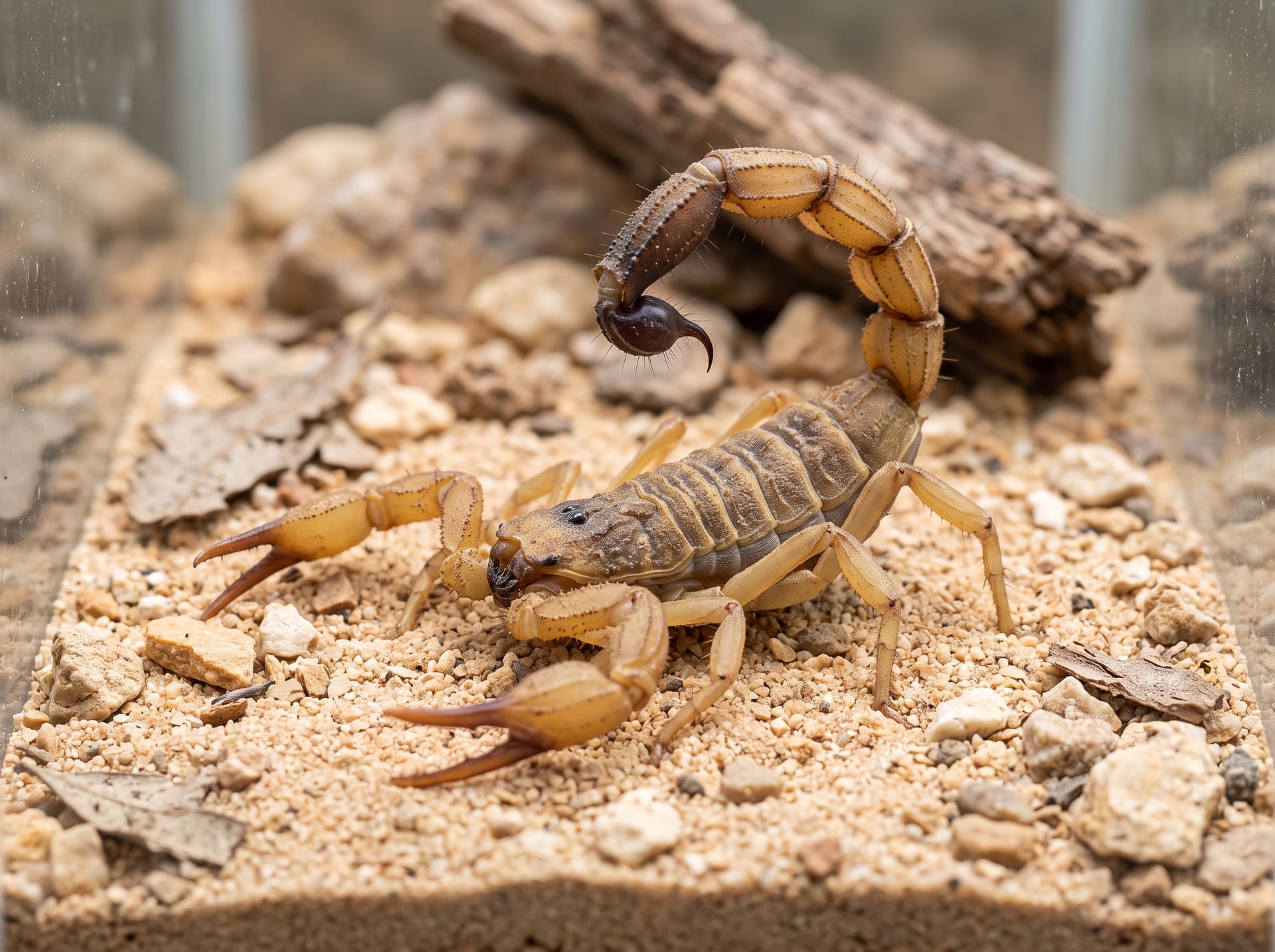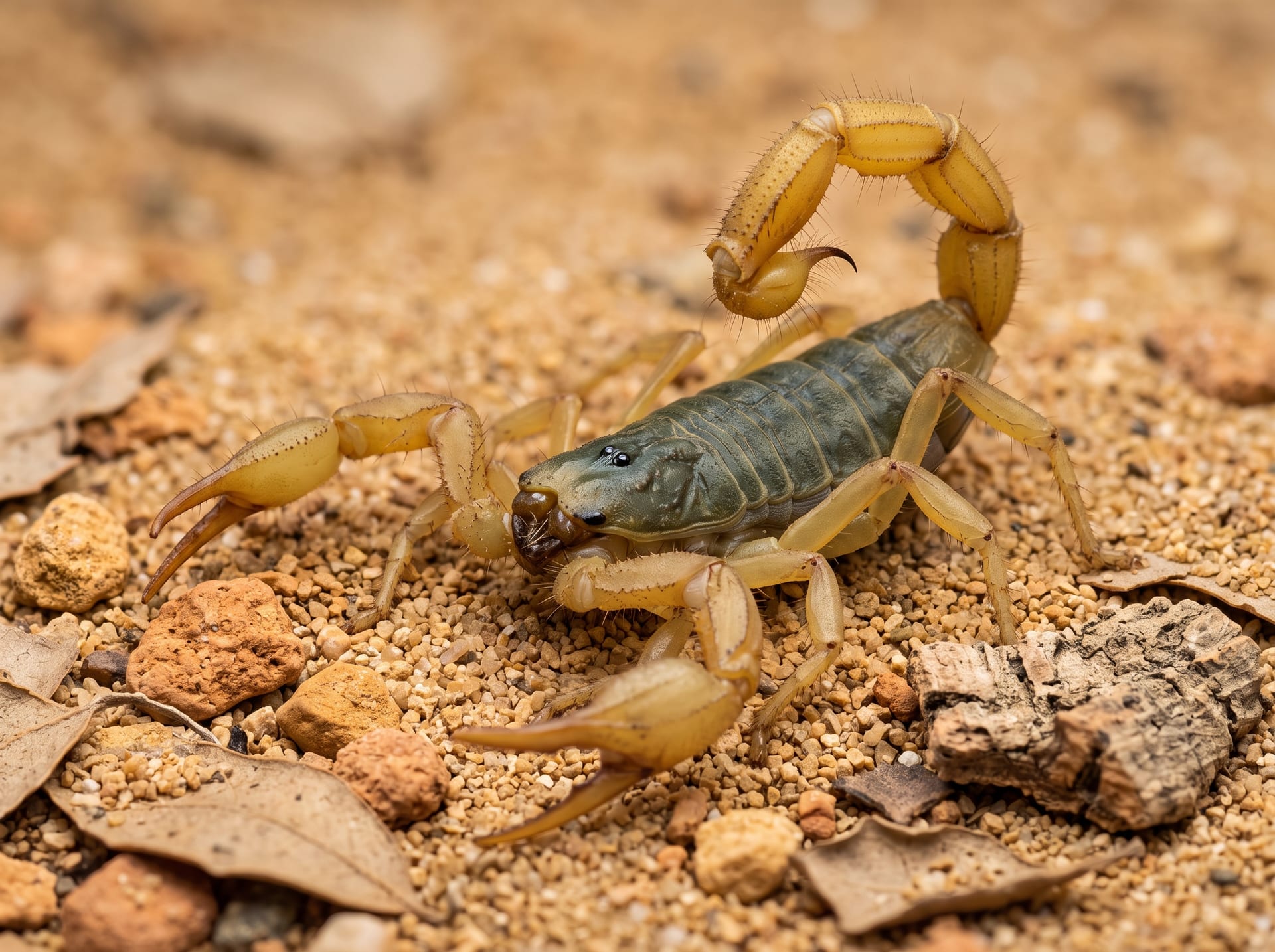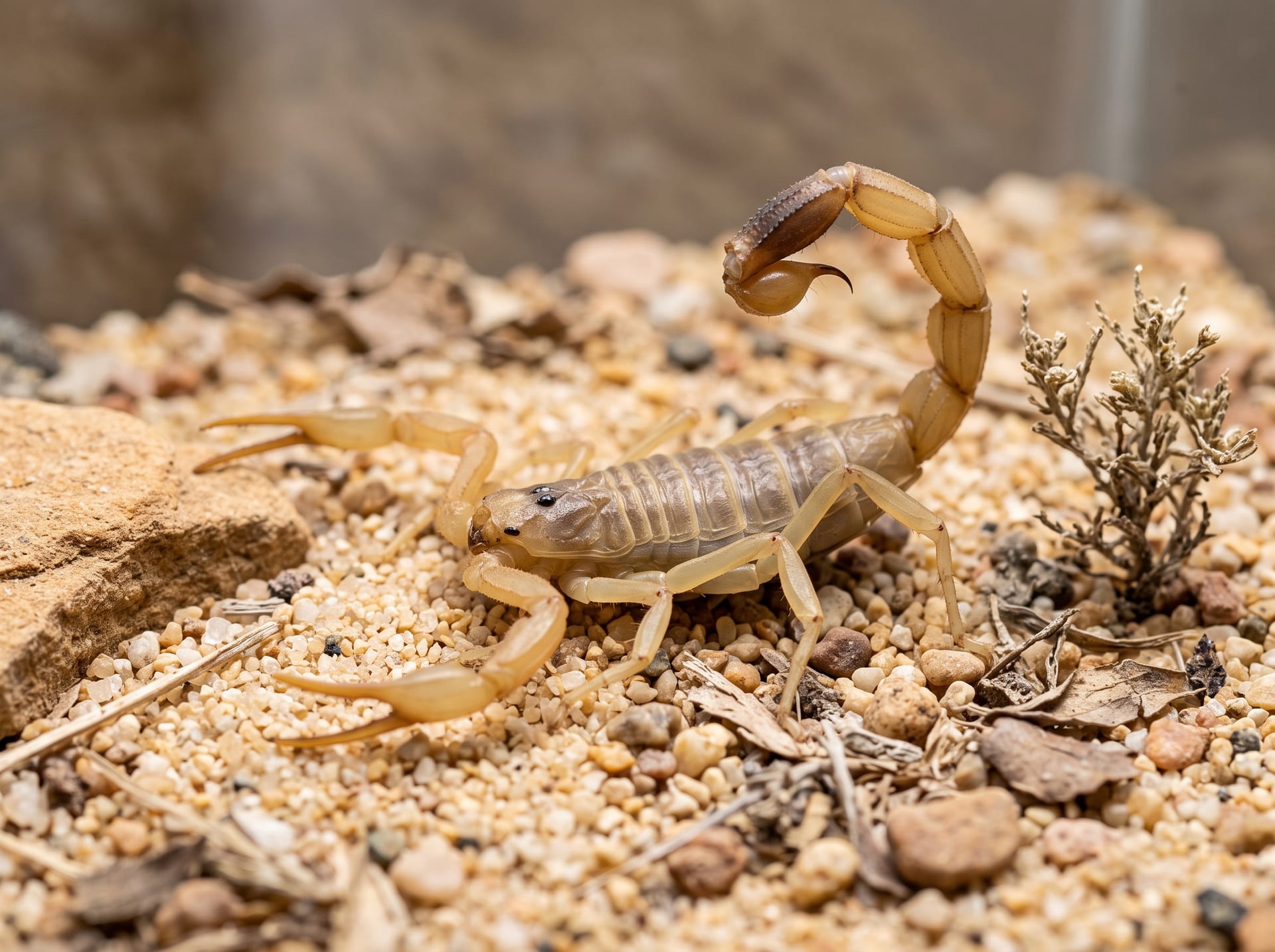
AI-generated image
Deathstalker
AdvancedLeiurus quinquestriatus
A pale yellow scorpion from the arid regions of North Africa and the Middle East, with some of the most potent neurotoxic venom of any scorpion. Medically significant and potentially lethal; for experts only.
Difficulty
Advanced
Temperature
26〜34℃
Lifespan
About 4-6 years
Size
7-11 cm in length
Humidity
30〜45%
Diet
Live insects such as crickets and roaches
About
The Deathstalker (Leiurus quinquestriatus) is a pale yellow scorpion of the arid regions of North Africa and the Middle East, measuring 7–11cm. It possesses some of the most potent neurotoxic venom of any scorpion and is a medically significant, potentially lethal species that must never be handled. Housed in a hot, dry 26–34°C enclosure at 30–45% humidity on live insects, this 4–6 year species is for experts only.
Lifespan of the Deathstalker
The Deathstalker lives About 4-6 years.
Size of the Deathstalker
The Deathstalker grows to 7-11 cm in length.
Basic Info
Origin
Deserts and arid zones of North Africa and the Middle East
Lifespan
About 4-6 years
Size
7-11 cm in length
Temperature
26〜34℃
Humidity
30〜45%
Diet
Live insects such as crickets and roaches
Care Guide
References & Sources
Edited & verified by: BreederDirect editorial team
The taxonomic, regulatory, and husbandry data on this page are compiled and verified against the authoritative primary sources below.
Deathstalker Listings
Loading latest listingsFind listings for this species