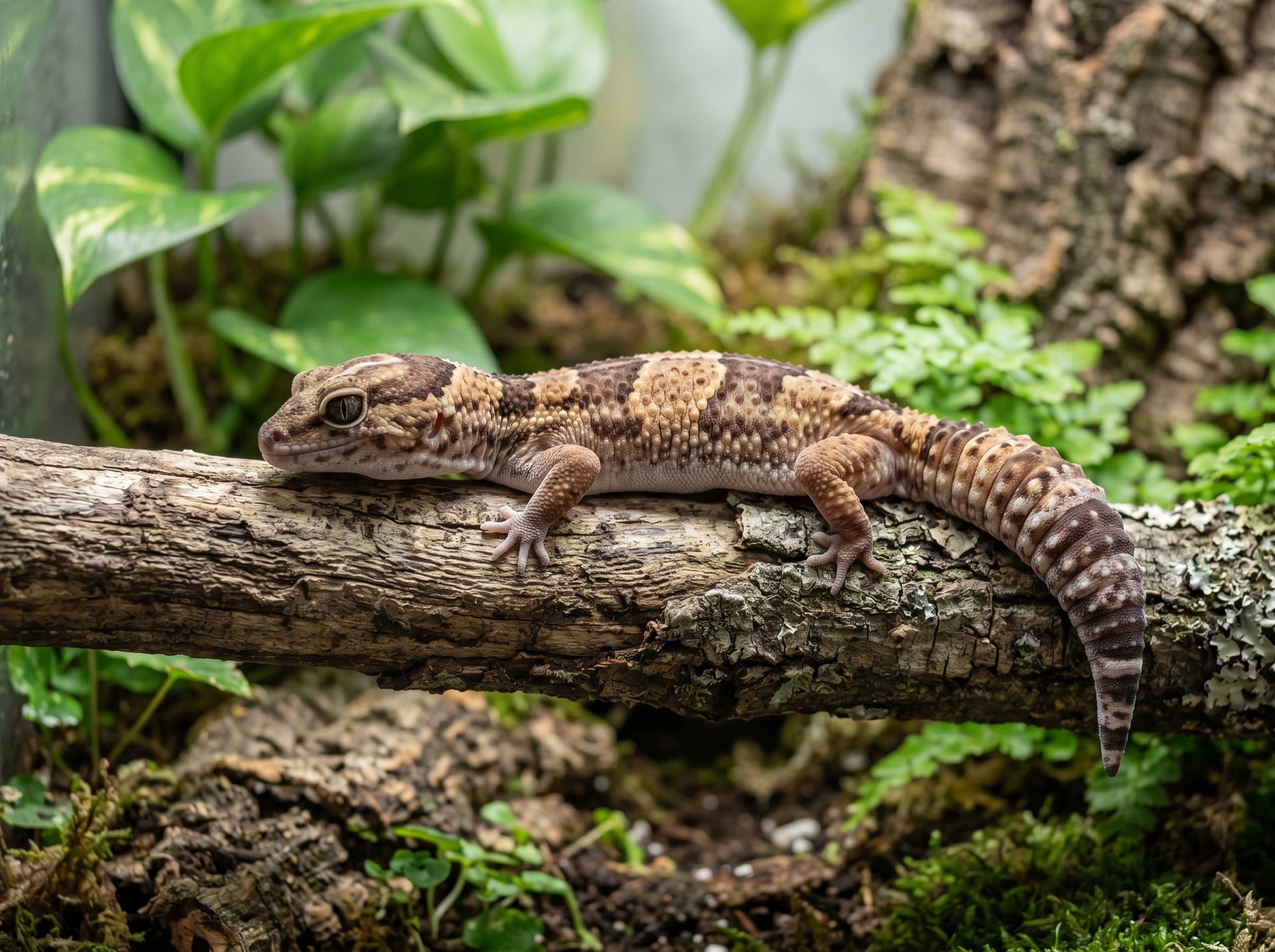
Popular ground-dwelling gecko alongside leopard geckos. Prefers higher humidity and slightly shy but calms with handling.
View 西非肥尾守宫 encyclopedia →前3笔销售免佣金!在2026年7月31日前注册为繁殖者,前3笔销售免佣金!
繁殖者 招募中!
在BreederDirect发布商品,直接销售给全国客户!
爬行动物与两栖动物的出品中繁殖者将明示以下信息。确保形态、遗传、食性、气质的透明度。
价格区间
地区
属性
想上架爬行动物与两栖动物吗?
注册成为繁殖者,即可与买家直接联系。
The African Fat-Tailed Gecko (Hemitheconyx caudicinctus) is a ground-dwelling gecko native to the grasslands and dry woodlands of West Africa, from Senegal to Cameroon. Closely related to the Leopard Gecko, it stands apart through its preference for higher humidity and its characteristically thick, rounded tail used to store fat reserves. Base coloration is typically brown with beige banding, and a wide variety of morphs — including albino and oreo patterns — are now widely available. In temperament, it is cautious and sensitive, yet a well-settled individual can be remarkably calm, often sitting still on an open hand. Its impressive lifespan of 15 to 20 years makes it a rewarding long-term companion. Nocturnal by nature, it spends daylight hours sheltering in hides, making evening feeding and observation one of the quiet pleasures of keeping this species.
1Humidity Is Key
African Fat-Tailed Geckos prefer higher humidity (60–80%) compared to Leopard Geckos. Using a moist hide and creating a humidity gradient within the enclosure helps prevent incomplete sheds. Overly dry conditions can lead to retained skin on the toes, which may cause injury over time.
2Shy Nature and Taming
African Fat-Tailed Geckos tend to be shyer and more nervous than Leopard Geckos, though this varies by individual. It is best to avoid handling for the first few weeks and let the gecko acclimate through the enclosure first. Consistent, brief daily interactions will gradually build trust and acceptance of handling.
3Enclosure and Substrate
An enclosure of at least 45×30 cm is recommended for one adult. Moisture-retaining substrates such as coconut fiber or bioactive mixes are well-suited, while loose sand carries risks of ingestion and dryness for beginners. Always provide two hides—one dry and one moist—to allow the gecko to self-regulate.
4Setting a Temperature Gradient
Aim for a warm side of 30–32°C and a cool side of 24–26°C. Placing an under-tank heater beneath one side of the enclosure provides belly warmth while allowing the gecko to escape the heat as needed. Keep nighttime temperatures above 20°C.
5Insect Diet and Feeding
Crickets and mealworms form the staple diet, though feeder insects like Dubia roaches are easier to manage and highly digestible. Juveniles should be fed daily, while adults do well with feedings every 2–3 days. Dust insects with calcium powder before each feeding as a routine practice.
View 西非肥尾守宫 encyclopedia entry →
Care difficulty, lifespan, size and diet — all basics covered.
6The Tail Signals Health
The plump tail of the African Fat-Tailed Gecko stores fat reserves and serves as a visible health indicator. A sudden thinning of the tail may signal appetite loss, parasites, or other health concerns. Make it a habit to monitor the tail's condition regularly.
7Long-Term Keeping Costs
With a lifespan of 15–20 years, it is important to plan for the long-term costs of keeping this species. Beyond the initial setup (enclosure, equipment, and the gecko itself), ongoing expenses include feeder insects, electricity, and supplements. Budgeting for an annual check-up at a reptile-specialized veterinarian is also advisable.