AI-generated image
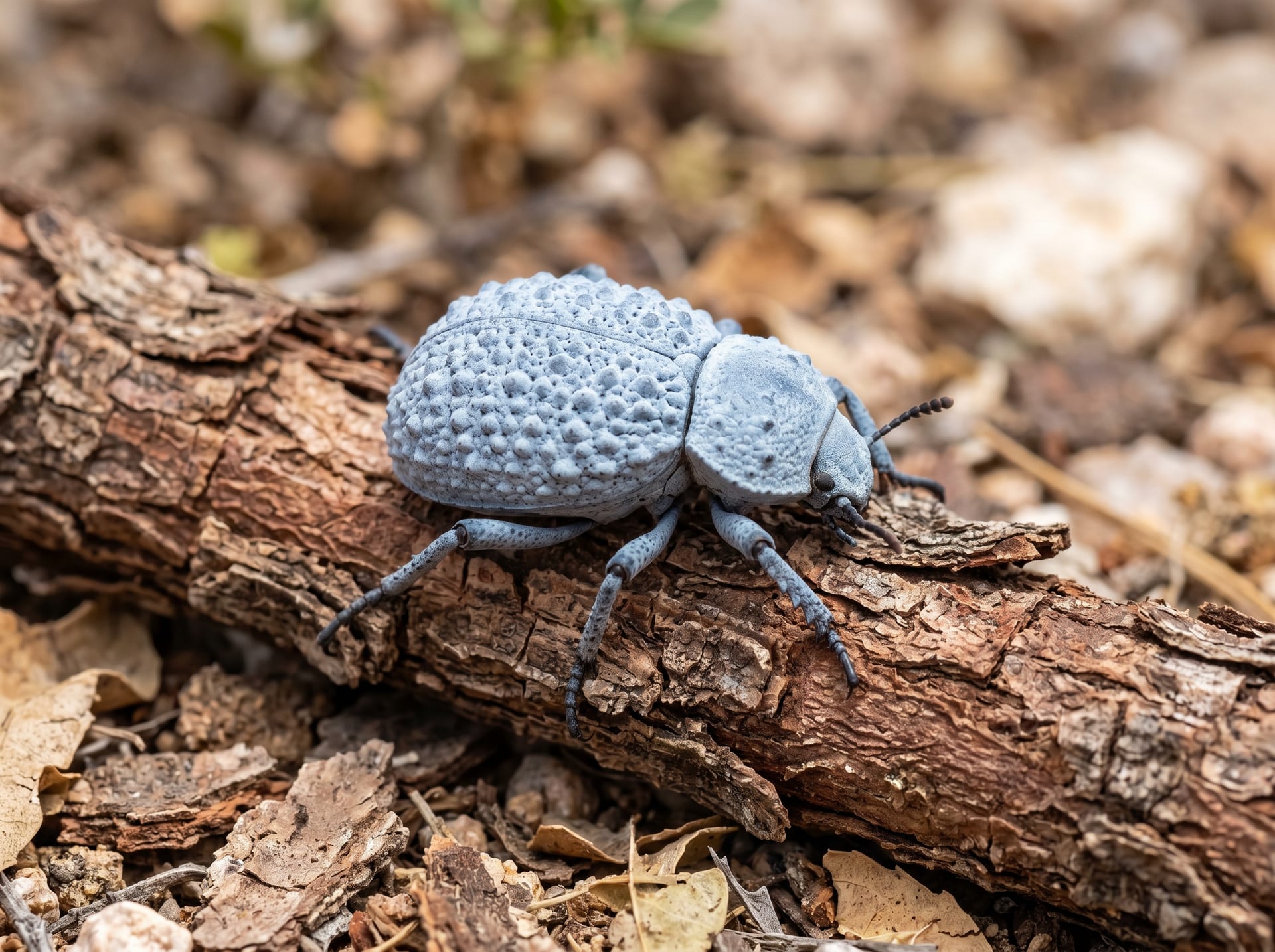
Asbolus verrucosus
生活在北美沙漠的藍白色甲蟲。感到危險時會假死,這種獨特的防禦行為是其名字的由來。強健而長壽,飼育非常容易。
The blue death-feigning beetle (Asbolus verrucosus) is a darkling beetle native to the deserts of the southwestern United States. A waxy bloom gives it a bluish-white appearance, and its habit of going limp and motionless when threatened (thanatosis) inspires its common name. Adults are around 20 mm and favor dry conditions. Husbandry follows a desert setup with dry sand or coconut fiber as substrate and only sparing moisture from a shallow dish or light misting. It is omnivorous, accepting vegetable matter and dry foods. Hardy, long-lived, and low-maintenance, it is a good choice for beginners.
Source: Wikipedia (CC BY-SA 4.0)
產地
deserts of the southwestern United States
壽命
5~8年
體型
18~22mm
溫度
22〜32℃
濕度
10〜30%
蔬菜、水果、魚飼料
鋪沙的乾燥環境。配置石頭和木片
無需水碟。從蔬菜獲取水分
多隻可一起飼育。不會互相爭鬥
藍色是蠟狀物質。濕度高時會變黑
適合新手. 這是一個適合初學者的物種。不需要特殊設備或經驗,基本的飼養設置即可成功飼養。
藍色假死甲蟲的理想溫度為22〜32℃。推薦濕度為10〜30%。避免溫度驟變,保持穩定的環境。
藍色假死甲蟲的平均壽命為5~8年。透過適當的護理和營養,牠們可以長壽健康地生活。
藍色假死甲蟲成年後通常可達18~22mm。大小可能因飼養條件和個體遺傳而異。
藍色假死甲蟲的食物為:蔬菜、水果、魚飼料。目標是適當的餵食頻率和均衡的飲食。
藍色假死甲蟲的價格因品系、大小和血統而有很大差異。請查看我們的市場價格頁面獲取最新價格資訊。
最後更新: 2026年6月23日
編輯與資料核驗: br-choku編輯部
本頁的分類·法規·飼養資料依據下列權威第一手來源編製並核驗。
學名(受理名): Asbolus verrucosus LeConte, 1851
權威資料庫: GBIF
Nomenclature follows global taxonomic authority databases.
Asbolus verrucosus(ゴミムシダマシ科)。CITES 非掲載。コガネムシ上科ではないため種類名証明書の対象外。
來源: CITES 附属書(checklist.cites.org)
法規可能修訂,請以各主管機關的最新第一手資訊為準。
尋找此物種的商品
Guide to Growing Large Horns in Rhinoceros Beetles | Optimizing Substrate, Temperature, and Container Size
Comprehensive explanation of larval care management for maximizing rhinoceros beetle horns. Covers selection of high-nutrient fully-fermented substrate, the importance of 6–10L container size per individual, temperature management strategy (22–24℃) effective for growing large specimens, timing of substrate replacement, and complete procedures for pre-pupation care to maximize large individuals.
Beginner's Guide to Foreign Beetles | Characteristics and Care of Hercules, Caucasus, and Atlas Beetles
A beginner's guide explaining the characteristics, acquisition methods, how to create a breeding environment, and larvae management of foreign beetles (Hercules Beetle, Caucasus Beetle, and Atlas Beetle).
Complete Guide to Raising Japanese Beetle Larvae | Selecting Substrate, Temperature, Care by Growth Stage, and Pupation to Adult Emergence
A comprehensive breeding guide for raising Japanese beetle larvae (1st to 3rd instar) until adult emergence. Covers methods for collecting eggs from breeding setups, growth characteristics by instar stage, how to choose fermented substrate and timing for changes, temperature and humidity management tips, precautions before pupation, and post-emergence timing—practical information for successful full-cycle cultivation.
Breeding and Care Guide for Dung Beetles (Scarabaeus and Copris) | Enjoying the Fascinating Ecology of Scarab Beetles
A guide to breeding and raising dung beetles (scarabs) such as Scarabaeus sacer and Copris species. From dung ball formation to adult care and larval management—we clearly explain how to raise these insects with their unique ecology.