Encyclopedia of popular goldfish varieties with care guides, traits, and show standards.
顯示79個物種中的79個
Carassius auratus var.
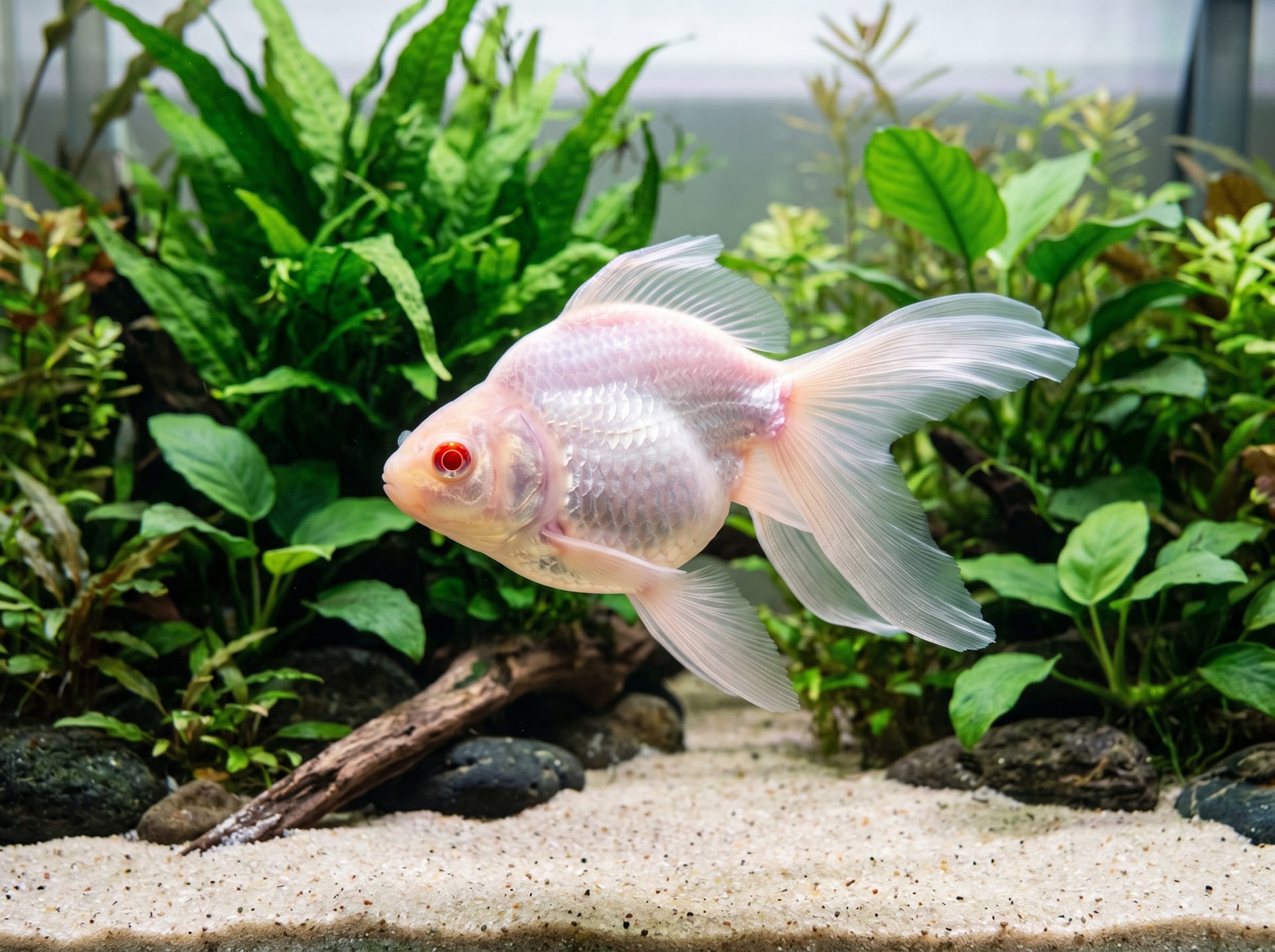
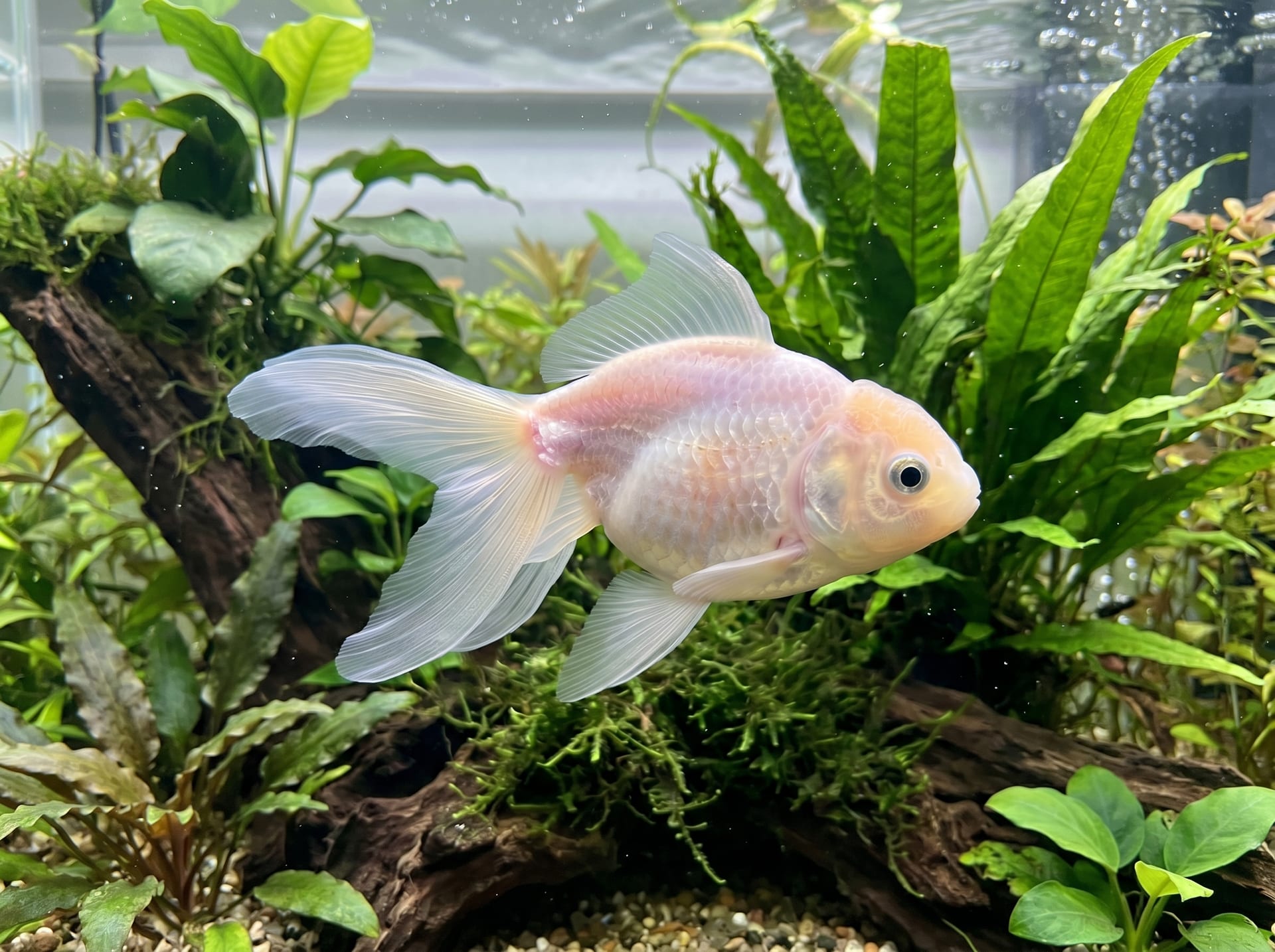
Albino mutation of Ryukin. Red eyes with white to pale pink body create a mystical appearance. Same care as standard Ryukin but slightly light-sensitive. Popular as rare variety.

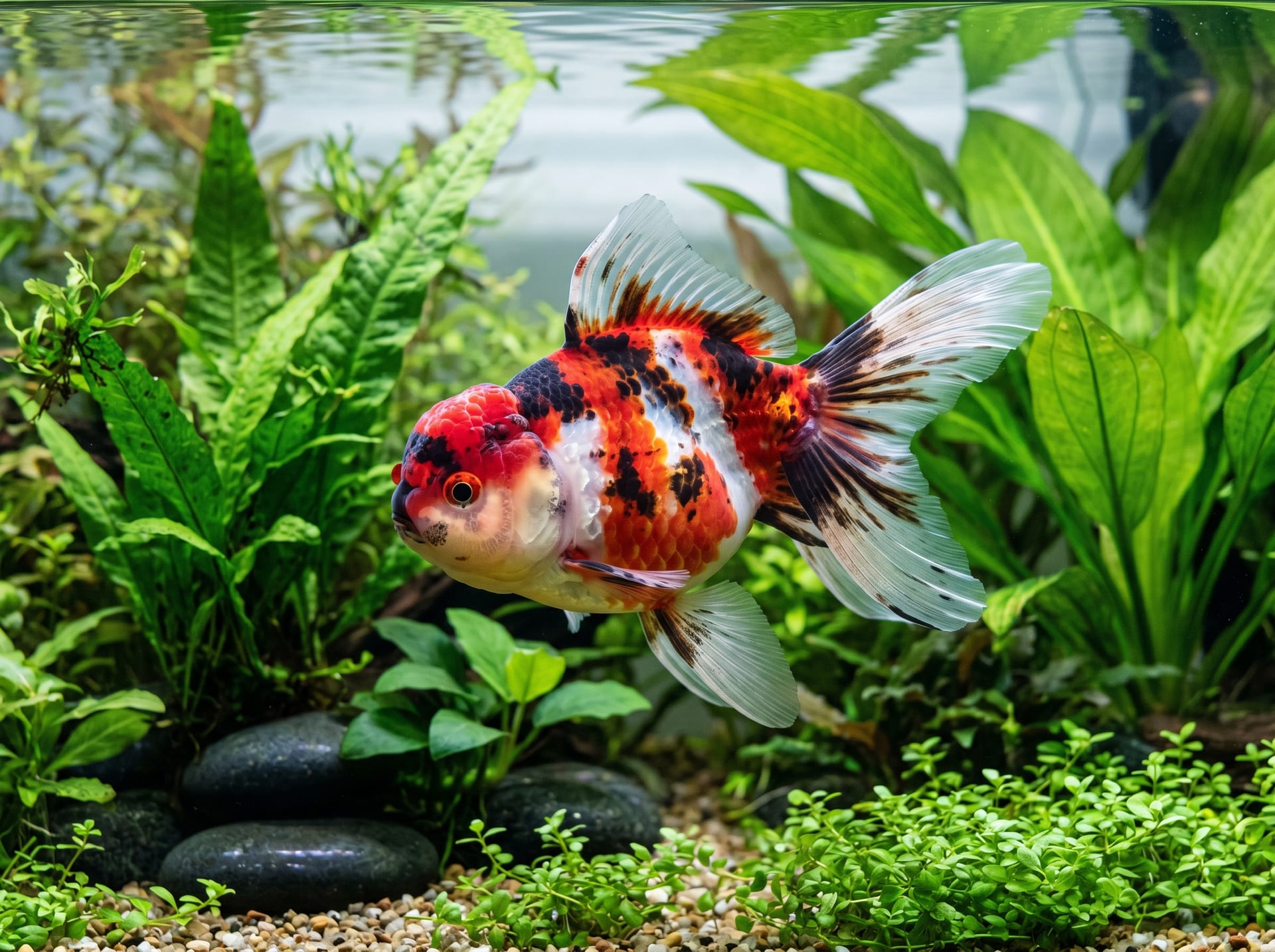
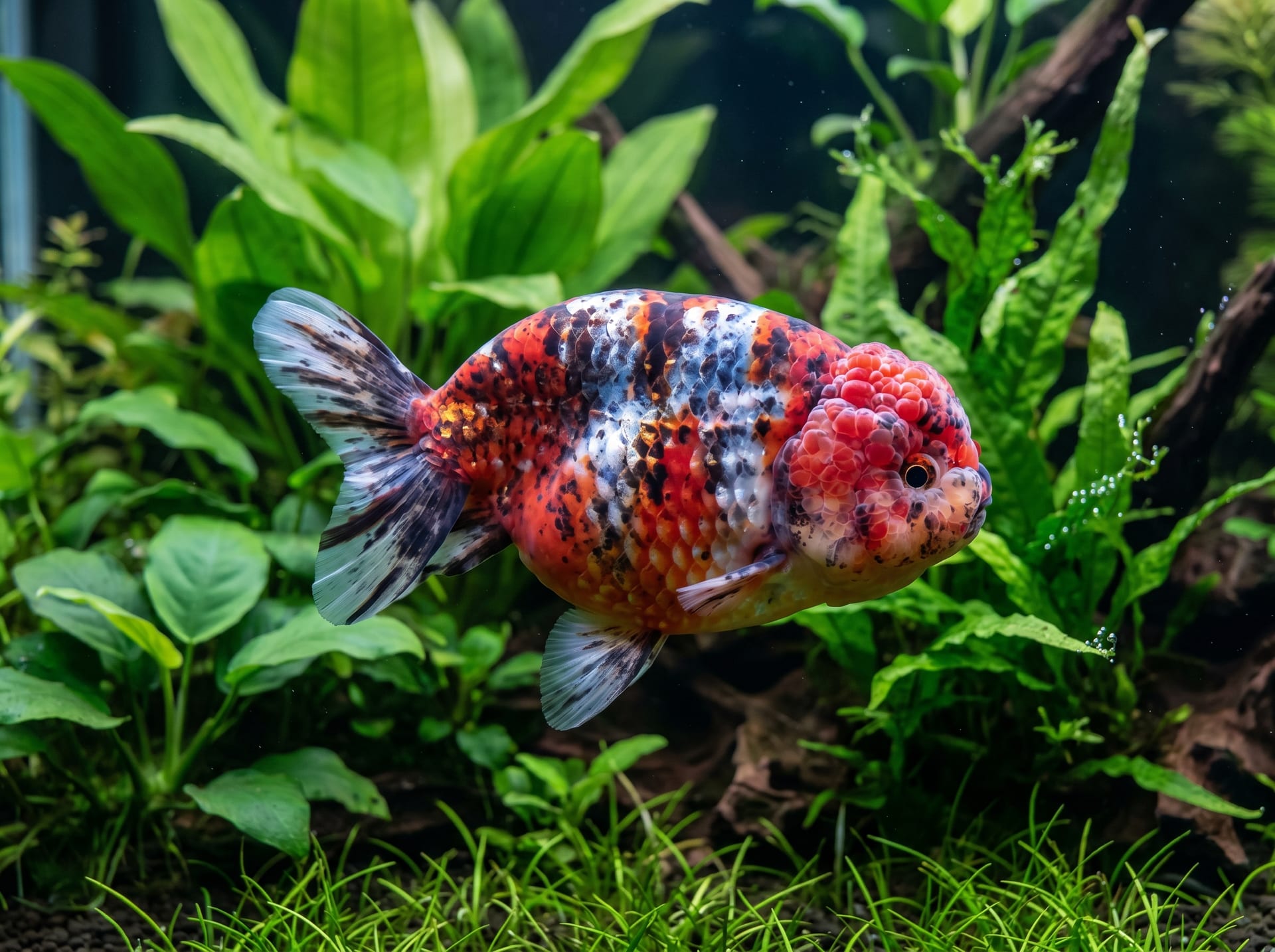
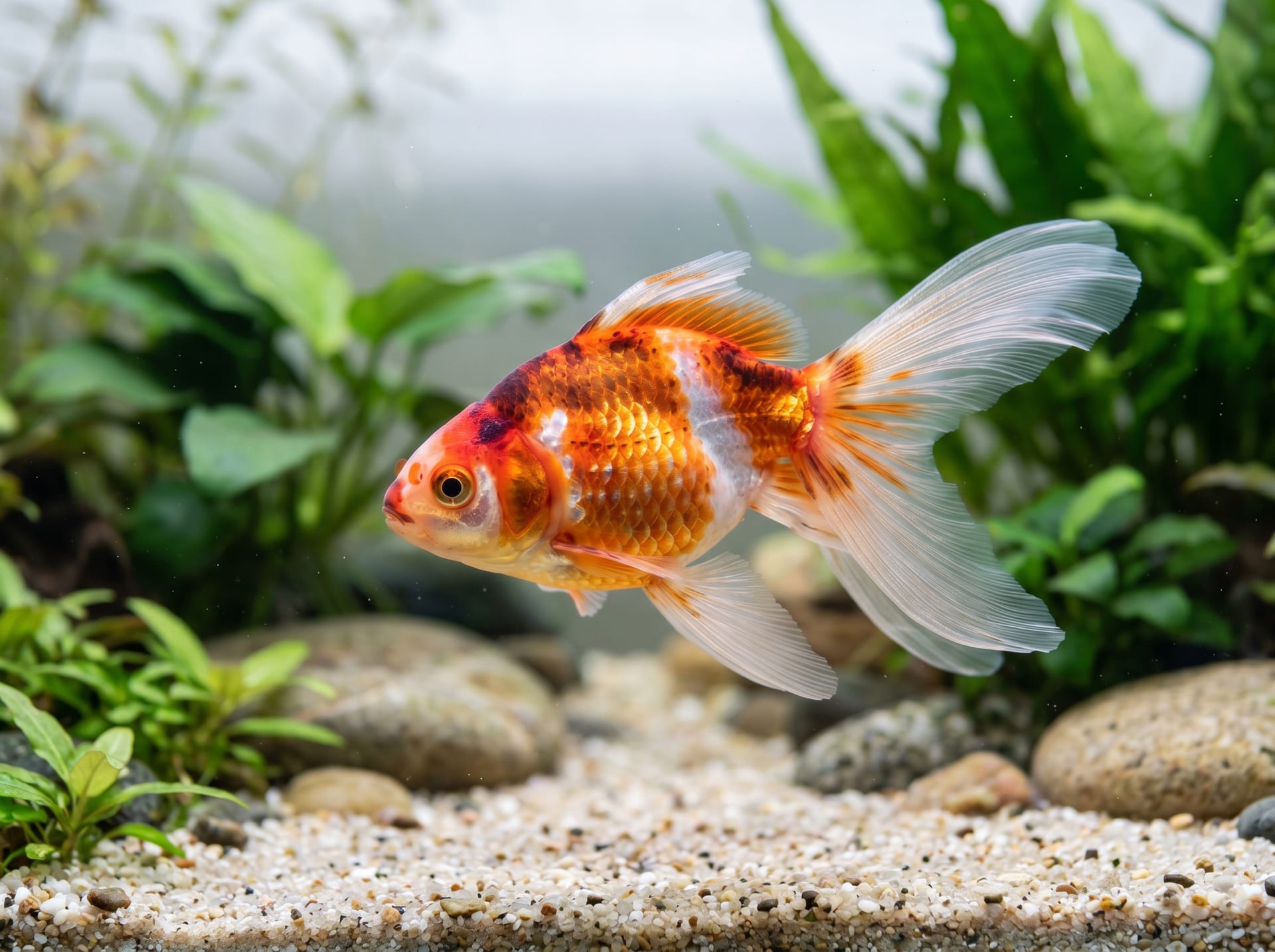
Oranda body type with calico (tricolor) pattern. Beautiful mix of red, white, and black coloring.
Carassius auratus var.
All-black Lionhead goldfish. Well-developed black wen creates a majestic, imposing appearance. Specimens that maintain black without fading are rare and valuable. Chinese variety.
Carassius auratus var.
A ranchu that shines jet black all over. The combination of a solid black chic body color and typical ranchu body shape has unique appeal. Color can change, so environmental management to maintain black coloration is important.

The representative black telescope breed. Beloved goldfish familiar from summer festival goldfish scooping.
Carassius auratus var.
Oranda variety with metallic blue-gray coloration. Wen development combined with unique blue-gray hue creates striking beauty. Gaining attention in shows.
Carassius auratus var.
A variety originating from China, a type of telescope goldfish with characteristic bluish-black body coloration. Unlike the black telescope, it has a deep, lustrous blue-black sheen. Popular among enthusiasts in Japan for its rare coloration.
A shubunkin improved in Bristol, England with large heart-shaped tail fins.
Carassius auratus var.
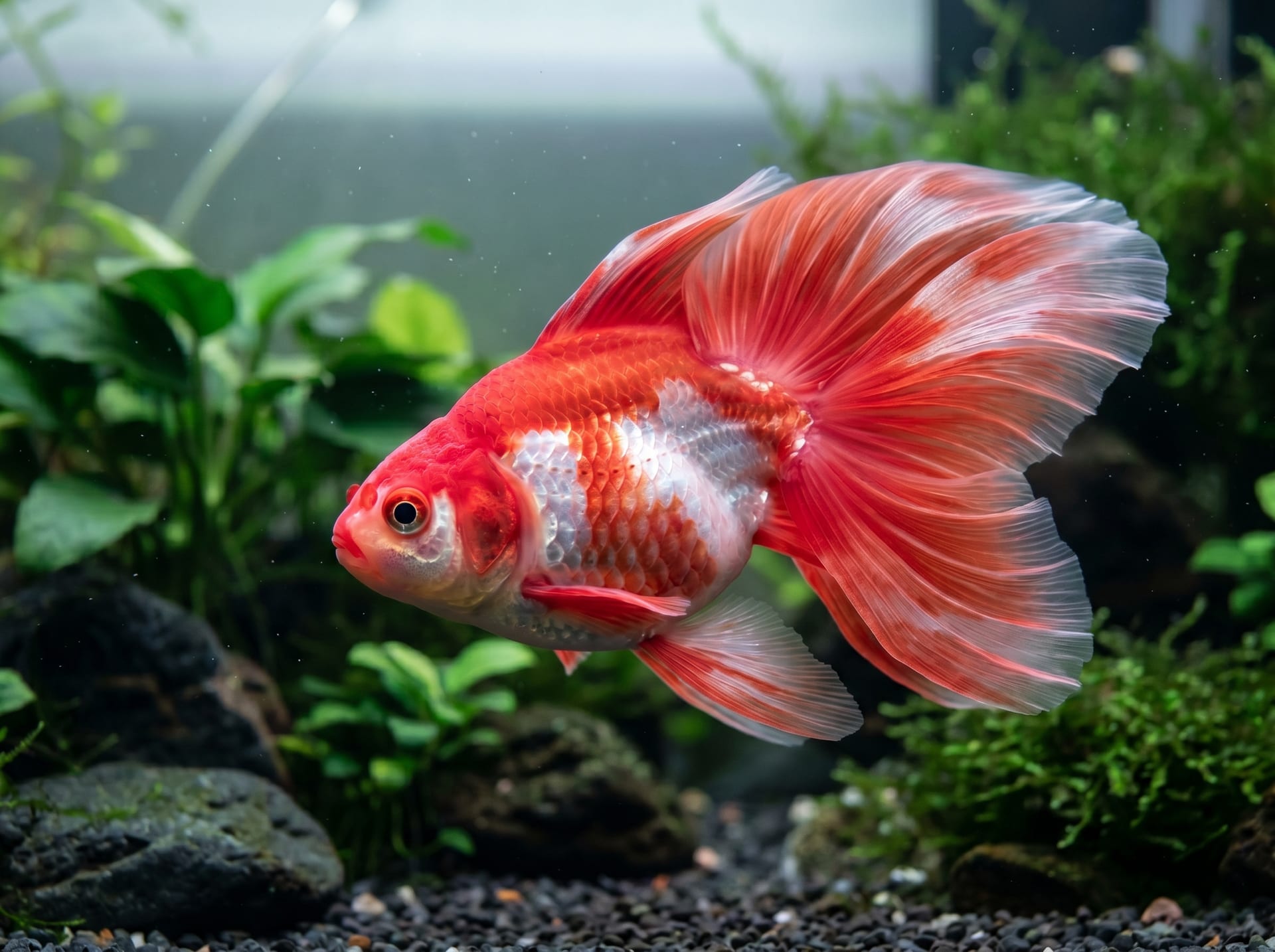
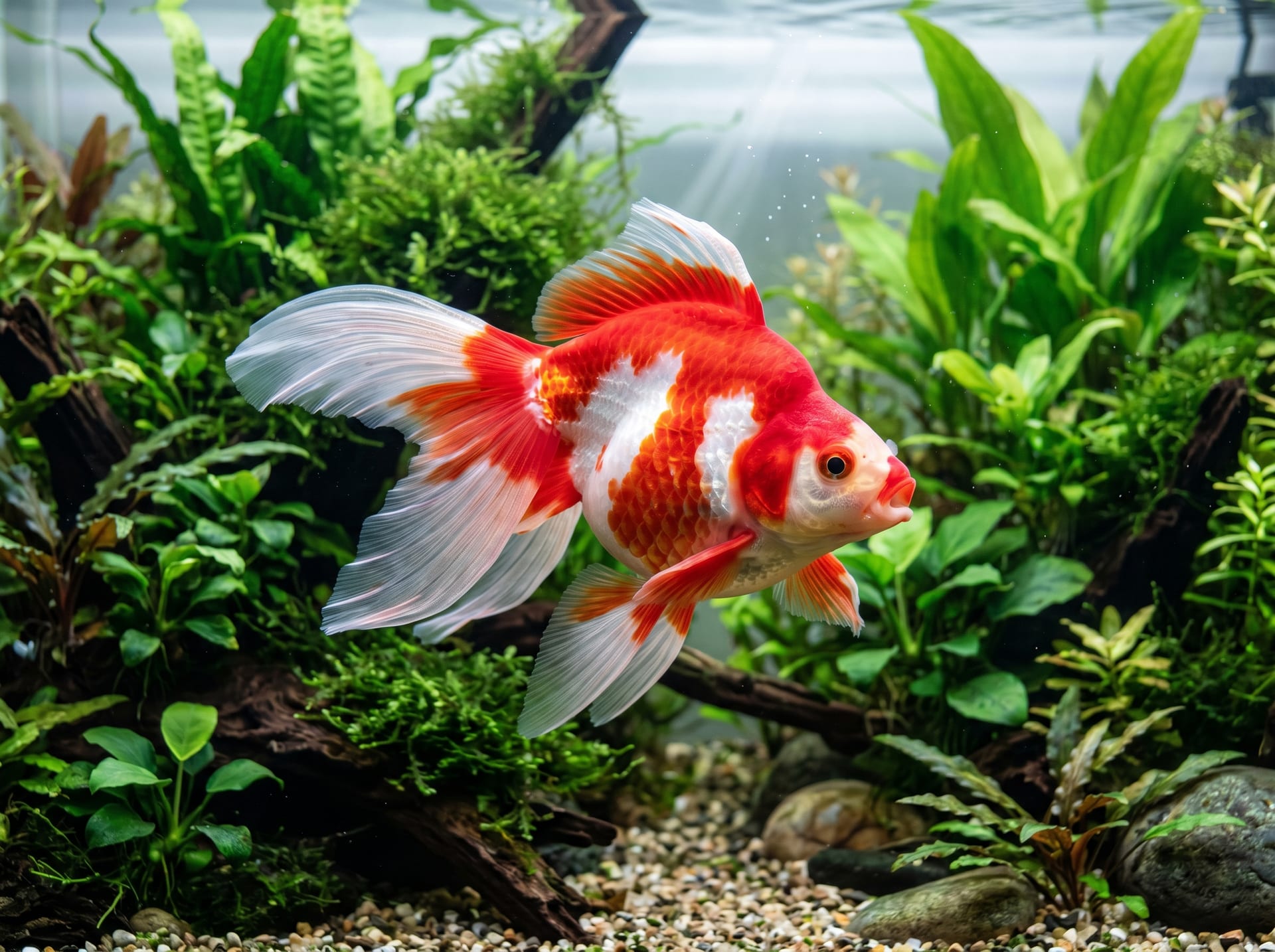
Premium Ryukin variety with broad tail fins spreading like a fan. Side view shows tail flowing like a skirt — elegant and graceful. Highly valued in shows.
Carassius auratus var.
A ranchu with calm brown body coloration. Brown goldfish are rare and appreciated by enthusiasts for their unique beauty. Can be maintained using the same methods as regular ranchu.

Distinctive goldfish with large fluid-filled sacs under eyes. Chinese-bred variety. Very delicate for experienced keepers.
Carassius auratus var.
Cross between Jikin and Butterfly Tail. Tail spreads like butterfly wings from above, combined with Jikin's 'six-scale' pattern. Extremely rare.

Tail fins spread like butterfly wings when viewed from above. Bred in China, most impressive in top-down viewing.

A telescope eye goldfish with butterfly-wing spread tail. Top-view tail shape is main viewing point.
Carassius auratus var.
Ranchu with red, white, and black calico pattern. Some have transparent scales revealing internal red. Unique beauty. Shows evaluate pattern balance.
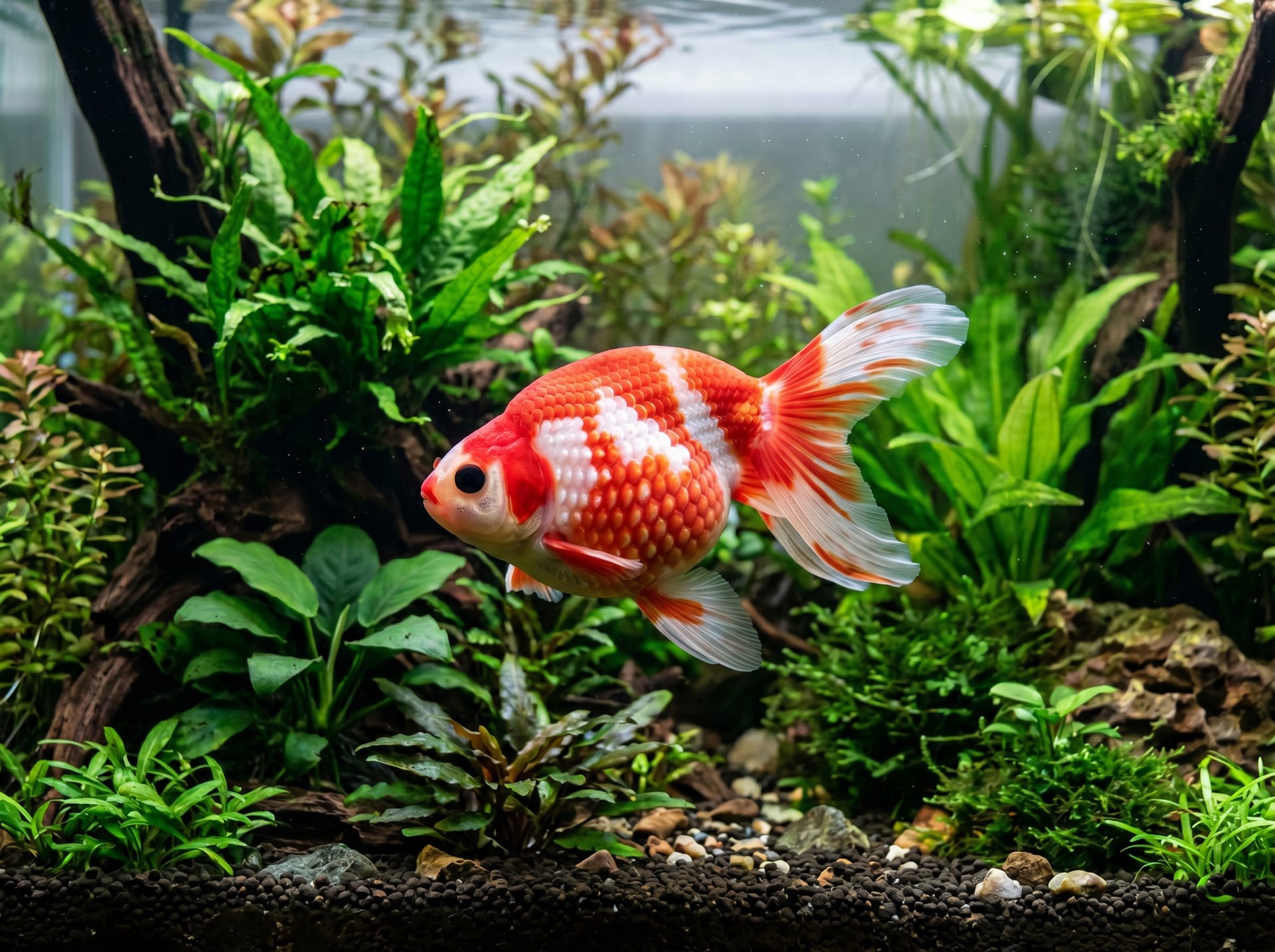
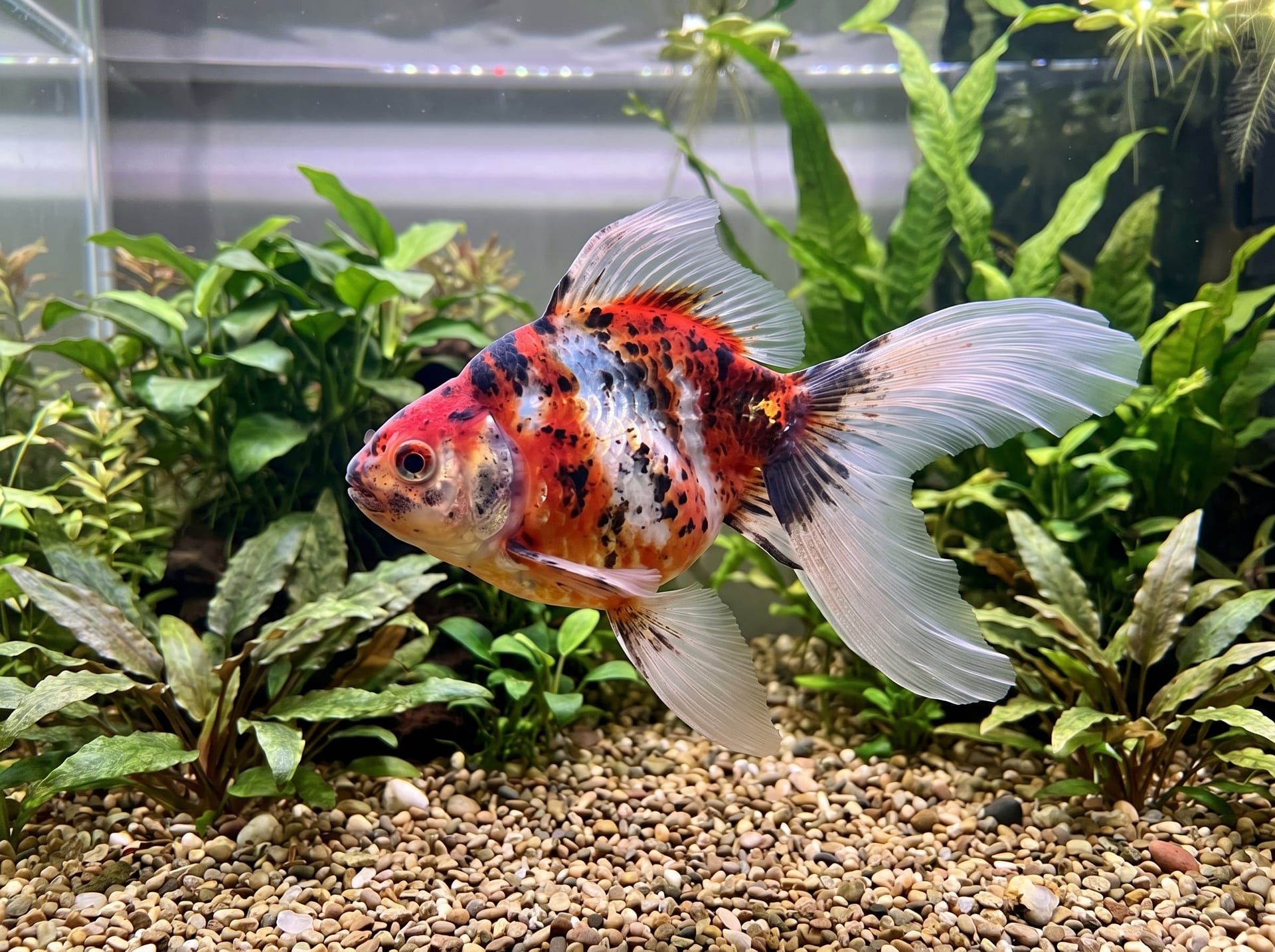
A ryukin with red-white-black tricolor (calico) pattern. Popular for gorgeous coloring and round body.
A ryukin with tricolor calico pattern and long elegant tail fins. Gorgeous representative of ornamental goldfish.
Calico version of telescope goldfish. Red-white-black pattern with protruding eyes is distinctive. Each fish has unique markings.

Rare goldfish with upward-facing eyes. Chinese-bred to resemble gazing at heaven. No dorsal fin, very rare variety.
Carassius auratus var.
Rare variety with upward-facing eyes (Celestial) and nasal bouquets (Pompom). Ancient Chinese fancy goldfish. Unique appearance loved by enthusiasts. Challenging to keep.

A goldfish with rare brown (chocolate) body color. Round body with adorable gentle swimming.
American-bred goldfish with long flowing tail. Active and fast swimmer, ideal for outdoor ponds. Hardy and long-lived.
Carassius auratus var.
Cross between Telescope Eye and Pearlscale. Combines protruding eyes with round pearlscale body. Popular fancy goldfish in China, increasingly available in Japan.

Ranchu body with calico pattern. Bred in Tokyo (Edo). Beautiful tricolor pattern best viewed from above.
One of finest ranchu. Treasure of Japanese goldfish with improvement history from Edo period.
Carassius auratus var.
Ancient Chinese egg-shaped goldfish. No dorsal fin with round body similar to Ranchu, but without wen development. Prototype of Chinese goldfish varieties.
A basic variety with beautiful fan-shaped tail. Said to be the prototype of Ryukin, hardy and easy to keep.
Carassius auratus var.
A large oranda with an exceptionally developed, large wen (lion head). Some develop wens so extensive they spread over the entire body, creating an overwhelming presence. Requires a large tank and high-level water management.
A goldfish with long tail fins flowing like celestial maiden's robe. Long-tail type of Oranda.
A goldfish combining pearl scales with head growth. Popular breed with pearl shimmer and luxurious wen.
Distinctive goldfish with pompom-like narial bouquets on nose. Chinese name Rongqiu. Charming and endearing face.
Carassius auratus var.
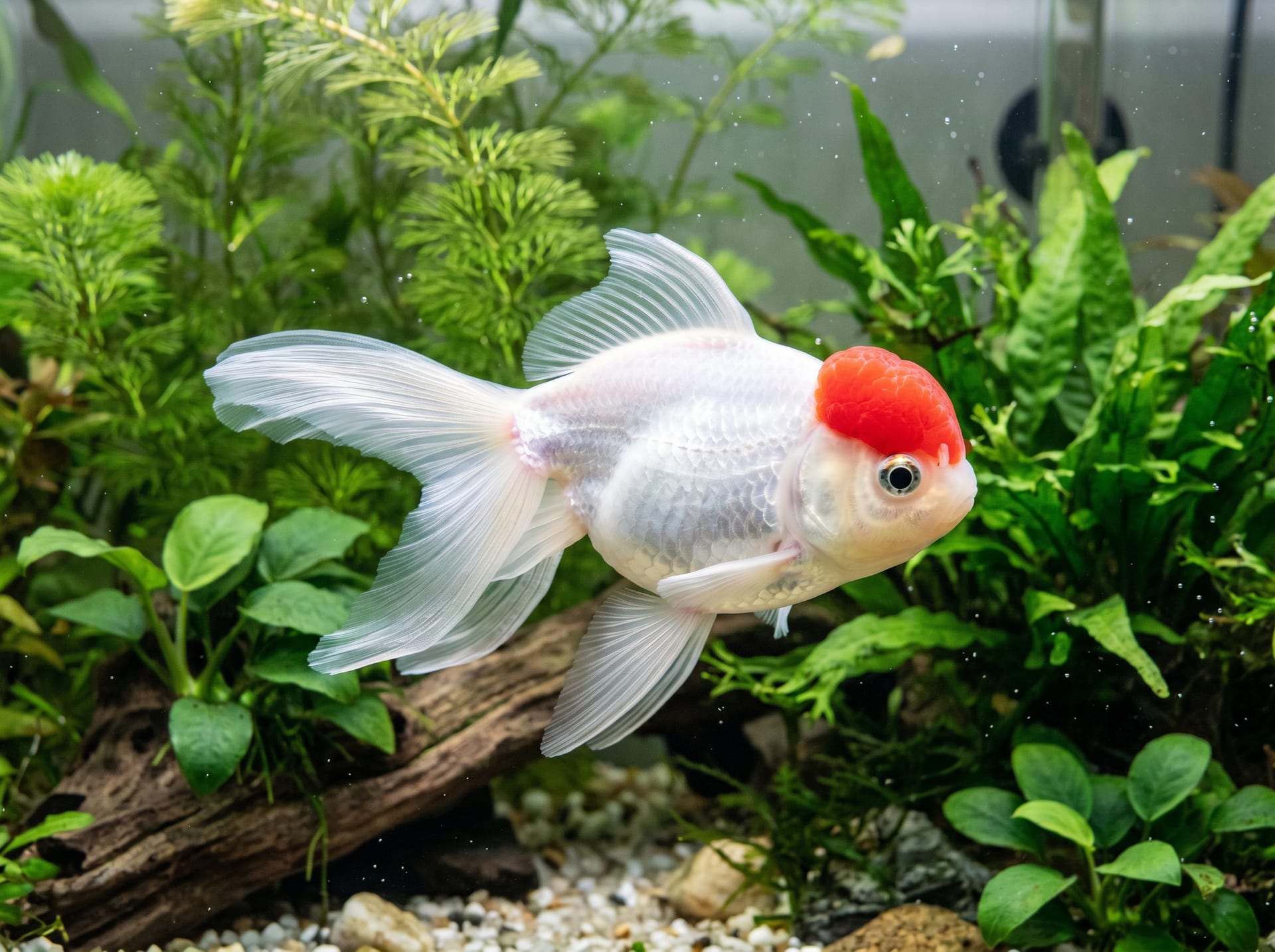
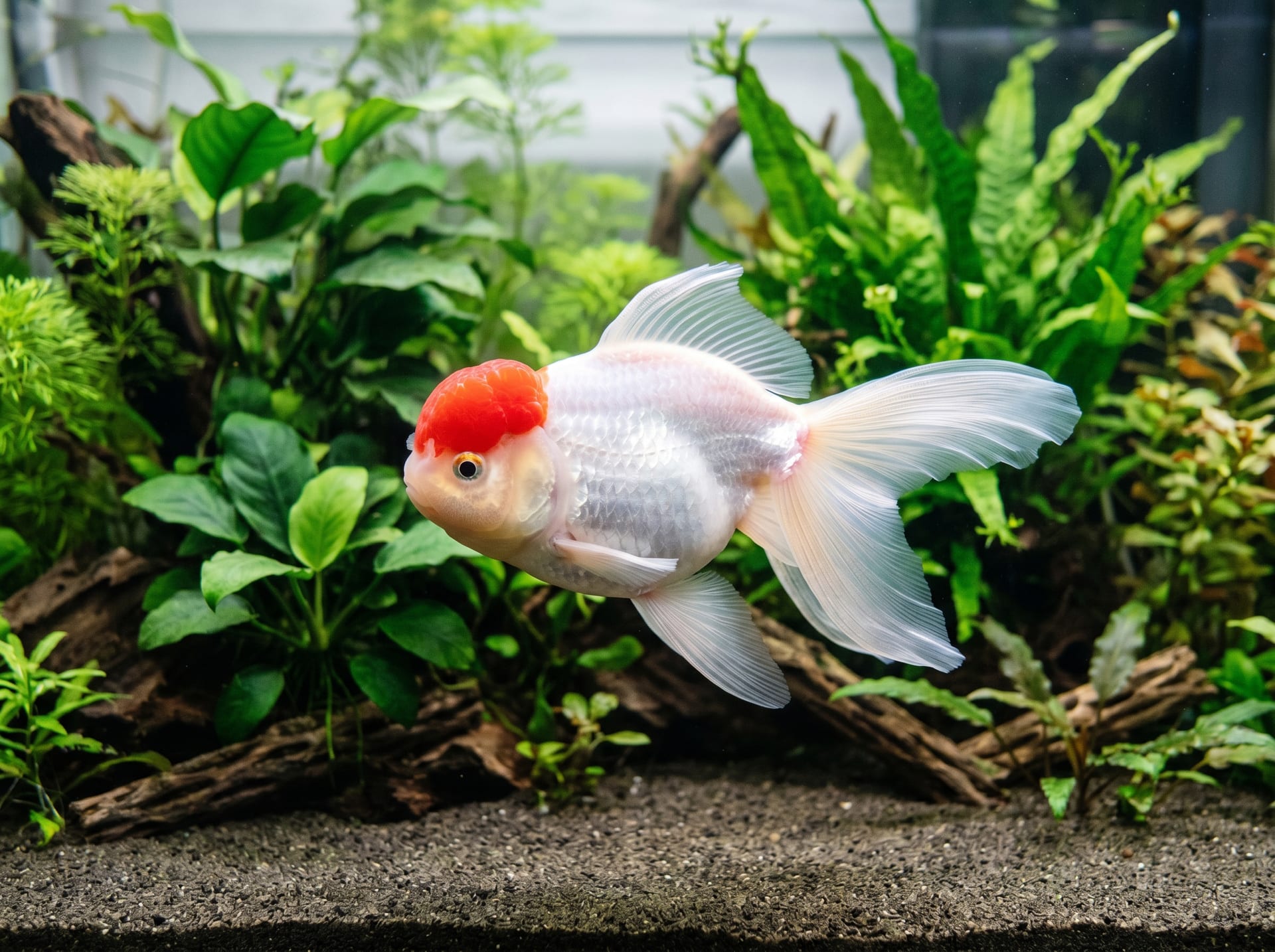
A tancho goldfish with a particularly tall, highly developed head wen. The round red wen on the crown of the white body evokes the red crown of a crane. The height of the wen and vibrancy of red determine its ornamental value.
A traditional variety from Izumo, Shimane. No dorsal fin with round body, beautiful when viewed from above.

Rare goldfish from Aichi prefecture. Ideal form has white body with red fins only (rokurin coloring). Strict show standards.
Carassius auratus var.
Rare goldfish with mosaic-like scale mutation. Mix of normal and transparent scales creates unique sparkling appearance. Chinese variety, rare in Japan.
Chinese goldfish considered the ancestor of ranchu. Large wen covering entire head resembles a lions mane. No dorsal fin.
Carassius auratus var.
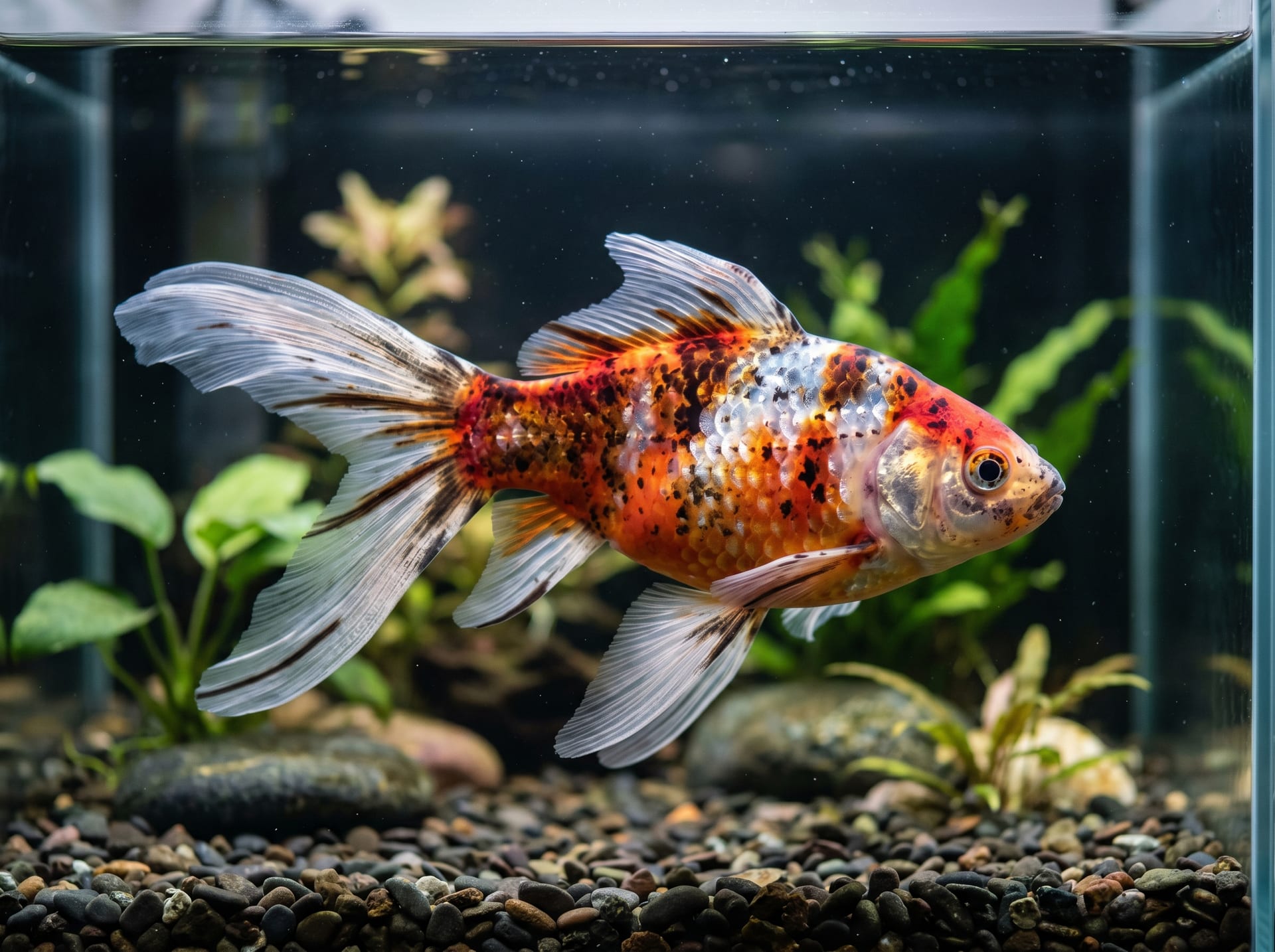
Slim-bodied goldfish with calico pattern. English-bred Shubunkin line. Unlike Bristol Shubunkin, has shorter fins and is hardier. Suitable for outdoor keeping.
A rare goldfish without tail fins. Round body wobbles uniquely when swimming.
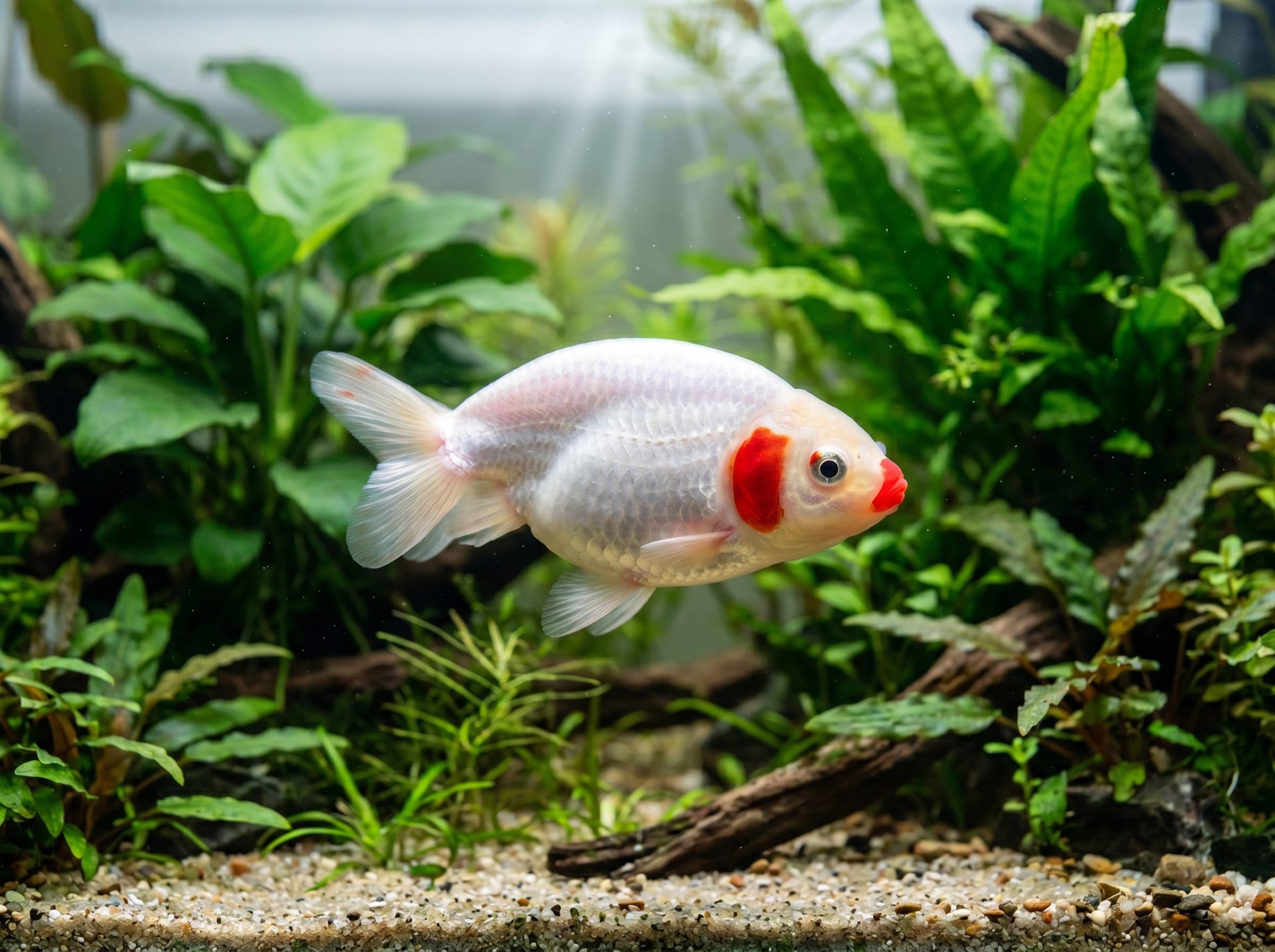
Designated natural monument from Izumo, Shimane. White body with red head is characteristic. Preserved by conservation societies.

Named for the lion-mane-like head growth (wen). Ryukin body shape with rich colors. Often called the king of goldfish.
Carassius auratus var.
A classical ranchu strain developed in Osaka during the Edo period. Has distinct body characteristics from Tokyo ranchu strains, once called a phantom breed. A rare variety preserved and passed down by enthusiasts.
Carassius auratus var.
Telescope goldfish with distinctive black-and-white panda coloration. Protruding eyes and round body with charming contrast. Color may fade to white with age.

Telescope goldfish in panda-like black and white. Chic monochrome beauty is popular. Many lose black coloring with age.

Distinctive raised pearl-like scales and ping-pong ball round body. Extremely popular for its cute appearance.

A goldfish with distinctive pearl-like raised scales. Attractive for round body and unique scales.
Carassius auratus var.
Rare variety with both pearlscale and pompom (nasal bouquet) features. Round body with sparkling scales and charming nasal growths. Bred in China.
A unique goldfish with pompom-like nasal growths. Traditional variety loved in China for centuries.

Carassius auratus var.
The 'King of Goldfish.' Tail-less with a round body and prominent head growth (wen). Active show culture — top specimens fetch hundreds of thousands of yen.
Carassius auratus var.
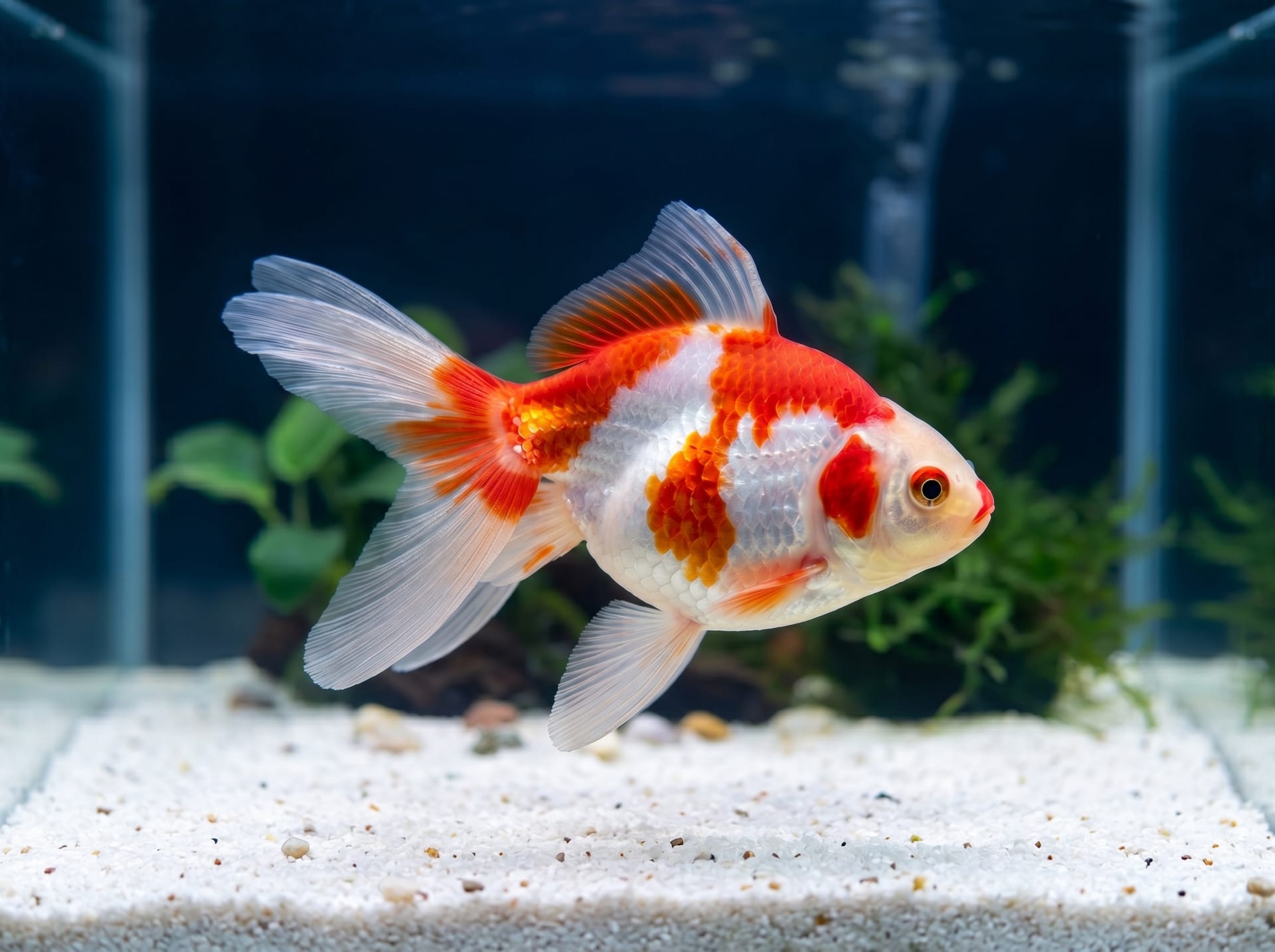
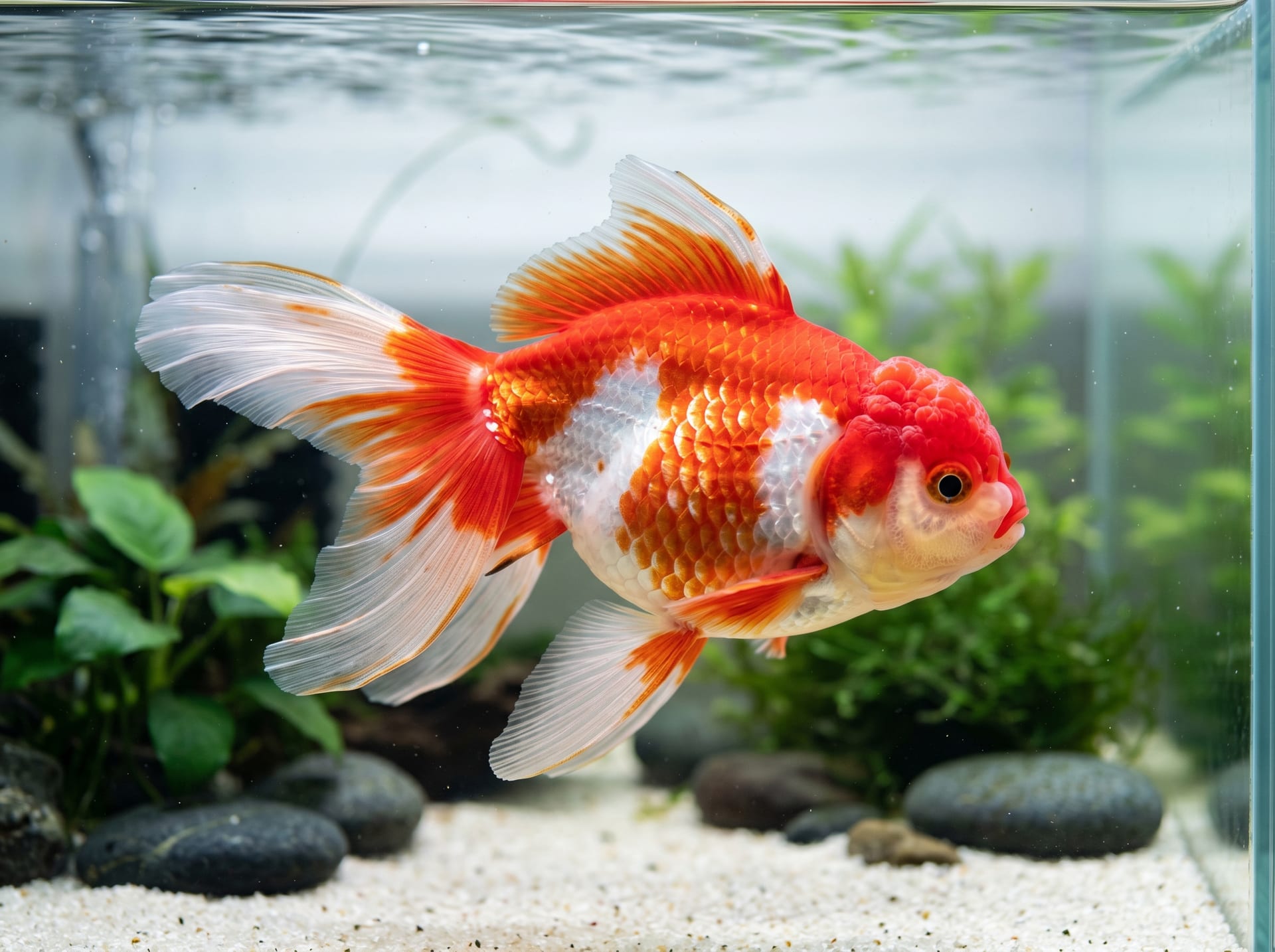
Beautiful Oranda with white body and striking red wen only. Named after red-crowned crane for its coloring. Clear red-white contrast increases value.
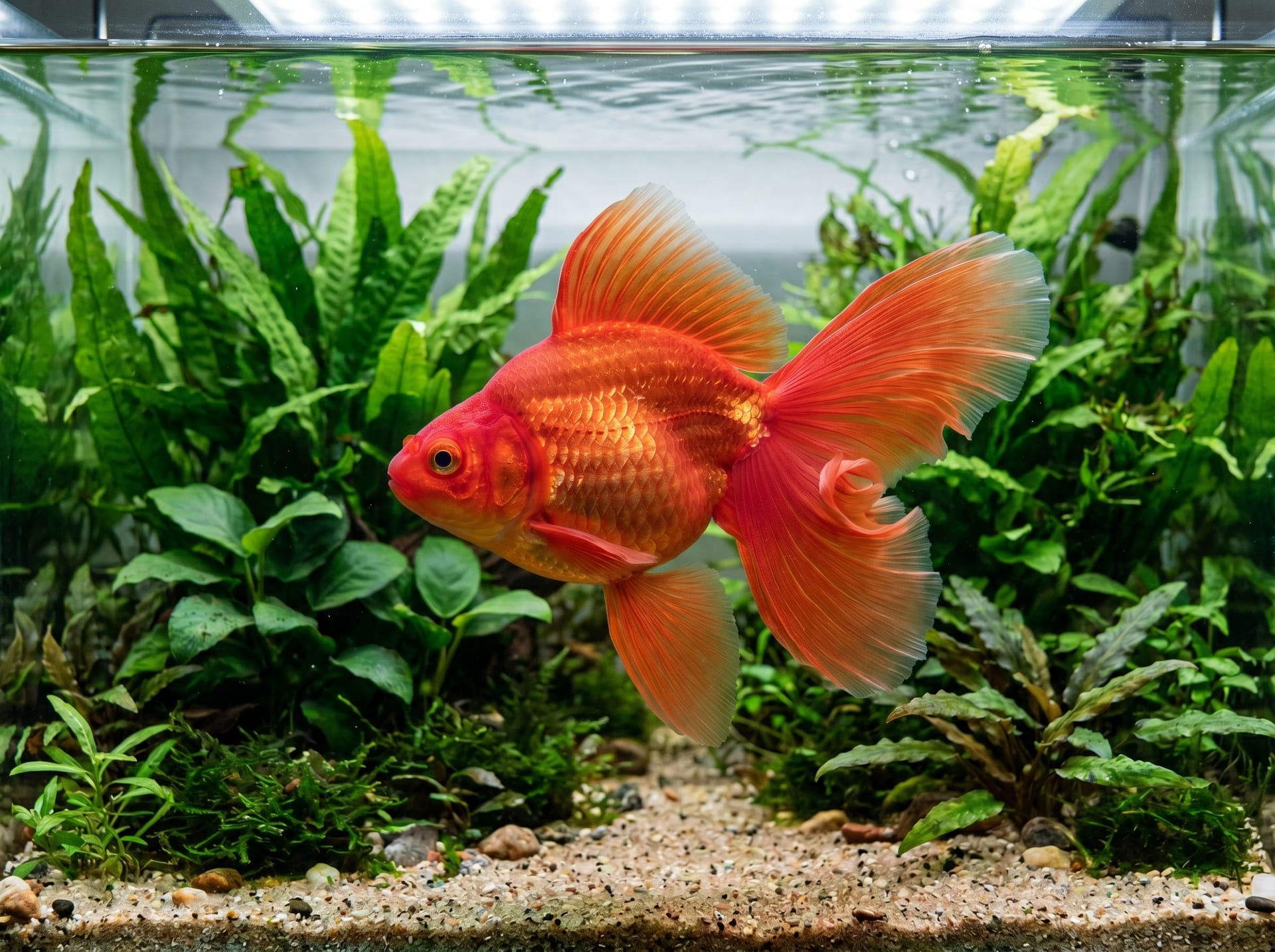
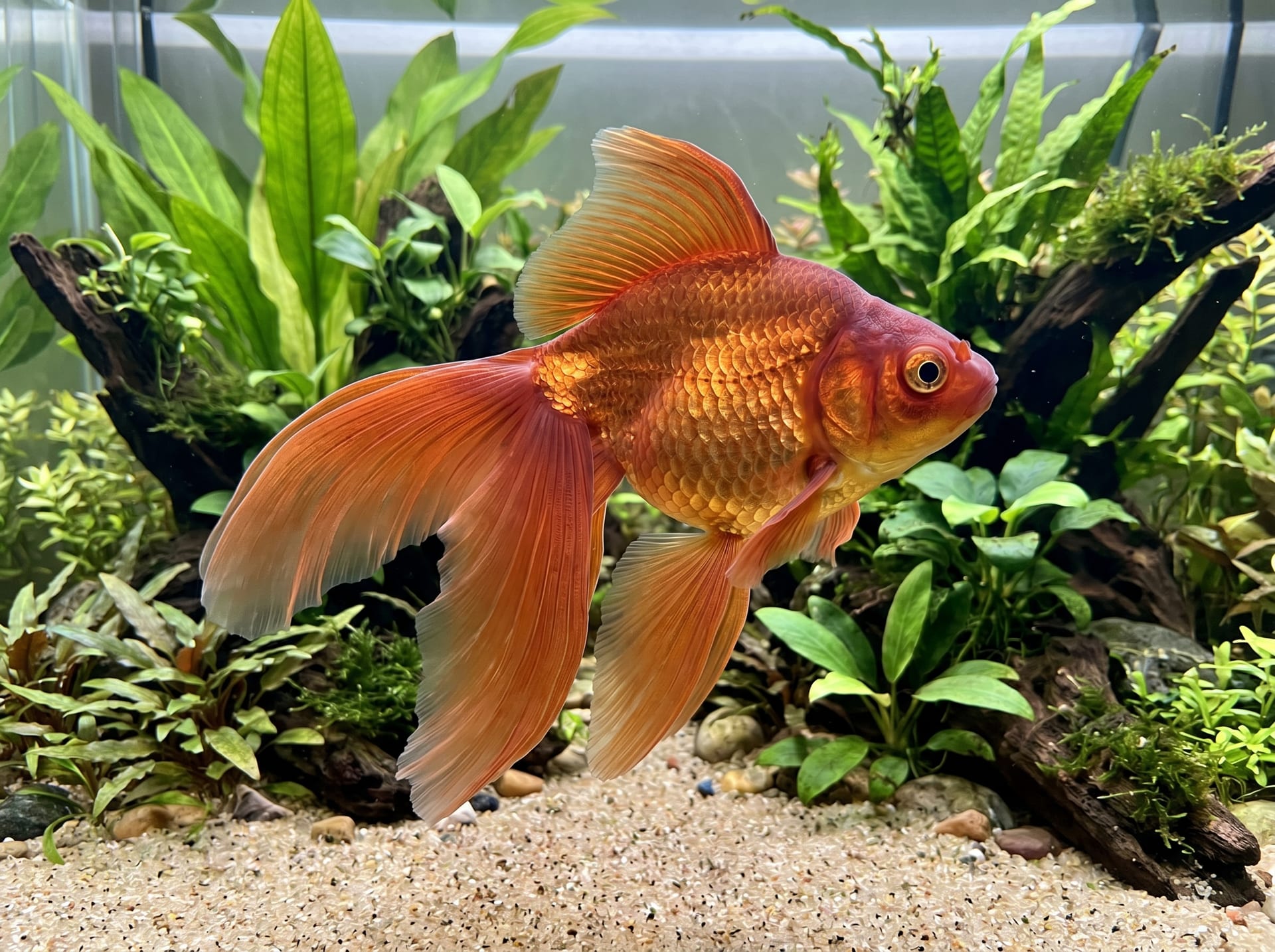
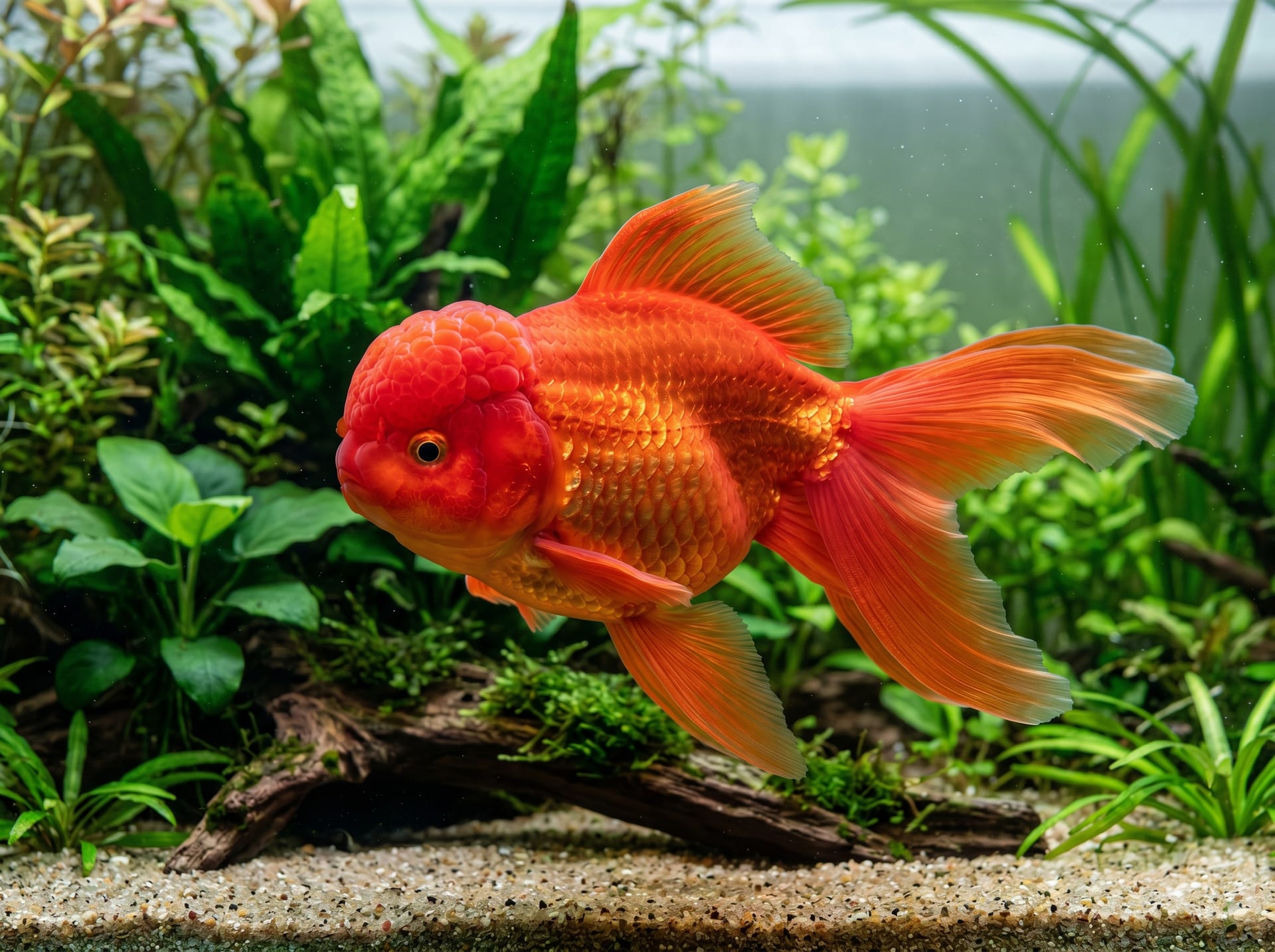
An Oranda with deep red whole body. Both wen development and deep crimson body are highlights.
Carassius auratus var. ranchu
A ranchu with vivid red patterns on a white base. The red-white color scheme is striking when viewed from above, making it popular in shows. Combines ranchu body beauty with red-white coloration.
Carassius auratus var.
Telescope Eye goldfish with beautiful red and white coloration. Protruding eyes add charm. Sarasa-patterned telescopes are relatively rare and popular with collectors.
Carassius auratus var.
A ryukin with an even rounder and shorter 'marute' body type than standard ryukin. The maximally rounded body shape like a ball is its greatest feature, highly regarded by enthusiasts. Slow swimmer but extremely high ornamental value.

Carassius auratus var.
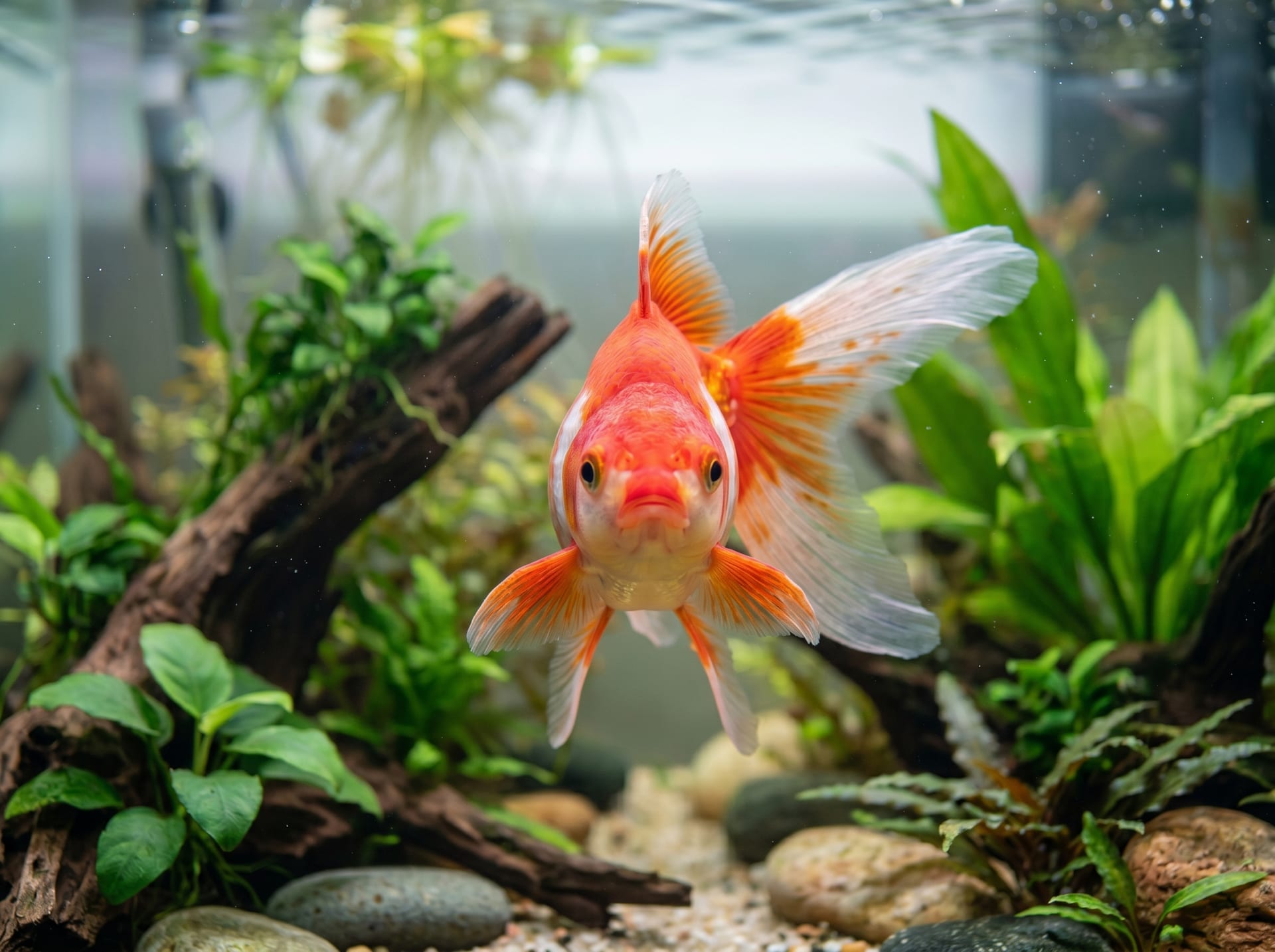
Classic goldfish with a round, humped body and elegant long fins. Rich variety in color — red, white, calico. Hardy and easy to keep — ideal for beginners.
Carassius auratus var.
A variety of azuma nishiki with transparent scales, featuring pale pink and white coloration reminiscent of cherry blossoms. The soft coloration unique to transparent scales evokes cherry blossom petals. An elegant breed combining the tricolor of azuma nishiki.
Relatively new variety with ranchu body and calico pattern. Named for its cherry blossom-like soft coloring.
Carassius auratus var.
Ranchu with transparent scales. Internal red shows through as pale pink, resembling cherry blossoms — hence the name. Delicate beauty popular with female enthusiasts.
Carassius auratus var.
A wakin with transparent scales, featuring pale pink and white cherry blossom coloring. The soft coloration unique to transparent scales is reminiscent of spring cherry blossoms. Has the hardy, easy-to-keep wakin body shape.
Carassius auratus var.
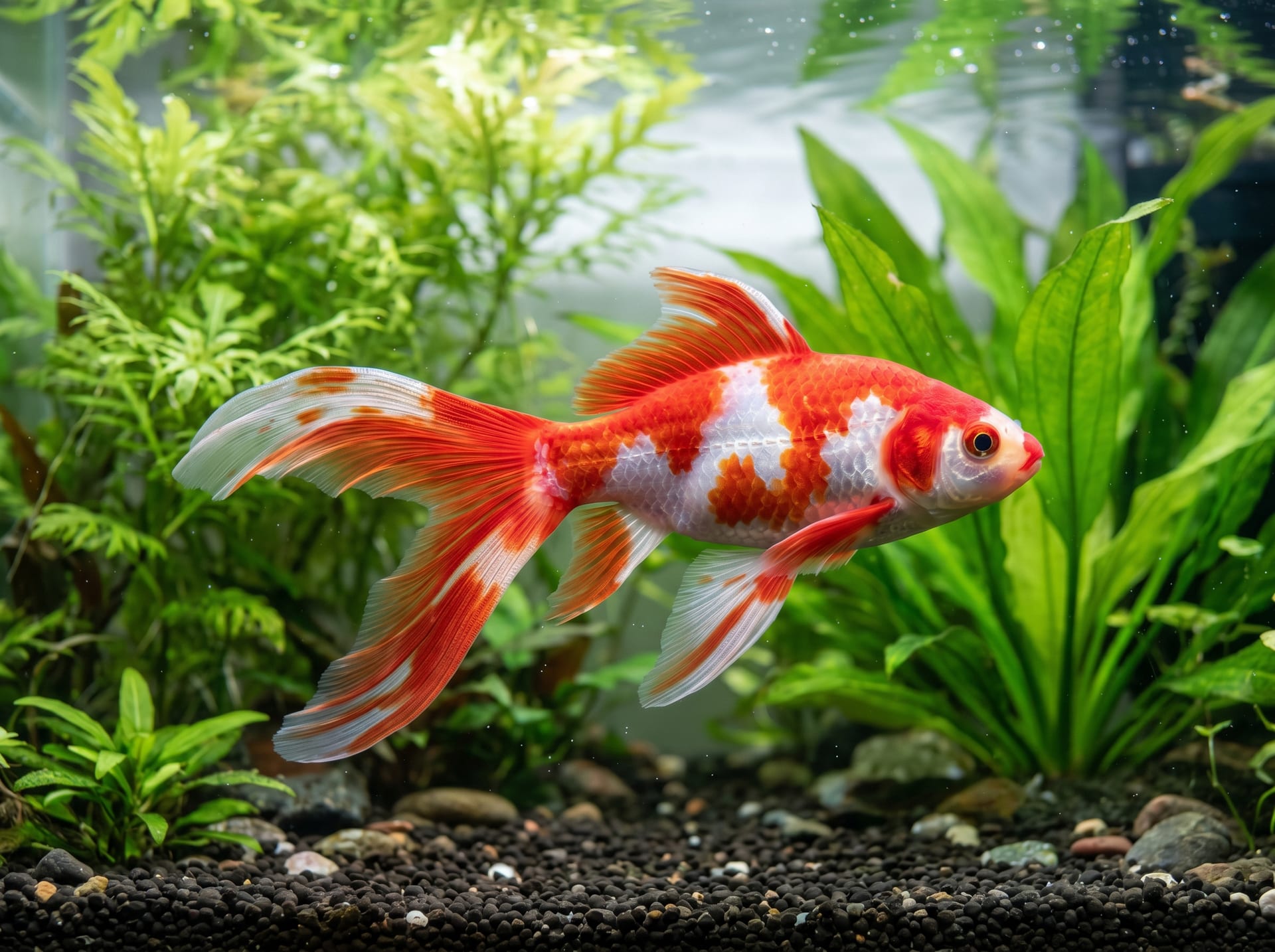
Comet with red-white sarasa pattern. Beautiful with long flowing tail. Hardy and suitable for outdoor keeping, popular in biotopes.
Carassius auratus var. ryukin
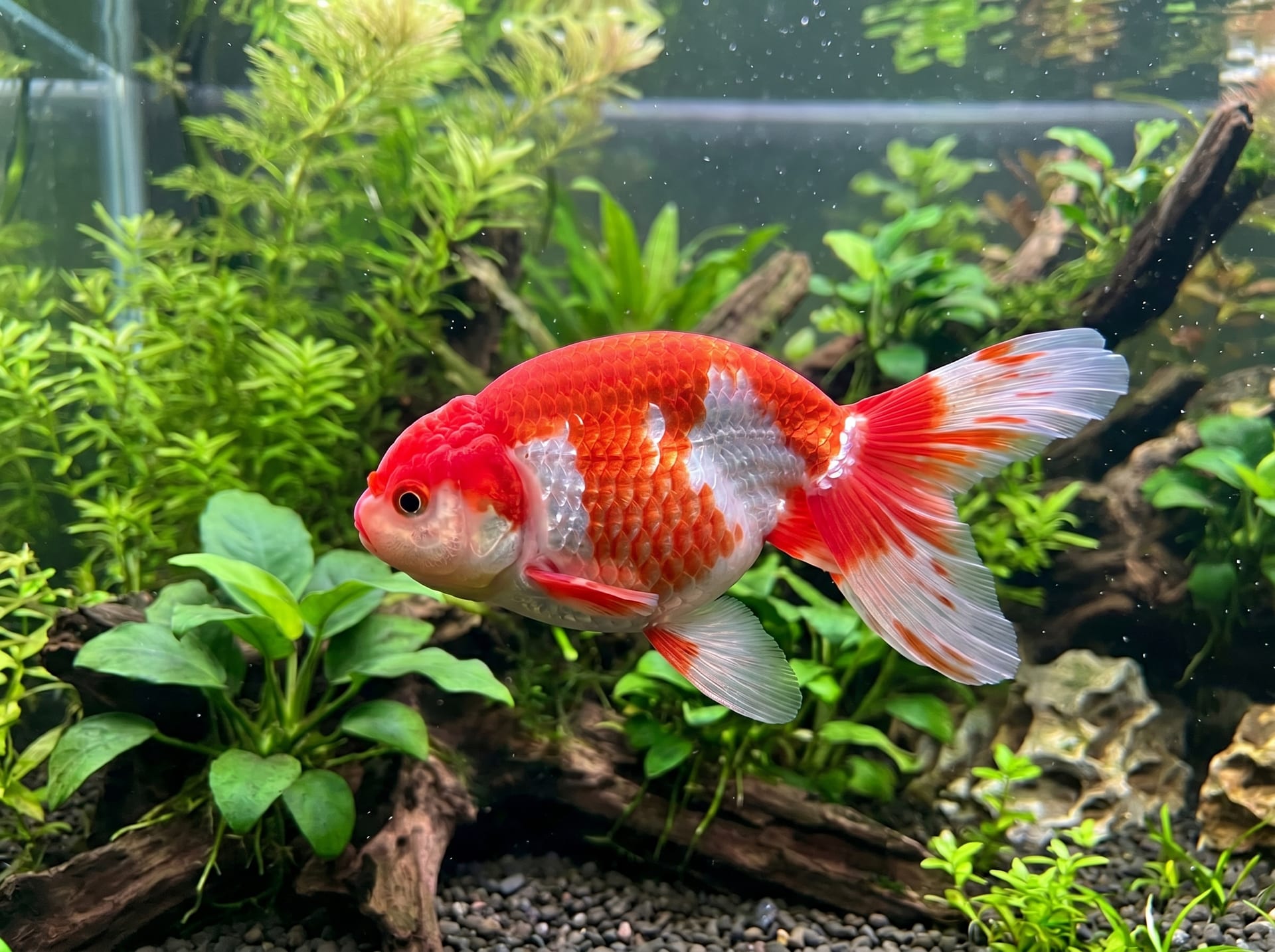
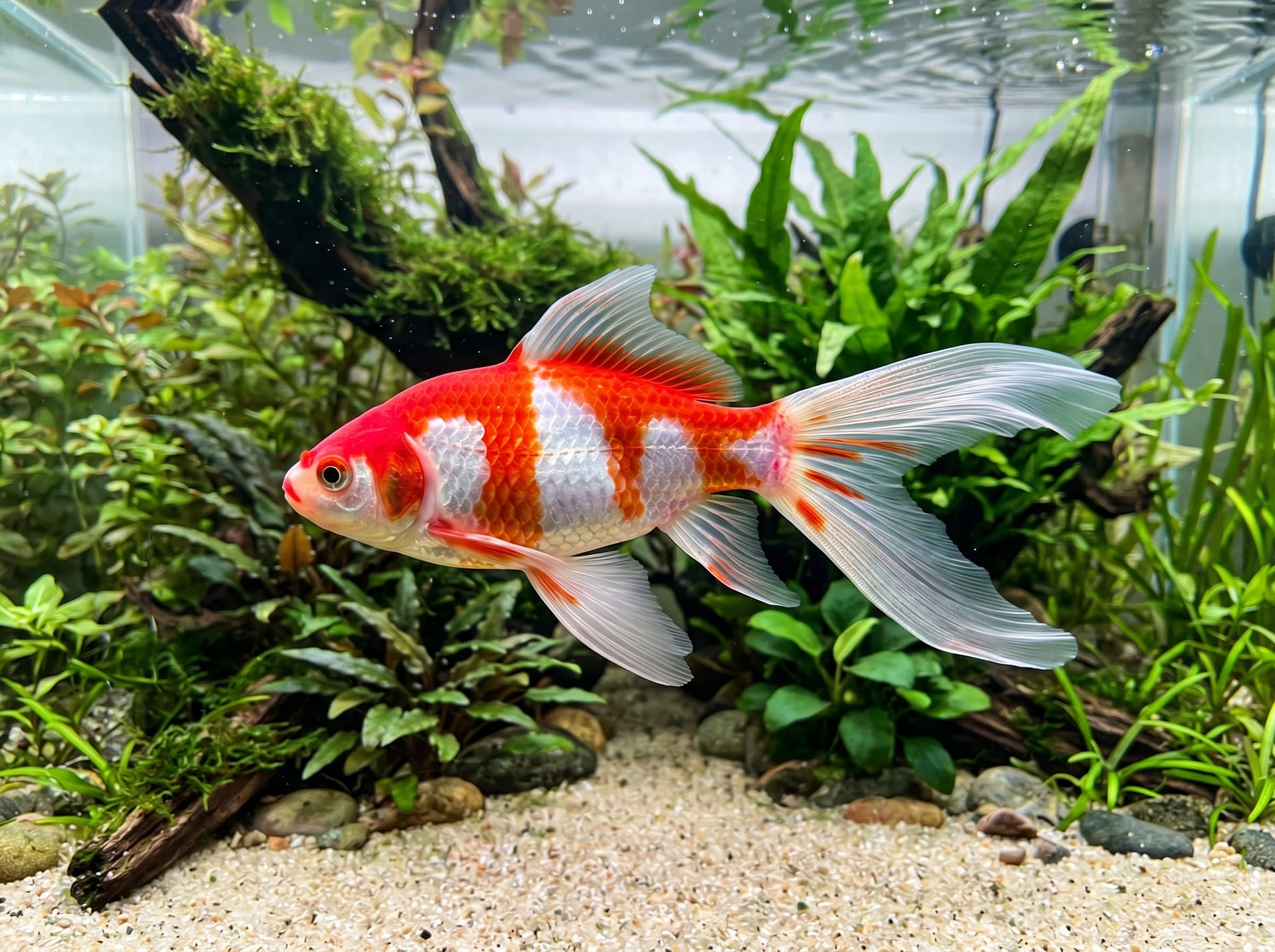
A ryukin with red patterns scattered on a white base, resembling sarasa koi coloring. The round body and long tail fins are beautiful. Widely popular as an ornamental goldfish.
A wakin with red-white sarasa pattern. Hardy traditional Japanese goldfish with active swimming.
Carassius auratus var.
A variety with particularly prominent transparent scale characteristics, said to have been developed and improved by goldfish breeder Shimura. Has such transparency that internal organs can be seen through the scales, possessing a unique beauty.
Short-tailed ryukin type. Round body with short tail creates cute balance. Even poorer swimmer than regular ryukin.

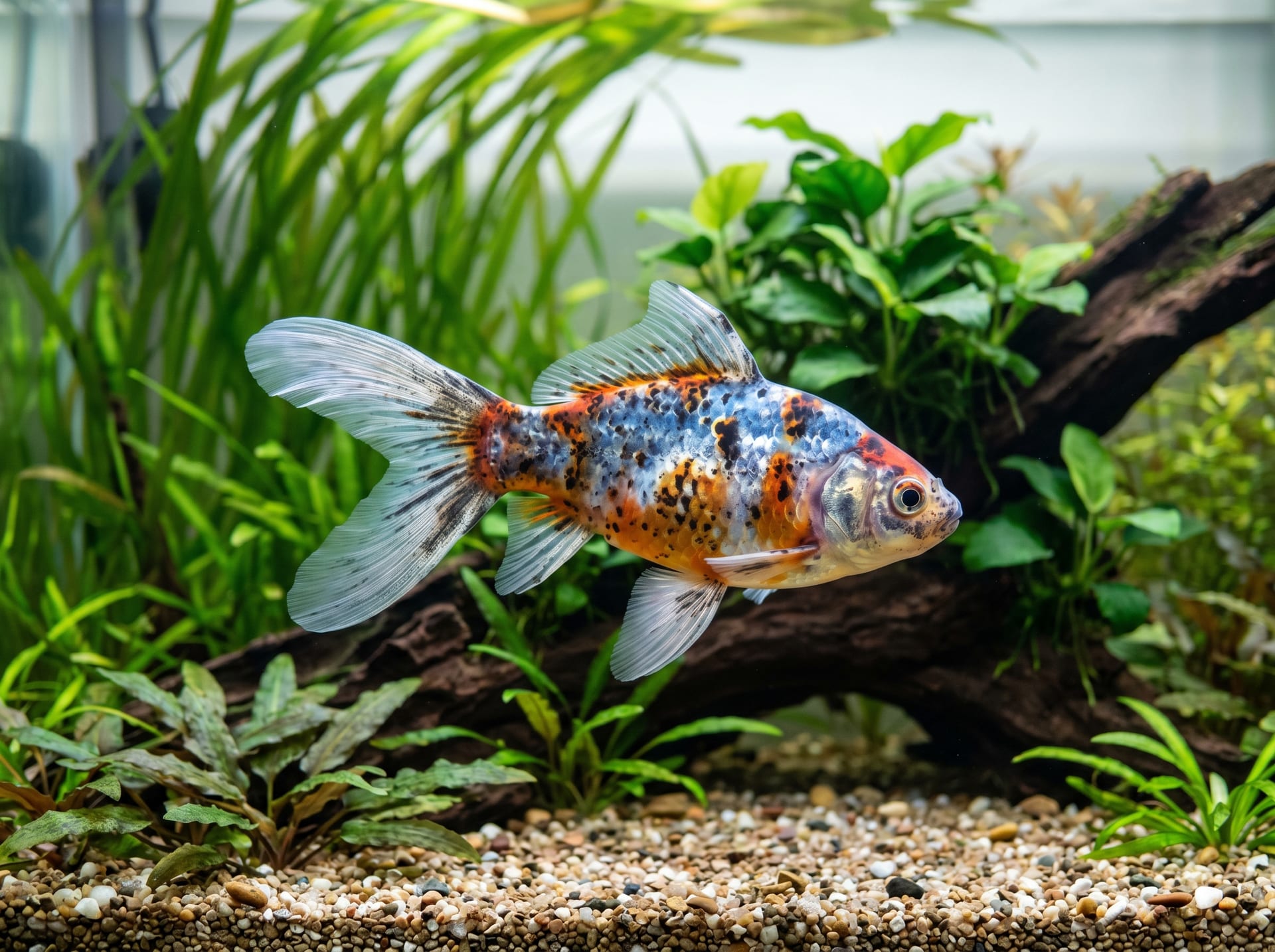
Long-bodied calico goldfish. Wakin type, hardy and active. Displays red, white, black, and blue colors. Perfect for outdoor ponds.

Ranchu body with ryukin-like long fins. Relatively new variety created in Showa era. Elegant appearance.
Carassius auratus var.
A goldfish with a rounded body and beautiful brocade-like coloration. Independently developed in Japan, featuring a combination of rounded body and gorgeous coloration. An elegant breed also appreciated in shows.

Originated in Yamagata. Ryukin body with wakin-like long tail. Hardy, suitable for outdoor ponds, and strong swimmer.
White body with only the head cap in red. Beautiful red-and-white like a Japanese crane. Color variant of Oranda.
An Oranda with white body and red head (tancho). Elegant coloring reminiscent of red-crowned crane.

Carassius auratus var.
Defined by large protruding eyes. Black Moor is the most popular variant. Poor eyesight requires smooth decor without sharp edges. Slow-moving and charming.
Carassius auratus var.
Ranchu with yellow-orange body and black tiger stripe pattern. Tiger pattern changes with growth and may disappear. Unique markings popular with collectors.

Natural monument from Kochi prefecture. Distinctive inverted tail fin is most beautiful viewed from above. Challenging to keep.
A natural monument from Kochi Prefecture. Called 'Queen of Goldfish' for its elegantly spreading large tail.
Carassius auratus var.
Oranda with red, white, and black tricolor pattern. Unlike calico, colors are clearly separated on opaque scales. Well-balanced tricolor specimens are stunning and command high prices.
Carassius auratus var.
A regional goldfish breed developed in the Tsugaru area of Aomori Prefecture. Features transparent scales and distinctive coloration, inherited as local culture. One of the breeds representing Japan's unique goldfish culture developed in Tohoku.
A beautiful goldfish with thin, long veil-like tail fins swaying elegantly. Show judging emphasizes tail length and form.

Closest to the original goldfish ancestor. Crucian carp body shape, hardy and strong swimmer. Suitable for outdoor ponds.
A breed from crossing Wakin and Ryukin. Combines Wakin's swimming ability and Ryukin's elegance.
Carassius auratus var.
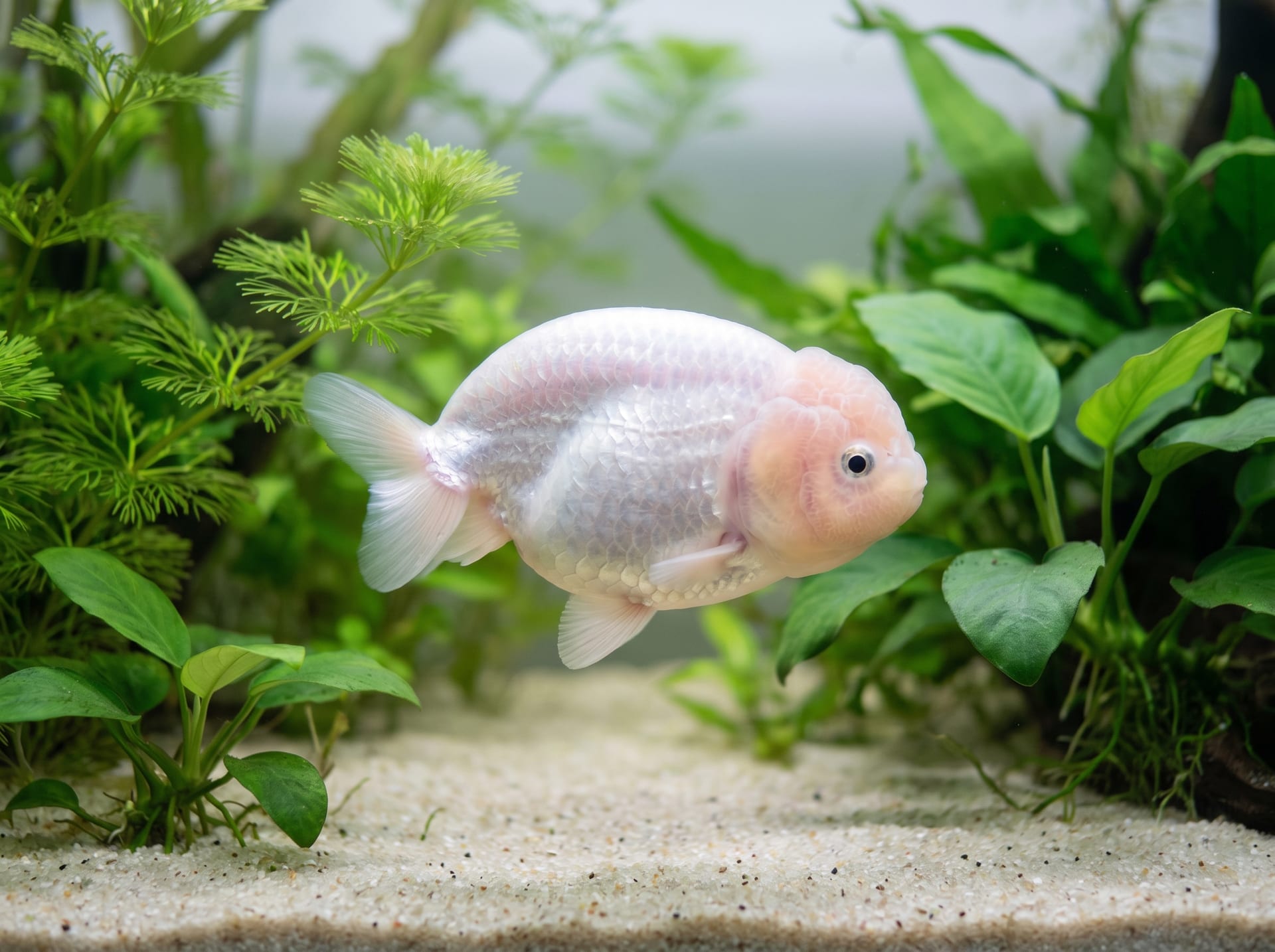
Pure white Ranchu. Snow-white body with developed wen creates beautiful contrast. Clean appearance is popular. Different lineage from red Ranchu.