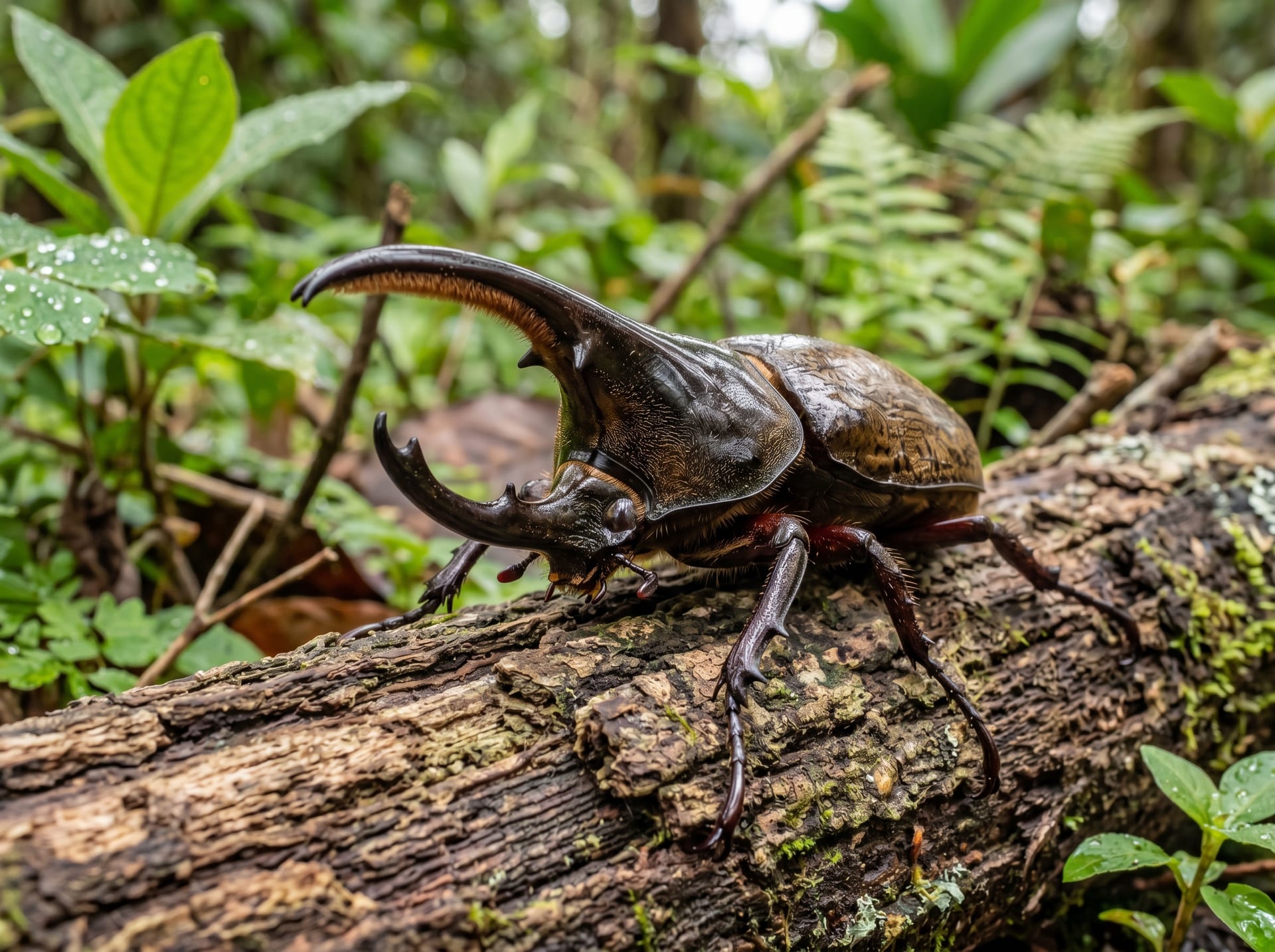
海格力斯长戟大兜虫
世界最大的甲虫。最大180mm的巨大角令人瞩目。原产于中南美洲。是甲虫爱好者梦寐以求的品种。成虫寿命6~12个月,幼虫1~2年。食物为昆虫果冻(成虫)和发酵垫材(幼虫)。
View 海格力斯长戟大兜虫 encyclopedia →成交手续费0%!2026年9月30日前注册,前 2 笔成交免佣金!
繁殖者 招募中!
在BreederDirect发布商品,直接销售给全国客户!
Br-choku承诺的 6 个透明度要点
刊登昆虫时,繁殖者会明示以下信息。我们保证成长阶段与繁殖配对的透明性。
- 阶段明示
- 代次明示
- 实物照片
- 繁殖单位
- 原产国
- 体长明示
查看全部26个品种
海格力斯长戟大兜虫的基本数据
- 饲养难度
- 适合中级者
- 寿命
- 成虫6-12个月,幼虫1-2年
- 体型
- 最大180毫米(含角)
- 适宜温度
- 20〜25℃
- 饮食
- 昆虫果冻(成虫),发酵垫料(幼虫)
- 幼虫期
- 1-2年。需要大型饲养容器
- 注意事项
- 饲养温度管理最为重要。用葡萄酒柜等设备管理
- 温度与湿度
- 饲养温度保持在20〜25℃。极不耐高温,避免28℃以上。体色随湿度在黄绿到黑之间变化。
- 饲养环境
- 特大饲养箱内铺20cm以上深的发酵垫材。幼虫消耗大量垫材,需持续补充。
- 饵料与喂食
- 成虫喜食昆虫果冻和香蕉。幼虫以发酵垫材为食,应提供优质垫材。
- 繁殖与产卵
- 在垫材中产卵,一只雌虫可产30〜50枚卵。羽化时不要翻动,以免破坏蛹室。
关于海格力斯长戟大兜虫
大力神甲虫是生活在中南美洲热带雨林中体型最大的甲虫,正如其学名"Dynastes hercules"所示,具有如同神话英雄般的存在感。雄虫头角与胸角交叉的独特形态是其他甲虫所没有的特征,最大个体的体长可超过180mm。体色个体差异很大,随着湿度的变化会呈现从黑色到黄褐色的变化,这也是其魅力所在。其性格相对温和,行动缓慢悠闲,也比较容易观察。饲养的最大乐趣在于观看从幼虫到完全变态的过程。在管理发酵垫材的同时,用1~2年时间饲养的幼虫化蛹,最后作为大型成虫羽化的那一刻,即使是经验丰富的饲养者也会感到感动。作为昆虫饲养中能够特别体验到成就感的品种,它一直深受众多爱好者的喜爱。
迎接海格力斯长戟大兜虫前需要了解的7件事
1所需的饲养盒尺寸
由于成虫雄虫体型较大,需要准备宽敞的饲养盒,如超大型防小蝇容器或容量60L以上的塑料盒。为了避免角受损,需要确保饲养盒有足够的高度。如果空间太小,甲虫容易逃脱或翻倒,风险会大大增加。
2幼虫饲养期间
幼虫期间非常长,为1〜2年,期间需要定期更换发酵垫料进行管理。如果温度过高,会导致发育加速,可能引起羽化不全,因此20〜25℃左右的稳定环境最为理想。适合能够享受从幼虫到成虫全过程的饲养者。
3幼虫的食物与管理
幼虫以发酵垫料为食而成长。使用高品质的二次发酵垫料,保持适度湿度以防干燥很重要。垫料更换以3〜4个月一次为目安,当虫粪增加时就是更换的信号。
4成虫的寿命与活动量
成虫的寿命约为羽化后6〜12个月,相对较短。由于是夜行性,在夜间活跃地活动,所以白天通常较为安静,观察最好在傍晚以后进行。羽化后会立即潜入垫料中等待后食(首次摄食),所以请耐心观察,不要着急。
5成虫的食物与营养管理
成虫的主食是昆虫果冻(高蛋白·高糖类型)。也有人给它们喂食水果(香蕉、桃子等),但这会使容器内容易变脏,需要注意卫生管理。饲料缺乏会导致寿命缩短,所以要时刻保持充足供应。
6温度和湿度的管理
赫拉克勒斯甲虫(成虫和幼虫)的适温约为20~25℃,日本的酷暑和冬季需要进行温度管理。湿度应保持在饲养土适度湿润的程度,避免过干和过湿。如果夏季持续高温(28℃以上),昆虫容易体力消耗。
7初期投资和维护费用
赫拉克勒斯甲虫稀有性高,即使是幼虫也要花费数千到数万日元,成虫(尤其是尺寸较大的个体)价格更高。还需要考虑饲养箱、发酵饲养土、果冻食和温度管理设备等初期投资。从幼虫开始精心培养能获得很大的满足感,但也需要考虑长期管理的成本。
海格力斯长戟大兜虫的常见问题
- Q.从幼虫开始饲养和从成虫开始哪个比较好?
- A.建议初学者从成虫开始。幼虫饲养需要1~2年的长期管理,饲养土的质量和温度管理的失败会直接影响个体的尺寸和生存率。先从成虫饲养熟悉后再尝试幼虫会比较顺利。
- Q.饲养一定需要空调吗?
- A.并非必须,但夏季高温(30℃以上)会增加昆虫体调不良或死亡的风险,因此强烈建议采取温度管理措施。虽然也可以用冷藏箱或冷却剂的方法,但从稳定性来看,空调管理最为可靠。
- Q.雄性和雌性可以一起饲养吗?
- A.除交配目的外,建议将其分开饲养在不同的饲养箱中。雄虫的大角可能会伤害雌虫,且频繁交配会导致雌虫体力消耗、寿命缩短。交配后应立即分开饲养。
- Q.与孩子一起饲养安全吗?
- A.赫拉克勒斯大兜虫不含毒液,咬合力也不强。在适当监督下,孩子可以接触它。不过,它的大角相当脆弱,处理不当容易折断,所以成人应先教好孩子的正确持握方法,再让孩子接触。
- Q.产卵需要什么样的环境?
- A.为已交配的雌虫准备一个铺有发酵垫料(深度至少20cm)的饲养箱。垫料应保持适当湿度并提供足够深度供雌虫潜入。产卵后取出雌虫,垫料保持原状不翻动,静置等待孵化。
适合饲养海格力斯长戟大兜虫的实用工具
在图鉴中详细了解海格力斯长戟大兜虫
查看海格力斯长戟大兜虫的图鉴条目 →
收录饲养难度、寿命、体长、食性等基础数据。