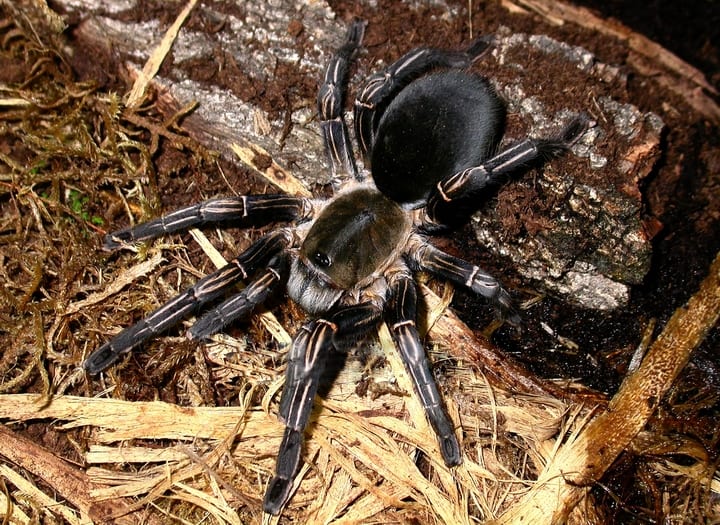
 © Www.universoaracnido.com / CC BY-SA 2.5
泰国斑马地蛛
The Thai Zebra Tarantula is a burrowing species native to Southeast Asia, easily recognized by the bold white stripes running down its black legs and the zigzag pattern across its abdomen. Found in tropical forests as well as bamboo groves and rice paddies, it digs deep, vertical burrows and spends its days hidden underground, emerging near the entrance at night to ambush prey. Adults reach a body length of about 5 to 6 cm with a leg span of roughly 12 to 13 cm, and their striking contrast becomes more pronounced as they mature. Because it spends much of its life out of sight and needs a deep substrate setup to burrow properly, this species is generally recommended for keepers with some prior tarantula-keeping experience rather than absolute beginners.
View 泰国斑马地蛛 encyclopedia →成交手续费0%!2026年9月30日前注册,前 2 笔成交免佣金!
繁殖者 招募中!
在BreederDirect发布商品,直接销售给全国客户!
Br-choku承诺的 5 个透明度要点
刊登奇虫时,繁殖者会明示以下信息。我们保证成长阶段与繁殖配对的透明性。
- 实物照片
- 繁殖单位
- 代次明示
- 体长明示
- 原产国
查看全部249个种类
奇虫分类正在招募认证繁殖者
繁殖者正在陆续注册,即将上架。设置上架通知,不错过新商品。
「接收上架通知」需免费注册会员即可设置。当有符合您保存条件的新商品上架时,我们会通过邮件和站内通知提醒您。
已注册的繁殖者(抢先看)
关于泰国斑马地蛛
The Thai Zebra Tarantula is a burrowing species from Southeast Asia with bold black-and-white striped legs. This intermediate-level species digs deep vertical burrows and grows to a body length of 5-6 cm with a 12-13 cm leg span.
迎接泰国斑马地蛛前需要了解的7件事
1A Deep Burrowing Species
The Thai Zebra Tarantula digs deep, vertical burrows and spends most of its life underground. Its enclosure needs a substrate layer deep enough for digging, such as coco fiber or a soil-based mix. You may not see it often, but staying hidden below ground is simply natural behavior for this species.
2Nocturnal and Reclusive
Activity centers on nighttime hours, and during the day it typically stays hidden inside its burrow. If you want to observe it, quietly checking near the burrow entrance after dark works best. Avoid digging it out or disturbing it frequently.
3Suited to Intermediate Keepers
This species carries an intermediate difficulty rating. Because it requires burrow-friendly housing and confident handling of its quick movements, it suits keepers who already have some basic tarantula-keeping experience.
4Fast-Moving and Alert
This tarantula is alert and quick to react. When startled, it may dart deep into its burrow or take a defensive posture. Handling is best avoided — enjoying it as an observation-focused pet is the safer approach.
5Requires Humidity Management
Since this species comes from tropical forests and rice paddy areas, maintaining appropriate humidity in the enclosure is essential. Before bringing one home, plan how you'll avoid both dryness and excess moisture, such as placing a water dish and keeping the substrate lightly moist.
6Handle Molting Periods with Care
Like all tarantulas, this species molts periodically as it grows. Appetite and activity often drop around molting, so keeping the enclosure undisturbed and quiet during this time is a basic part of good care.
7Feeding and Enclosure Hygiene
Feeding typically consists of insects, and leftover prey should be removed promptly to keep the enclosure clean. Adjust the amount and frequency of feeding based on the individual's condition and molting cycle.
泰国斑马地蛛的常见问题
- Q.Can beginners keep a Thai Zebra Tarantula?
- A.This species is rated as intermediate difficulty, requiring burrow-friendly housing and comfort handling its quick movements. Having some prior tarantula-keeping experience makes it easier to care for confidently.
- Q.How large does it grow as an adult?
- A.Adults reach a body length of about 5 to 6 cm, with a leg span of roughly 12 to 13 cm. They start out small as juveniles, and the striped pattern becomes more distinct as they mature.
- Q.Will I often get to see it out in the open?
- A.Since it's a burrowing species, it usually stays hidden underground during the day, so sightings are limited. It sometimes comes near the burrow entrance at night, which is the best time to try observing it.
- Q.Can I handle it directly?
- A.Because this species is alert and moves quickly, handling is generally not recommended. Enjoying it through observation rather than direct contact is the safer approach.
- Q.Is the Thai Zebra Tarantula listed under CITES?
- A.The Thai Zebra Tarantula is not listed under CITES.
在图鉴中详细了解泰国斑马地蛛
查看泰国斑马地蛛的图鉴条目 →
收录饲养难度、寿命、体长、食性等基础数据。