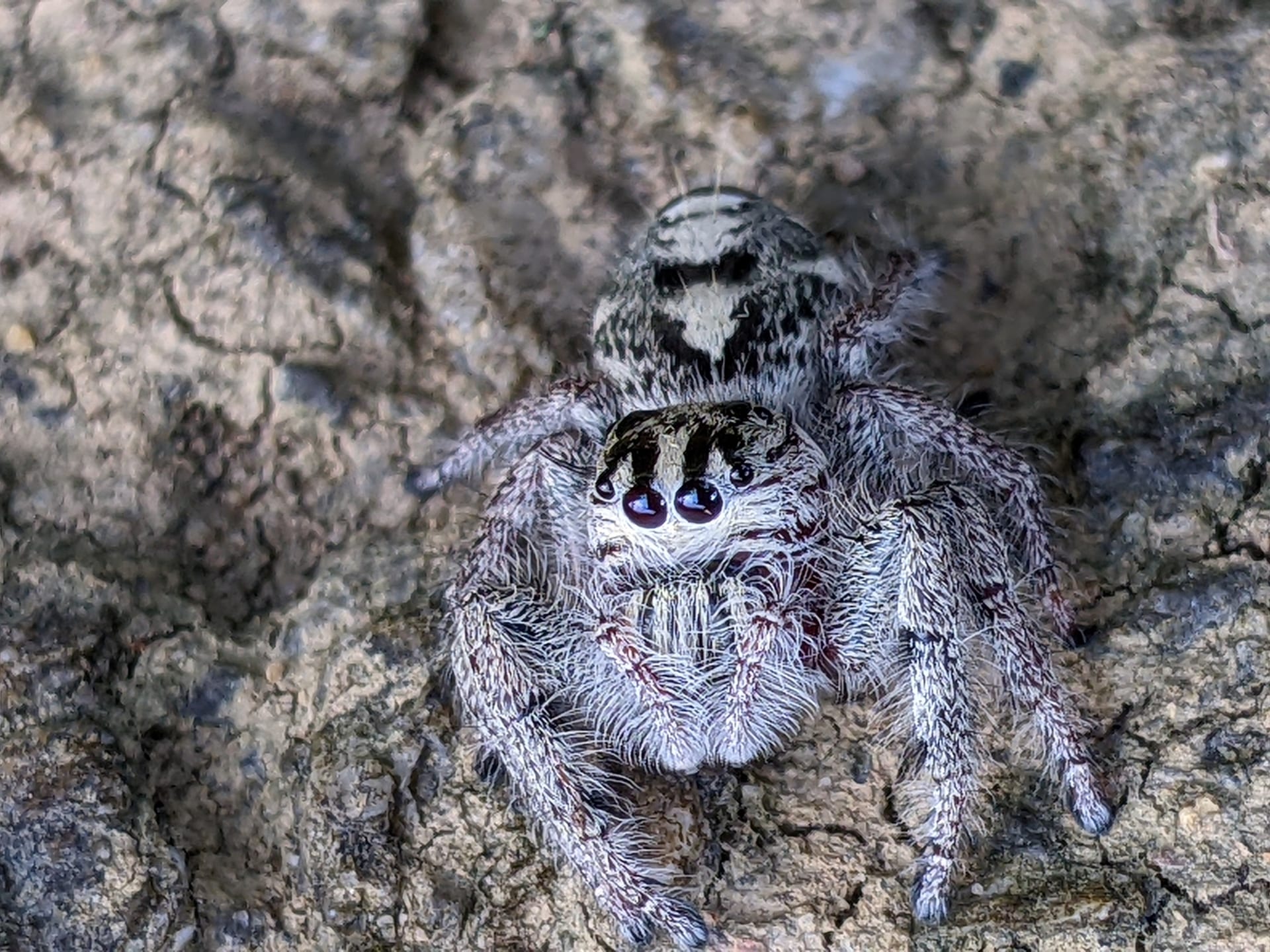
 © Doreen / CC BY 4.0
重型跳蛛(Hyllus diardi)
The Heavy Jumping Spider is a large jumping spider widely distributed across Southeast Asia. Its brownish-gray body is scattered with metallic yellow hairs that shift in appearance with the light, giving it a striking look. Females carry a horn-like tuft of black hair beneath their posterior median eyes, making it easy to tell them apart from males. With its large eyes constantly surveying its surroundings and quick, precise jumps when hunting, it has real presence and personality among jumping spiders. It thrives in hot, humid conditions and needs more careful humidity management than other species in its genus, which is why it's considered suitable for intermediate keepers. This species rewards anyone willing to stay on top of humidity control.
View 重型跳蛛(Hyllus diardi) encyclopedia →成交手续费0%!2026年9月30日前注册,前 2 笔成交免佣金!
繁殖者 招募中!
在BreederDirect发布商品,直接销售给全国客户!
Br-choku承诺的 5 个透明度要点
刊登奇虫时,繁殖者会明示以下信息。我们保证成长阶段与繁殖配对的透明性。
- 实物照片
- 繁殖单位
- 代次明示
- 体长明示
- 原产国
查看全部249个种类
奇虫分类正在招募认证繁殖者
繁殖者正在陆续注册,即将上架。设置上架通知,不错过新商品。
「接收上架通知」需免费注册会员即可设置。当有符合您保存条件的新商品上架时,我们会通过邮件和站内通知提醒您。
已注册的繁殖者(抢先看)
关于重型跳蛛(Hyllus diardi)
A large jumping spider from Southeast Asia with metallic yellow hairs on a brownish-gray body. It favors hot, humid conditions and is considered suitable for intermediate keepers.
迎接重型跳蛛(Hyllus diardi)前需要了解的7件事
1High Humidity Is Essential
This species needs more humidity than other spiders in its genus. A cage that's allowed to dry out can cause it to lose condition, so set up a way to maintain humidity, such as regular misting, before bringing one home.
2Keeping It Warm
Since this species prefers warm, humid conditions, heating support is essential during cooler seasons. Plan a cage setup that lets you manage temperature and humidity together for peace of mind.
3A Striking Appearance
Its brownish-gray body is dotted with metallic yellow hairs that catch the light differently depending on the angle. Females also have a distinctive horn-like tuft of black hair below their posterior median eyes, rewarding close observation.
4Quick Movement and Sharp Eyesight
Like other jumping spiders, it has large eyes that let it carefully watch its surroundings, and it moves quickly using its strong jumping ability. It often reacts to its keeper's movements, making daily observation enjoyable.
5Keep Individually
Jumping spiders are generally territorial and solitary, so keeping multiple individuals in the same enclosure risks cannibalism. Provide one enclosure per spider.
6Feeding Frequency and Diet
Live prey such as crickets forms the core of its diet. Adjust prey size and feeding frequency to the individual's size and appetite, and remove any uneaten prey from the enclosure promptly.
7Prepare the Enclosure First
To avoid scrambling after bringing your spider home, prepare the enclosure in advance with good ventilation, humidity retention, climbing surfaces, and a hiding spot. Installing a thermometer and hygrometer also makes ongoing care easier.
重型跳蛛(Hyllus diardi)的常见问题
- Q.Is the Heavy Jumping Spider listed under CITES?
- A.No, the Heavy Jumping Spider is not listed under CITES.
- Q.How does it differ from other spiders in its genus?
- A.Some related species have a similarly striking appearance, but the Heavy Jumping Spider stands out for needing hotter, more humid conditions and more careful humidity management than others in its genus.
- Q.How can you tell males and females apart?
- A.Females have a distinctive horn-like tuft of black hair beneath their posterior median eyes, which can be used to distinguish them from males.
- Q.How large does it get as an adult?
- A.Reference data lists a body length of about 1.2cm, though specialty stores sometimes list it as about 2cm when including the legs in the overall size.
- Q.Can a first-time exotic pet keeper care for one?
- A.The Heavy Jumping Spider is considered suitable for intermediate keepers due to its demanding humidity needs. It's best to gain experience with an easier species first before taking this one on.
在图鉴中详细了解重型跳蛛(Hyllus diardi)
查看重型跳蛛(Hyllus diardi)的图鉴条目 →
收录饲养难度、寿命、体长、食性等基础数据。