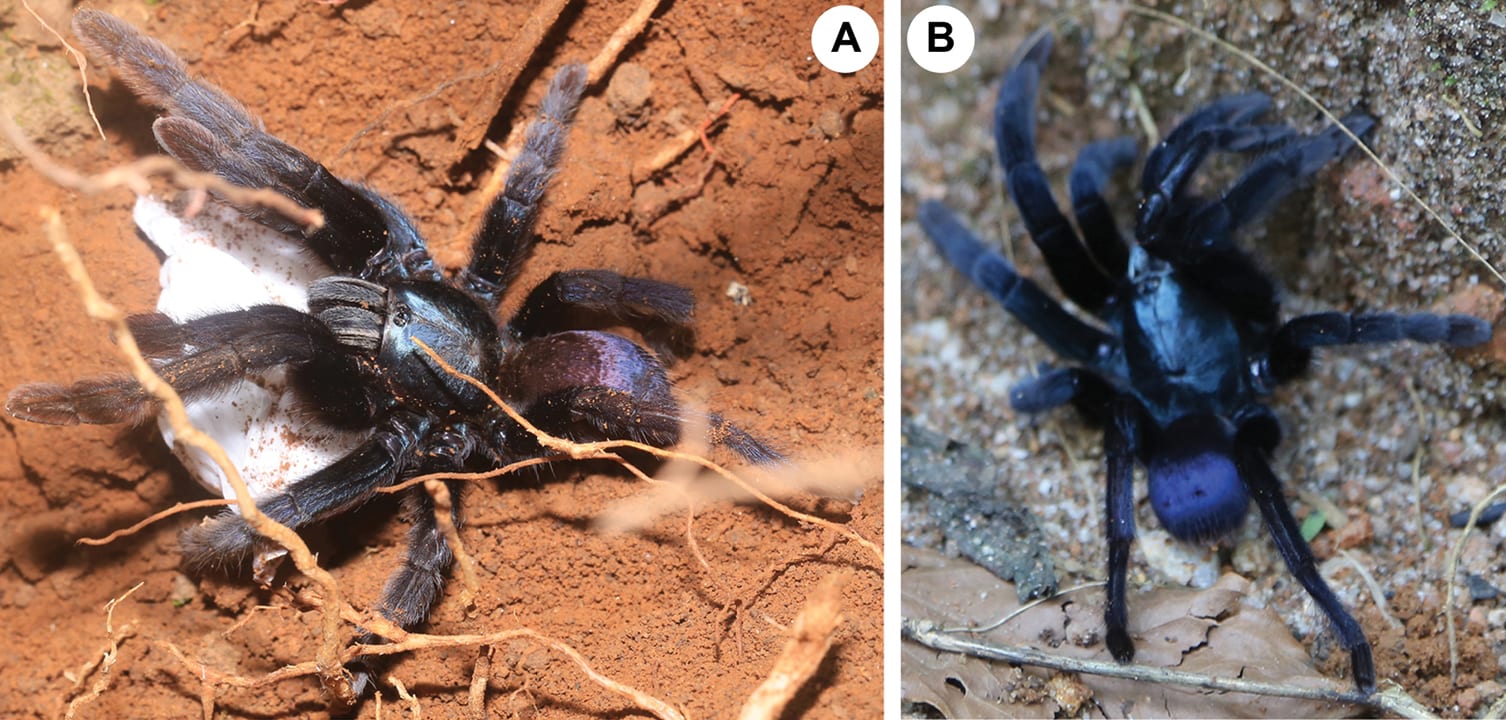
 © Jimmy Paul / Sankaran PM, Sebastian PA (2018) ZooKeys 749: 81-86 / CC BY 4.0
印度孔雀
The Indian Peacock Tarantula is a burrowing species found only in the Western Ghats mountains of India. Within this single species, two color forms occur — a striking blue form and a pinkish form — and it's the vivid blue individuals that gave rise to the "Peacock" name in the trade. These spiders dig burrows and spend much of their time tucked out of sight, but they can react with startling speed and defensive posturing when disturbed. Unlike New World tarantulas, they lack urticating hairs, so handling calls for real experience and a cautious approach — this is very much a keeper's tarantula rather than a beginner's.
View 印度孔雀 encyclopedia →成交手续费0%!2026年9月30日前注册,前 2 笔成交免佣金!
繁殖者 招募中!
在BreederDirect发布商品,直接销售给全国客户!
Br-choku承诺的 5 个透明度要点
刊登奇虫时,繁殖者会明示以下信息。我们保证成长阶段与繁殖配对的透明性。
- 实物照片
- 繁殖单位
- 代次明示
- 体长明示
- 原产国
查看全部249个种类
奇虫分类正在招募认证繁殖者
繁殖者正在陆续注册,即将上架。设置上架通知,不错过新商品。
「接收上架通知」需免费注册会员即可设置。当有符合您保存条件的新商品上架时,我们会通过邮件和站内通知提醒您。
已注册的繁殖者(抢先看)
关于印度孔雀
Learn about the Indian Peacock Tarantula, a burrowing species native to India's Western Ghats — its traits, temperament, and what to know before bringing one home.
迎接印度孔雀前需要了解的7件事
1Burrowing habit
This species is a fossorial tarantula that digs its own burrow in the substrate. It spends much of its time hidden inside that burrow or tucked away out of sight, so you won't see it moving around often.
2Warm, humid habitat needs
Its native range in the Western Ghats has a warm, humid climate. Setting up an enclosure that reflects these conditions, and avoiding excessive dryness, helps the spider settle in.
3No urticating hairs
Unlike New World tarantulas, this species has no urticating hairs, so it relies on more direct defenses — rearing up or bolting quickly when threatened. Handle it calmly and avoid startling it.
4Skittish, fast reactions
It's sensitive to sound and vibration, reacting to disturbance with sudden bursts of speed — either bolting for cover or adopting a defensive posture. A quiet setup with minimal disturbance suits it best.
5Two color morphs
Within this one species, both a more blue form and a pinkish form are known to occur. Which coloration an individual shows can vary with age and by individual.
6Why it's advanced-level
This species is rated for experienced keepers, since handling its quick movements and managing its enclosure safely takes some prior tarantula-keeping experience.
7Escape-proofing prep
Because it can move very quickly, make sure the enclosure lid and any gaps are secure, and stay alert to the risk of escape during feeding or maintenance. Checking where the spider is before opening the enclosure is a good safety habit.
印度孔雀的常见问题
- Q.What is the Indian Peacock Tarantula's temperament like?
- A.It's sensitive to noise and vibration, and can react to being startled with a quick dash for cover or a defensive posture. Most of the time, though, it stays quietly tucked away in its burrow or hiding spot.
- Q.Is this tarantula suitable for beginners?
- A.Its care level is rated for advanced keepers, so it's best suited to those with prior tarantula-keeping experience. It's a good idea to be comfortable handling fast-moving species before bringing one home.
- Q.Does it have urticating hairs?
- A.No — unlike New World tarantulas, this species doesn't have urticating hairs. When alarmed, it responds instead by rearing up or fleeing quickly.
- Q.Will I get the blue or the pink color form?
- A.Both a bluer form and a pinkish form occur within this species, and which one an individual displays depends on the animal and its growth stage. It's worth checking the specific individual's appearance at the time of purchase.
- Q.What kind of setup does it need?
- A.Since it's a burrowing species, the basic setup calls for substrate deep enough for it to dig into properly. Given its origin in the warm, humid Western Ghats, an enclosure that maintains similar warmth and humidity works well.
在图鉴中详细了解印度孔雀
查看印度孔雀的图鉴条目 →
收录饲养难度、寿命、体长、食性等基础数据。