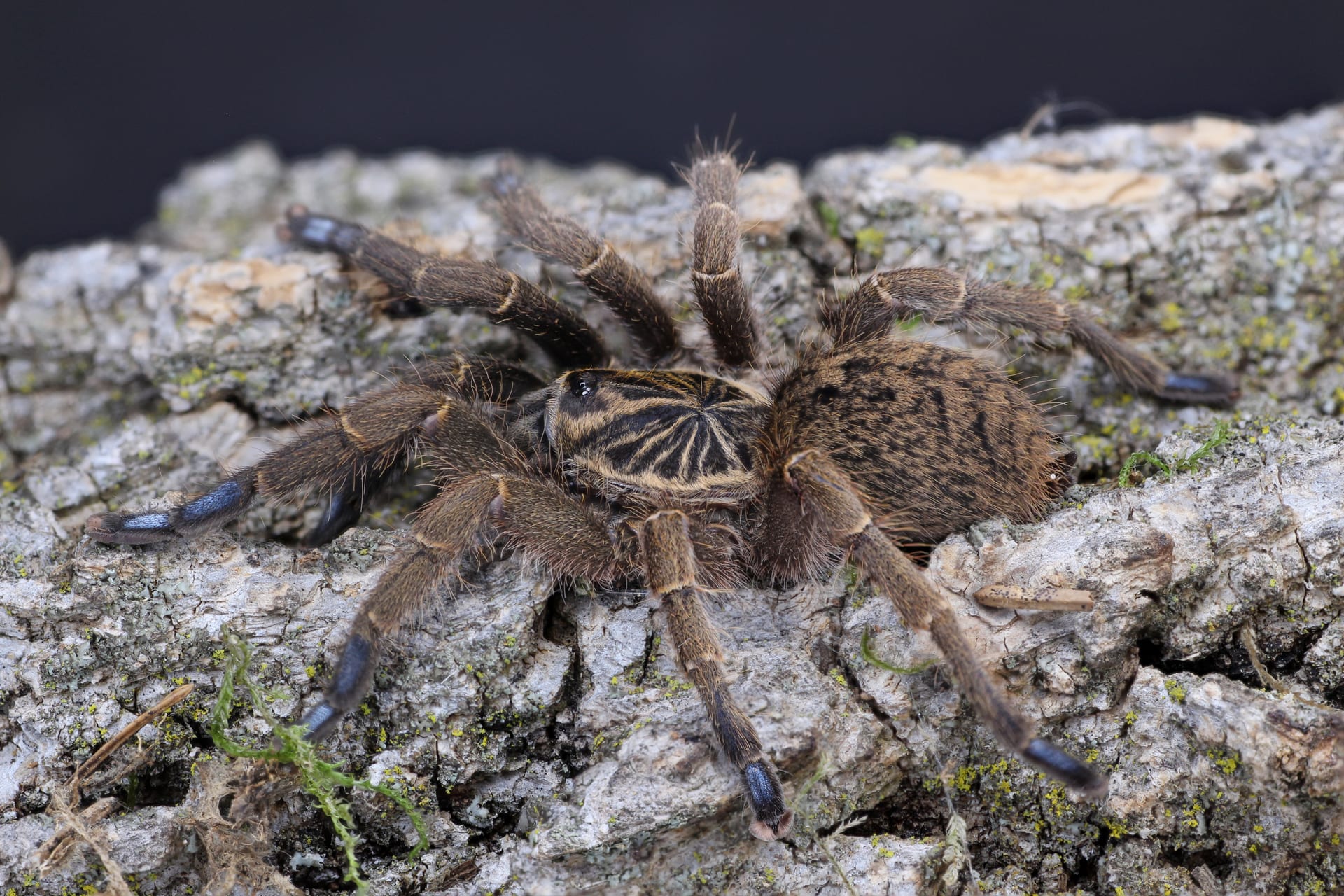
 © Quengsalinas / CC BY-SA 4.0
蓝足狒狒蛛
The Blue Foot Baboon is a small South African tarantula named for the vivid sky-blue color that covers just the tips of its legs, standing out sharply against its dark brown body. It's known for an unusual trait among tarantulas: digging a burrow and sealing the entrance with a silk-lined trapdoor. Skittish and easily startled by vibration or noise, it tends to retreat into its burrow at the first sign of disturbance rather than stay out in the open. Adults stay compact, with a body length of about 3-4cm in females and a leg span of roughly 11cm, so they don't need much enclosure space. Because it's considered an intermediate-level species, it makes a good next tarantula for keepers who already have some hands-on experience.
View 蓝足狒狒蛛 encyclopedia →成交手续费0%!2026年9月30日前注册,前 2 笔成交免佣金!
繁殖者 招募中!
在BreederDirect发布商品,直接销售给全国客户!
Br-choku承诺的 5 个透明度要点
刊登奇虫时,繁殖者会明示以下信息。我们保证成长阶段与繁殖配对的透明性。
- 实物照片
- 繁殖单位
- 代次明示
- 体长明示
- 原产国
查看全部249个种类
奇虫分类正在招募认证繁殖者
繁殖者正在陆续注册,即将上架。设置上架通知,不错过新商品。
「接收上架通知」需免费注册会员即可设置。当有符合您保存条件的新商品上架时,我们会通过邮件和站内通知提醒您。
已注册的繁殖者(抢先看)
关于蓝足狒狒蛛
A small South African tarantula whose leg tips turn a striking sky blue, known for building silk-sealed trapdoor burrows. An intermediate-level species, compact in size at about 3-4cm body length (female).
迎接蓝足狒狒蛛前需要了解的7件事
1Sky-Blue Leg Tips
The species' namesake feature is the bright sky-blue coloring on just the tips of its legs. Set against a dark brown body, the contrast makes it instantly recognizable among tarantulas.
2A Rare Trapdoor Habit
It digs a burrow and seals the entrance with a silk-woven trapdoor, a behavior that's unusual even among tarantulas. Watching the burrow and trapdoor take shape is one of the more distinctive parts of keeping this species.
3An Old World Species
As an Old World tarantula, it lacks the urticating hairs that New World species use for defense, relying instead on speed and defensive posturing when startled. It's best kept as a hands-off, observation-only pet rather than one you handle directly.
4Naturally Shy and Alert
It's highly sensitive to vibration and sound, and will retreat into its burrow at the first sign of disturbance. Don't expect it to be out and visible often — the appeal here is patient observation rather than constant viewing.
5Deep, Diggable Substrate
Since it naturally digs burrows, the enclosure needs a deep layer of substrate rather than a shallow one, giving it enough depth to dig and build properly. Letting it express this natural digging behavior is key to good husbandry.
6A Compact Size
Even as adults, they stay on the small side for a tarantula — around 3-4cm in body length for females, with a leg span of roughly 11cm. That compact size means the enclosure doesn't need to take up much room.
7Best for Experienced Keepers
Its quick movements and defensive nature make it a less forgiving choice for a first tarantula, which is why it's generally considered an intermediate-level species. It's best suited to keepers who already have experience with other species.
蓝足狒狒蛛的常见问题
- Q.Is this a good species for beginners?
- A.It's generally classed as an intermediate-level species, so it suits keepers who already have some tarantula experience. It's better suited as a second or third species than as a first tarantula.
- Q.Is it likely to bite?
- A.As an Old World species it has no urticating hairs to fall back on, so when startled it may react with quick movement or defensive posturing instead. As with any tarantula, it's best to avoid direct handling and keep interaction to observation.
- Q.How big does it get?
- A.Adults stay fairly compact, reaching a body length of about 3-4cm in females with a leg span of roughly 11cm. That puts it on the smaller end for a tarantula.
- Q.How do I encourage it to build a burrow?
- A.Give it a deep layer of substrate so it has enough depth to dig into. With the right conditions, it will naturally build its burrow and seal the entrance with its characteristic silk trapdoor.
- Q.Will I be able to see it often?
- A.It's naturally shy and quick to retreat into its burrow at any disturbance, so it won't be out and visible very often. The appeal is more in observing its trapdoor and burrowing behavior than in frequent sightings.
在图鉴中详细了解蓝足狒狒蛛
查看蓝足狒狒蛛的图鉴条目 →
收录饲养难度、寿命、体长、食性等基础数据。