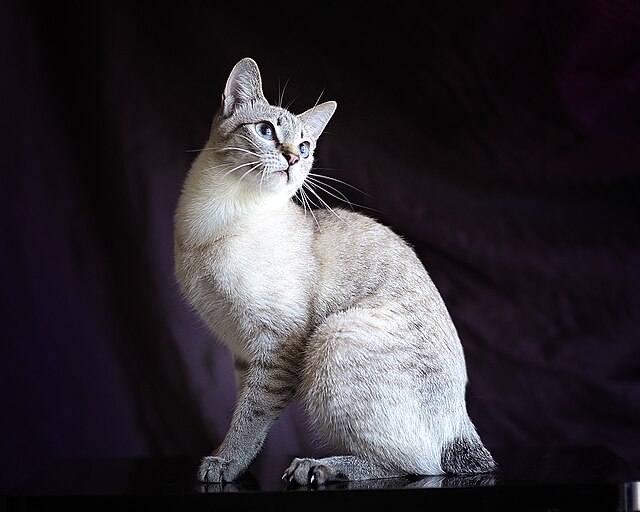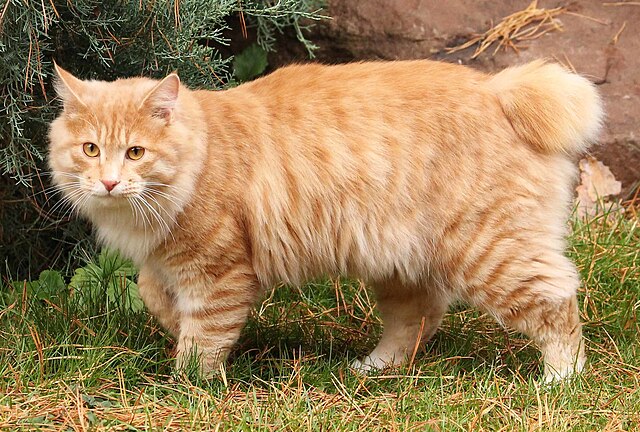
Source: Wikimedia Commons
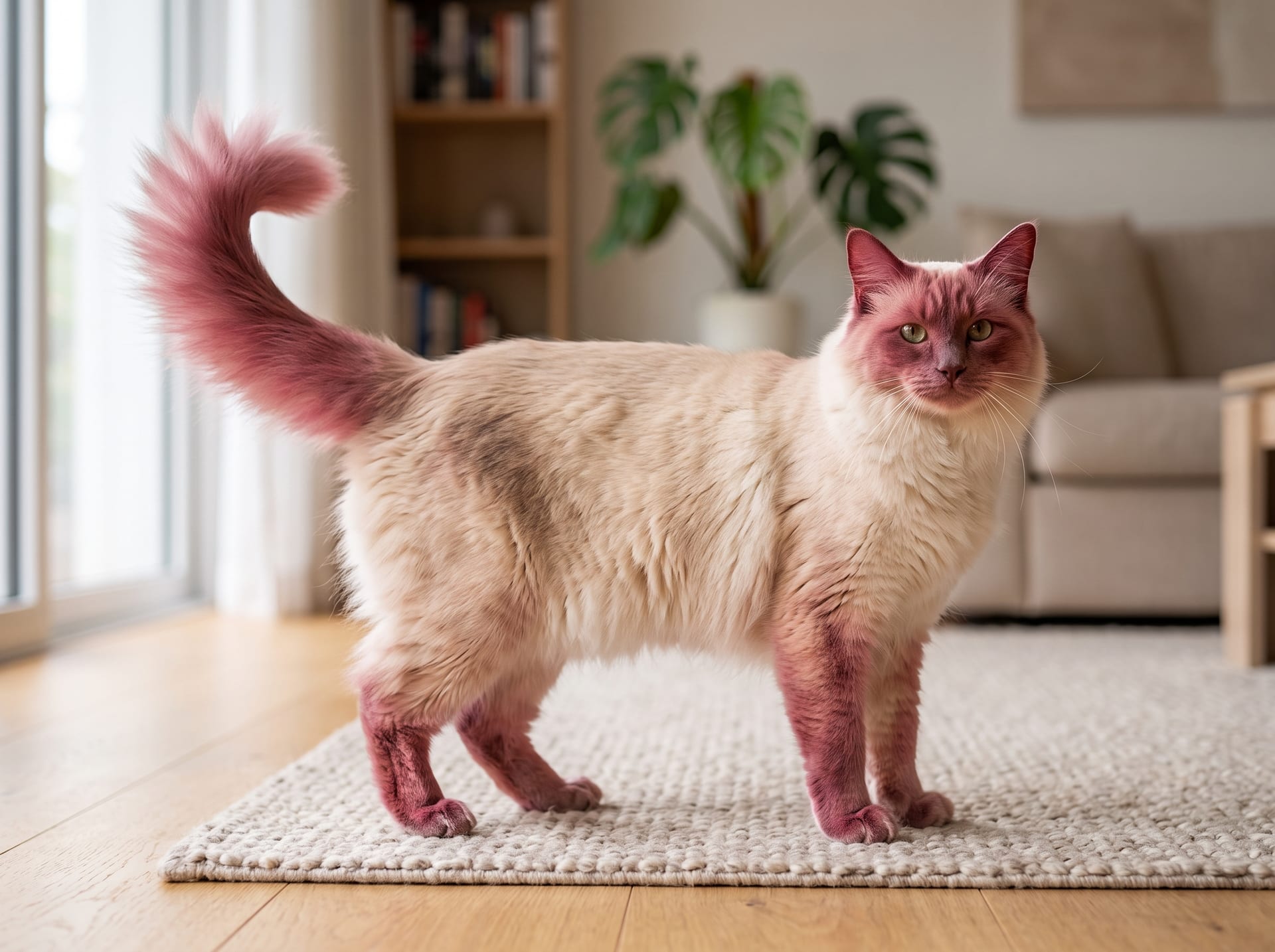
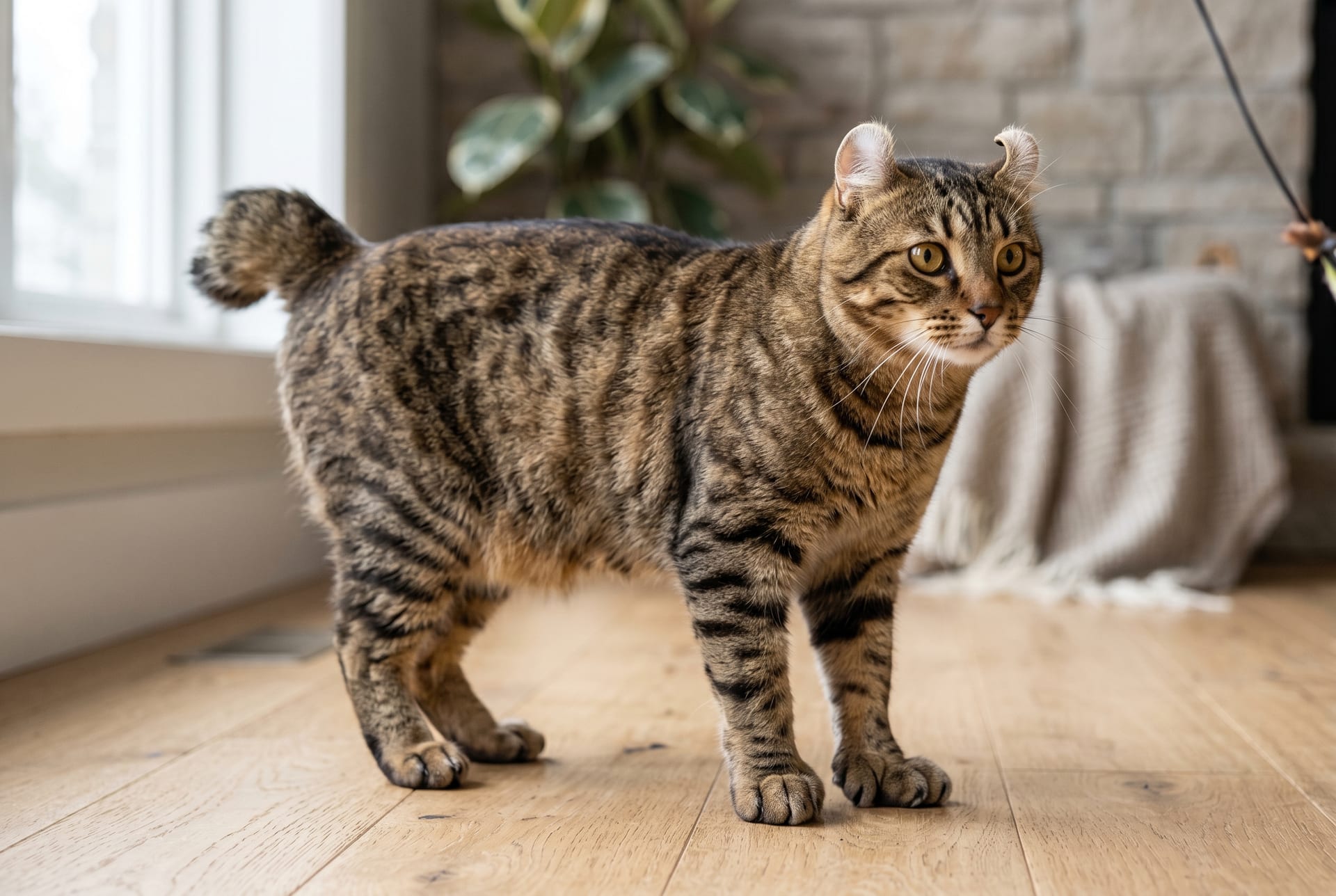
Natural breed from the Kuril Islands. Pom-pom-like short tail and muscular build. Excellent hunter, not afraid of water.
The Kurilian Bobtail is a cat breed originating from the Kuril Islands, as well as Sakhalin Island and the Kamchatka peninsula of Russia. Short- or long-haired, it has a semi-cobby body type and a distinct short, fluffy tail. The back is slightly arched with hind legs longer than the front, similar to those of the Manx. The breed is also called the Kuril Islands Bobtail, Kuril Bobtail and Curilsk Bobtail, and may be referred to without "Bobtail". It is sometimes also spelt Kurilean.
Source: Wikipedia (CC BY-SA 4.0)
产地
Kuril Islands (Russia)
寿命
15-20 years
体型
Weight 3.5-7kg
温度
18〜28℃
Cat food (complete nutrition)
Intelligent and social. Responds to play like a dog, learns fetch
High exercise needs. Uniquely enjoys water play
Short or semi-long coat. 1-2 brushings per week sufficient
Russia (Kuril Islands)
Intermediate. 这是一个中级难度的物种。建议有一定的饲养经验和环境管理知识。
Kurilian Bobtail的理想温度为18〜28℃。避免温度骤变,保持稳定的环境。
Kurilian Bobtail的平均寿命为15-20 years。通过适当的护理和营养,它们可以长寿健康地生活。
Kurilian Bobtail成年后通常可达Weight 3.5-7kg。大小可能因饲养条件和个体遗传而异。
Kurilian Bobtail的食物为:Cat food (complete nutrition)。目标是适当的喂食频率和均衡的饮食。
Kurilian Bobtail的价格因品系、大小和血统而有很大差异。请查看我们的市场价格页面获取最新价格信息。
查找此物种的商品
浏览Cat商品Complete Beginner's Guide to Keeping a Cat
Everything beginners need to start keeping a cat: preparation, litter, feeding, indoor environment, and popular breed tips.
Top 10 Popular Cat Breeds Compared — Temperament, Size & Ease of Care
Detailed comparison of 10 popular cat breeds: temperament, size, shedding, affection level, and overall ease of keeping.
Complete Kitten Training Guide — Litter, Scratching & Socialization
Essential kitten training during the 2-4 month socialization window: litter box success, designated scratching spots, curbing biting, and early socialization.
Cat Health Checklist — Daily Observation Points & Warning Signs
How to perform daily health checks on your cat: eyes, ears, mouth, coat, urine output, and recognizing symptoms that require a vet visit.