Source: Wikimedia Commons
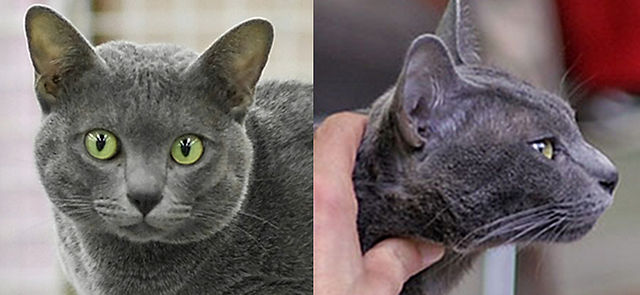
Thai 'good luck cat' with silver-blue coat. Heart-shaped face and large green eyes. Loyal but sensitive.
The Korat cat is a silver-tipped blue-grey, short-haired breed of domestic cat with a small to medium build and a low percentage of body fat. Its body is semi-cobby, and unusually heavy for its size. It is an intelligent and playful active cat that forms strong bonds with people and is very vocal, with a sound different from other breeds. Among the Korat's distinguishing characteristics are its heart-shaped head, its large green eyes. Its front paws are shorter than the back paws.
Source: Wikipedia (CC BY-SA 4.0)
产地
Thailand
寿命
10-15 years
体型
Weight 2.5-4.5kg
温度
18〜28℃
High-quality complete nutrition cat food.
Loyal and affectionate. Bonds strongly with family but dislikes noisy environments.
Moderately active. Playful but also values relaxation time.
Short silver-blue coat. Weekly brushing sufficient.
Thailand
Risk of gangliosidosis (GM1/GM2). Sensitive to noise and environmental changes.
Intermediate. 这是一个中级难度的物种。建议有一定的饲养经验和环境管理知识。
Korat的理想温度为18〜28℃。避免温度骤变,保持稳定的环境。
Korat的平均寿命为10-15 years。通过适当的护理和营养,它们可以长寿健康地生活。
Korat成年后通常可达Weight 2.5-4.5kg。大小可能因饲养条件和个体遗传而异。
Korat的食物为:High-quality complete nutrition cat food.。目标是适当的喂食频率和均衡的饮食。
Korat的价格因品系、大小和血统而有很大差异。请查看我们的市场价格页面获取最新价格信息。
查找此物种的商品
浏览Cat商品Complete Beginner's Guide to Keeping a Cat
Everything beginners need to start keeping a cat: preparation, litter, feeding, indoor environment, and popular breed tips.
Top 10 Popular Cat Breeds Compared — Temperament, Size & Ease of Care
Detailed comparison of 10 popular cat breeds: temperament, size, shedding, affection level, and overall ease of keeping.
Complete Kitten Training Guide — Litter, Scratching & Socialization
Essential kitten training during the 2-4 month socialization window: litter box success, designated scratching spots, curbing biting, and early socialization.
Cat Health Checklist — Daily Observation Points & Warning Signs
How to perform daily health checks on your cat: eyes, ears, mouth, coat, urine output, and recognizing symptoms that require a vet visit.