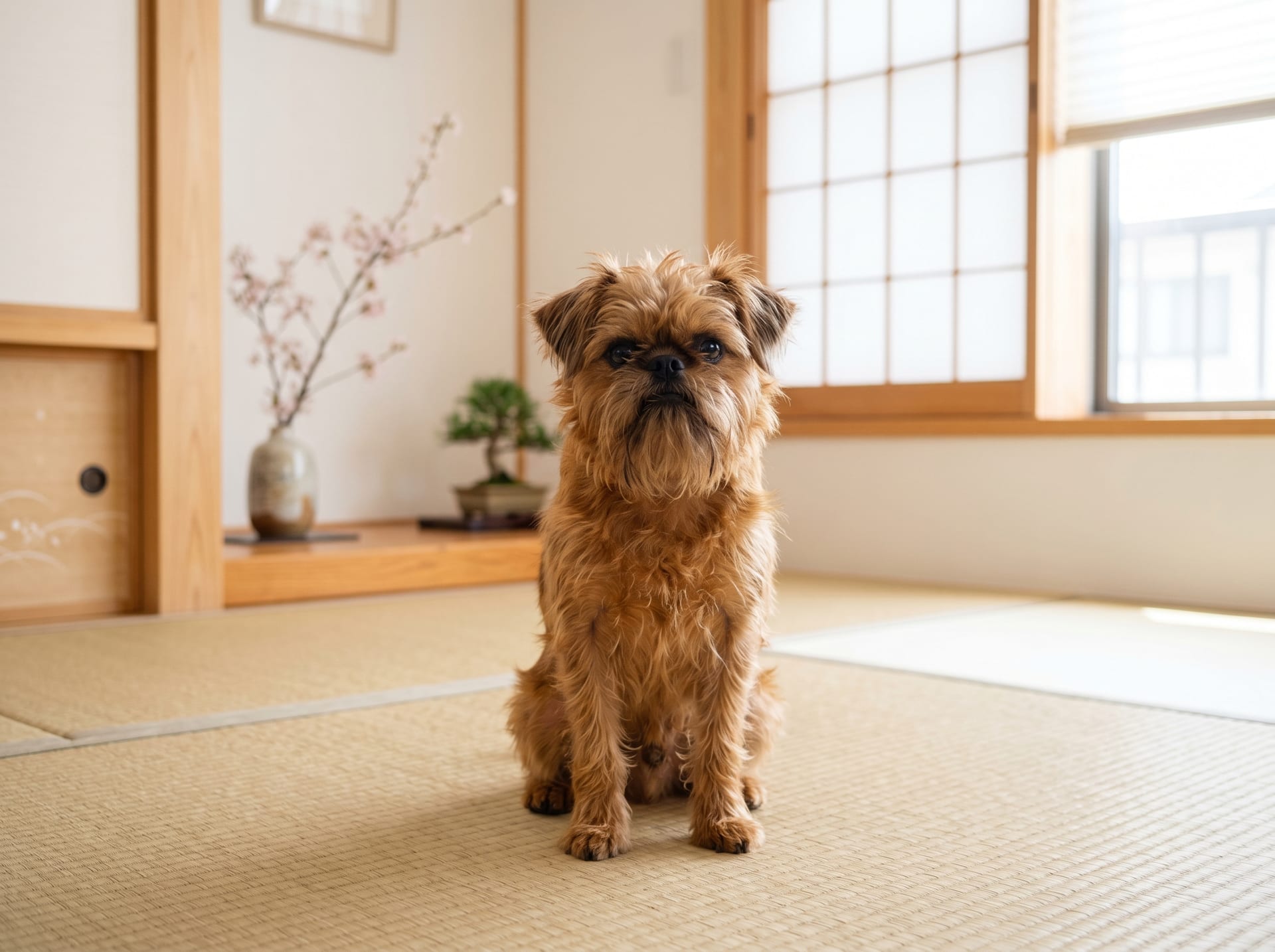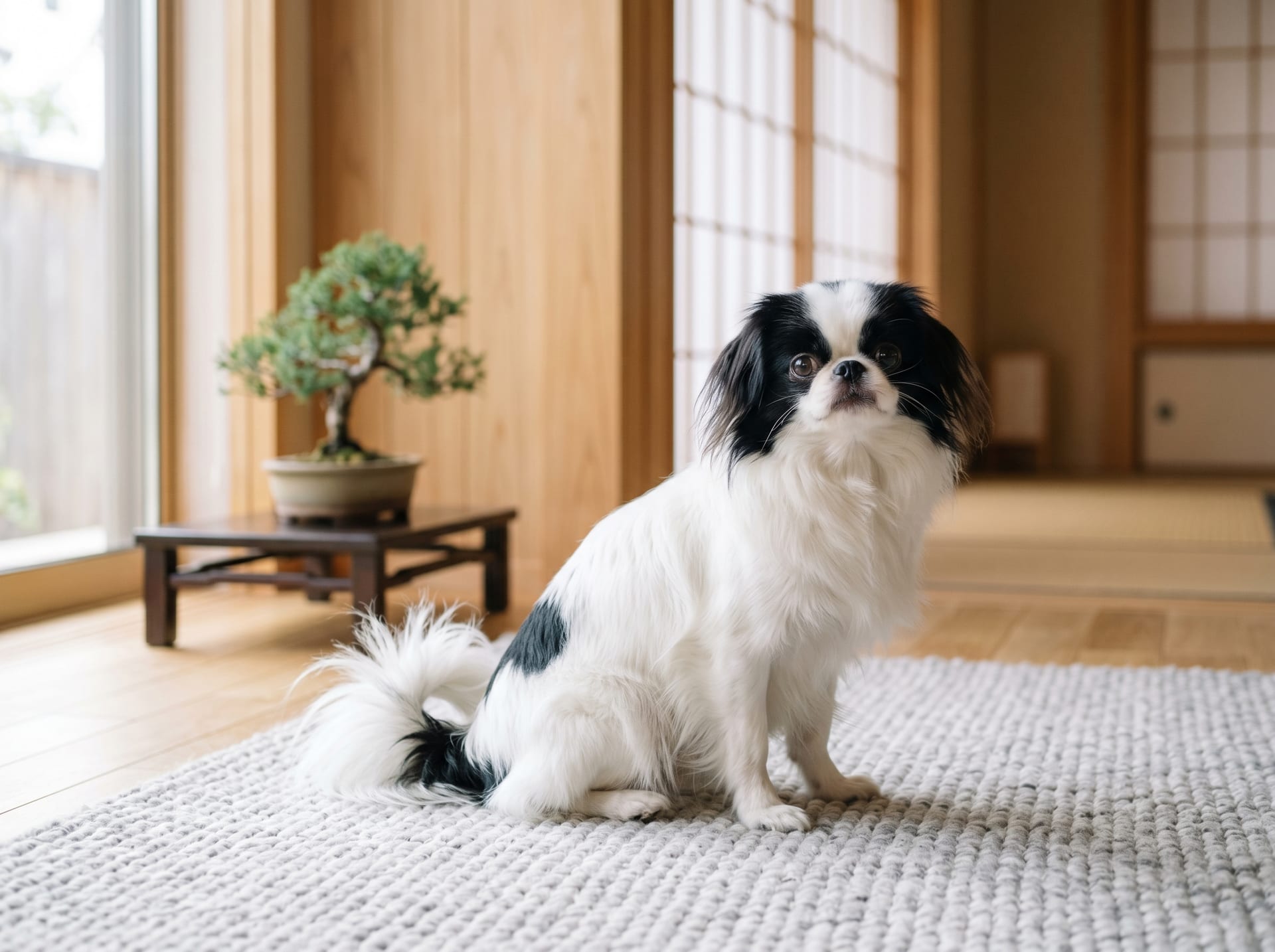
AI-generated image
Japanese Chin
BeginnerCanis lupus familiaris
An ancient Japanese companion dog. Elegant coat and charming expression, with a calm and noble temperament.
Difficulty
Beginner
Temperature
15〜26℃
Lifespan
12-14 years
Size
Height about 25cm (males; females slightly smaller) / Weight 2-5kg
Diet
Dry food, small portions
About
The Japanese Chin, also known as the Japanese Spaniel, is a toy dog breed, being both a lap dog and a companion dog, with a distinctive heritage.
Source: Wikipedia (CC BY-SA 4.0)
Lifespan of the Japanese Chin
The Japanese Chin lives 12-14 years.
Size of the Japanese Chin
The Japanese Chin grows to Height about 25cm (males; females slightly smaller) / Weight 2-5kg.
Basic Info
Origin
Japan (originated from China or Tibet)
Lifespan
12-14 years
Size
Height about 25cm (males; females slightly smaller) / Weight 2-5kg
Temperature
15〜26℃
Diet
Dry food, small portions
Care Guide
Temperament
Calm and noble, cat-like independence
References & Sources
Edited & verified by: BreederDirect editorial team
The taxonomic, regulatory, and husbandry data on this page are compiled and verified against the authoritative primary sources below.
Primary sources
Taxonomy & Authority
Japanese Chin Listings
Loading latest listingsFind listings for this species