Source: Wikimedia Commons
Wisteria
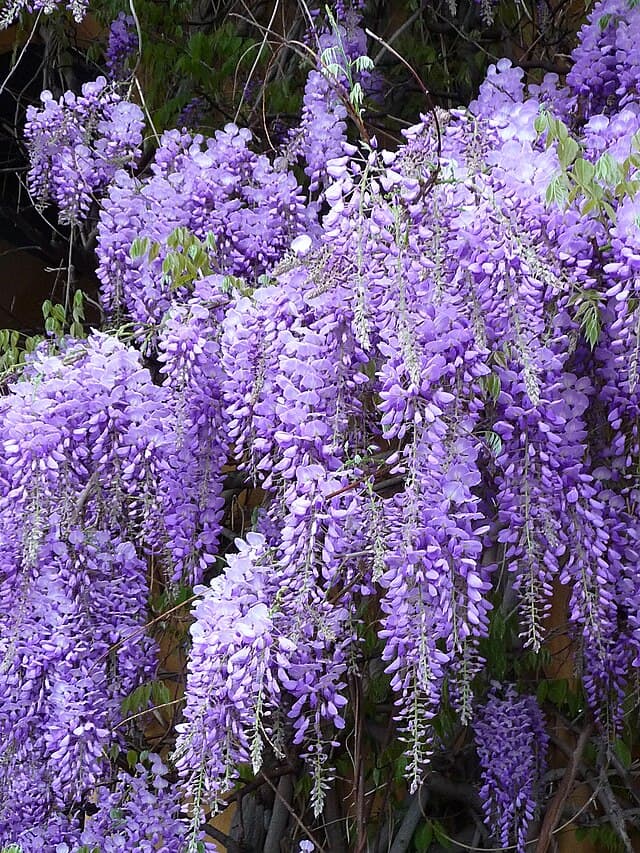
IntermediateElegant flowering bonsai with cascading purple flower clusters in spring. Cascade or display-shelf styles maximize bloom beauty. Flowering improves with age.
Difficulty
Intermediate
Temperature
-5〜35℃
Lifespan
Centuries
Size
20-60cm (bonsai size)
Diet
−
About
Wisteria is a genus of flowering plants in the legume family, Fabaceae (Leguminosae). The genus includes four species of woody twining vines that are native to China, Japan, Korea, Vietnam, southern Canada, the Eastern United States, and north of Iran. They were later introduced to France, Germany and various other countries in Europe. Some species are popular ornamental plants. The genus name is also used as the English name, and may then be spelt 'wistaria'.
Source: Wikipedia (CC BY-SA 4.0)
Basic Info
Origin
China, Japan, Korea, Vietnam, and eastern North America
Lifespan
Centuries
Size
20-60cm (bonsai size)
Temperature
-5〜35℃
Diet
−
Care Guide
Placement
Full sun outdoors. Ample sunlight essential for flower buds
Watering
Heavy water drinker. Extra water after bloom and in summer
Styling
Trim extending vines regularly. Prune after flowering
Notes
Vigorous roots may crack pots. Prune roots at repotting
IntermediateFloweringPurple clustersGraceful
Wisteria FAQ
QHow difficult is it to keep Wisteria?
A
Intermediate. This is an intermediate-level species. Some prior experience and knowledge of environmental management are recommended.
QWhat is the ideal temperature for Wisteria?
A
The ideal temperature for Wisteria is -5〜35℃. Avoid sudden temperature changes and maintain a stable environment.
QWhat is the lifespan of Wisteria?
A
The average lifespan of Wisteria is Centuries. With proper care and nutrition, they can live a long and healthy life.
Wisteria Q&A
Find listings for this species