Goldfish appraisal guide
Even within the same variety—such as ranchu or ryukin—evaluation varies significantly based on body shape, head lump development, tail form, coloration pattern, and age in cultivation. In the goldfish world, where show culture is deeply rooted, the proximity to each variety's ideal form and the condition of individual fish create price differences.
What determines the price
Body shape consistency and breed-specific traits.
HighFish are valued higher the closer they approach the ideal body shape for their variety (body roundness, height, and proportions). The standard for body shape differs for each variety.
Head lump development and uniformity.
HighIn varieties such as ranchu, oranda, and tosakin, the size and uniformity of the head lump is central to evaluation. Lump development is significantly influenced by rearing temperature and feeding management.
Tail form consistency and spread.
HighThe form (four-tail, cherry-blossom tail, butterfly tail, etc.) and spread of the tail fin are evaluated. Misshapen tails, missing portions, or asymmetry lower the evaluation.
Coloration and color pattern clarity.
MediumThe clarity and uniformity of color patterns—such as calico, three-colored, or solid—for each variety affect aesthetic value. Fish with pale or blurry color boundaries receive lower evaluations.
Size and age in cultivation.
MediumAt shows, body length and physical condition are important, and larger specimens developed over multiple years of cultivation increase in rarity.
Appraisal points
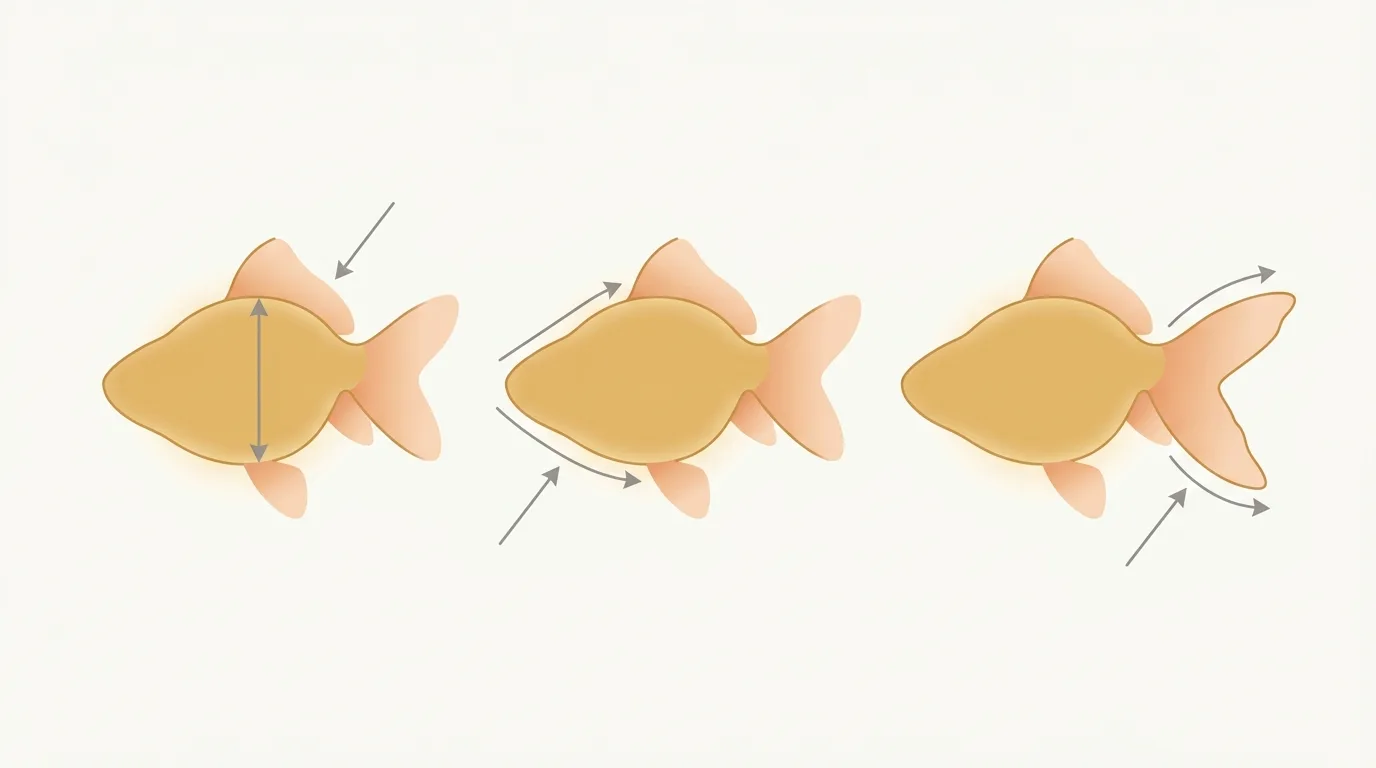
Check body shape consistency against breed standards.
- Good:
- The ideal body shape for the variety (roundness, height, balance) is well-proportioned, and the overall appearance is cohesive.
- Caution:
- Curved spine, deteriorated tail form, or body distortion may indicate genetic or husbandry issues.
Check head lump development and uniformity.
- Good:
- The fleshy hood develops evenly according to the breed's characteristics, with high bilateral symmetry.
- Caution:
- Asymmetrical development of the fleshy hood, scarring, or hardening can indicate husbandry conditions or individual issues.
Assess health status and swimming behavior
- Good:
- The fish swims actively in the water, with fins held upright, and shows no signs of injury or disease on the body surface.
- Caution:
- Sinking to the bottom, clamped fins, or white spots and hemorrhaging on the body surface may indicate health problems.
Appraisal quiz
Which elements are prioritized in goldfish show competitions?
Appraisal by breed
General information on judging value; not a guarantee of any individual's price or quality. See the market-price page for actual rates.