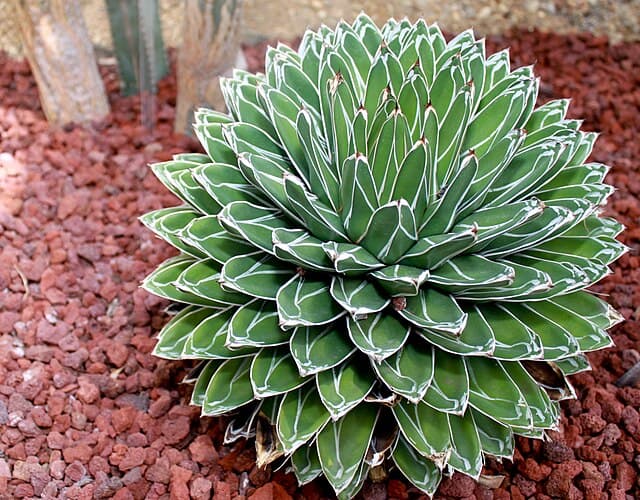
Agave Victoriae-Reginae
IntermediateKnown as Sasa-no-Yuki (Snow on Bamboo). Green leaves with white paint-like markings. Slow growing but very beautiful.
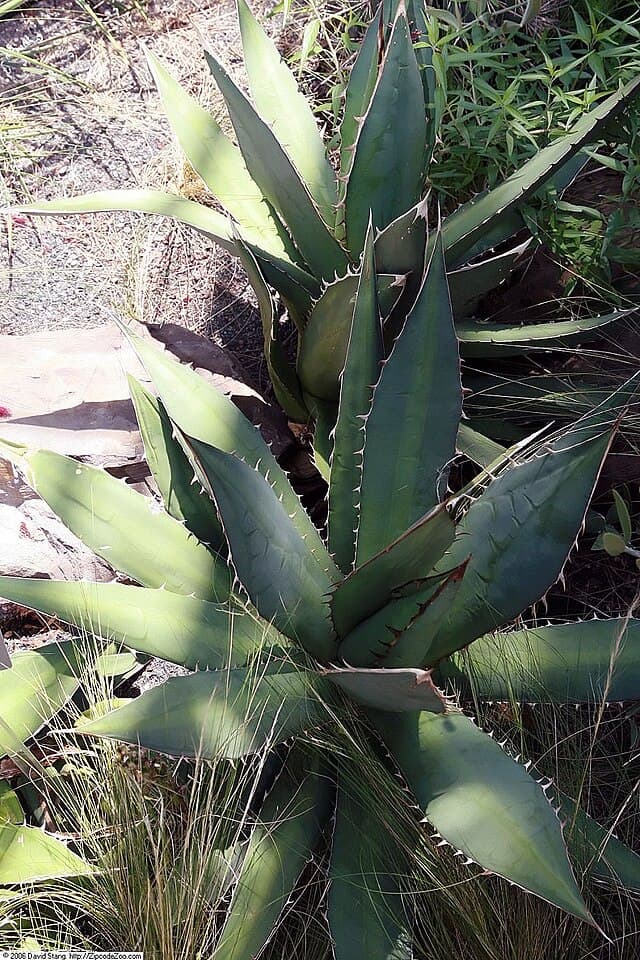
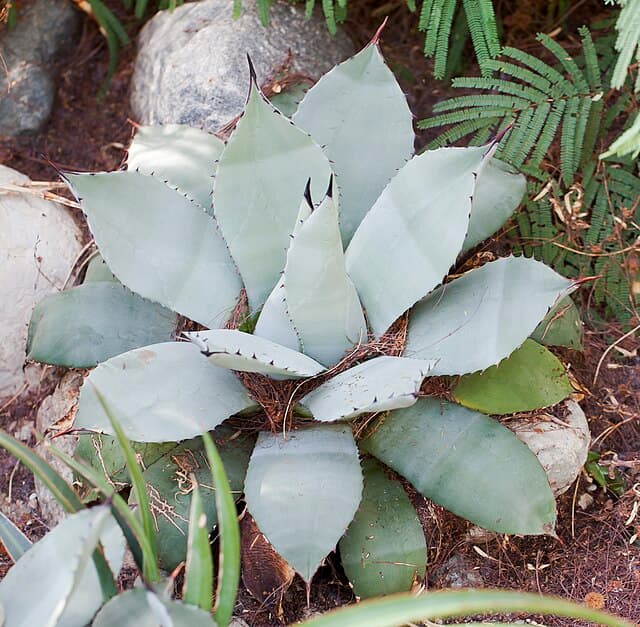
Agave victoria-reginae, known in Japan as 'Sasa-no-Yuki' (笹の雪, 'snow on bamboo'), is a small to medium species native to steep limestone cliffs in Coahuila, Nuevo León, and Durango, Mexico. Its stiff, dark green leaves display bright white margins and bud imprints that resemble snow-dusted bamboo leaves—the source of its elegant Japanese name. Unlike many agaves, the leaf margins lack teeth, with only a terminal spine at the tip, making it relatively safe to handle. Mature rosettes form a hemispherical shape 30–50 cm tall and wide. Growth is extremely slow; producing a large specimen takes a decade or more. It prefers a bright, sunny location but benefits from protection against intense afternoon sun in summer. Water sparingly and reduce to near-drought conditions in winter. It tolerates cold down to about 5°C, though protection from frost is advisable. One of the longest-cultivated agave species in Japan, it remains a classic choice for both beginners and serious collectors.
Origin
Coahuila, Nuevo León, and Durango, Mexico
Lifespan
20-30 years
Size
20-40cm
Temperature
0〜35℃
Bright location. Avoid afternoon sun in summer
Moderate. Almost no water in winter
Very slow — just a few new leaves per year
White markings are the main attraction
Water trapped between leaves causes rot — avoid overhead watering
Intermediate. This is an intermediate-level species. Some prior experience and knowledge of environmental management are recommended.
The ideal temperature for Agave Victoria-Reginae is 0〜35℃. Avoid sudden temperature changes and maintain a stable environment.
Find listings for this species
The average lifespan of Agave Victoria-Reginae is 20-30 years. With proper care and nutrition, they can live a long and healthy life.
Agave Victoria-Reginae typically reaches 20-40cm as an adult. Size may vary depending on care conditions and individual genetics.
The price of Agave Victoria-Reginae varies significantly depending on morph, size, and lineage. Check our market price page for the latest pricing information.