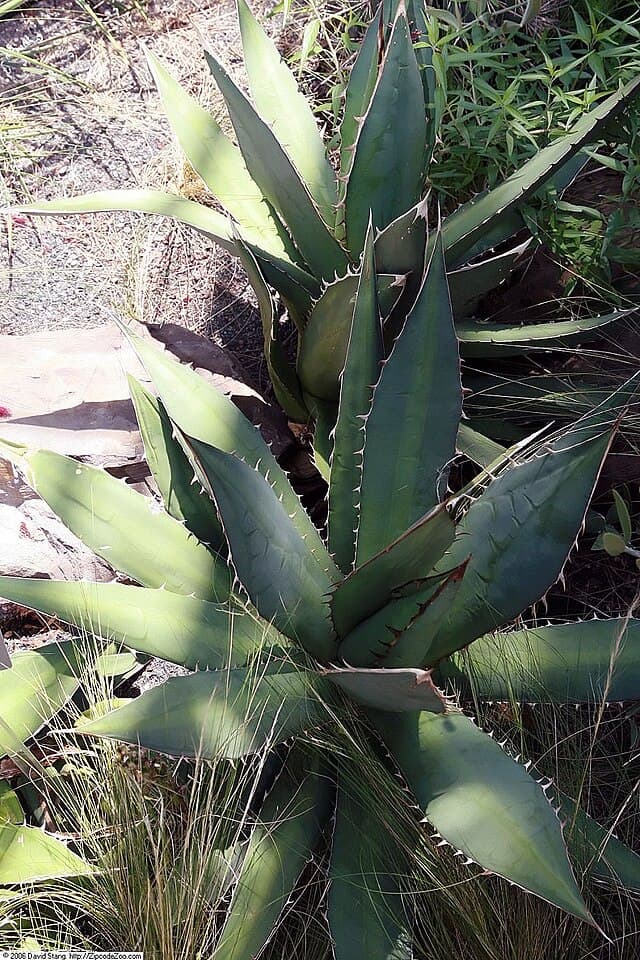
Source: Wikimedia Commons
Agave Titanota
IntermediateAgave titanota
The species that started the agave boom. Thick leaves with white teeth vary by origin: 'White Whale', 'Hime Ganryu', 'FO-076'.
Difficulty
Intermediate
Temperature
5〜40℃(適温15〜35℃)
Size
20-50cm rosette
Diet
Water: when dry in spring/fall / reduce in summer / monthly in winter
About
Agave titanota, commonly called the chalk agave, is a medium-sized succulent native to the rocky limestone canyons of the Tehuacán-Cuicatlán Valley in Oaxaca, Mexico. Its stiff, blue-gray leaves are edged with sharp cream to white teeth and terminate in a rigid spine. The plant forms a compact rosette typically reaching 30–60 cm tall and 60–90 cm wide, making it well-suited for container cultivation. Growth is slow and deliberate, gradually building a symmetrical rosette over several years. It demands excellent drainage—a mix of akadama, pumice, and decomposed granite works well. Full sun is essential; supplemental grow lighting is needed for indoor culture. Water thoroughly but infrequently, allowing the soil to dry completely between waterings. The extraordinary diversity of spine forms and colorations found in cultivated selections has made this one of the most sought-after agave species among collectors worldwide.
Source: Wikipedia (CC BY-SA 4.0)
Basic Info
Origin
Oaxaca, Mexico
Size
20-50cm rosette
Temperature
5〜40℃(適温15〜35℃)
Diet
Water: when dry in spring/fall / reduce in summer / monthly in winter
Care Guide
Soil
Akadama:Hyuga:Pumice 1:1:1. Prioritize drainage
Light
Direct sunlight recommended. Supplement with LED indoors
Rooting
Bare root: water culture → soil planting in two stages
Notes
Susceptible to rot. Ensure airflow in rainy season. Bring indoors in winter
Most popularToothedCollectibleMany lineages
Agave Titanota FAQ
QHow difficult is it to keep Agave Titanota?
A
Intermediate. This is an intermediate-level species. Some prior experience and knowledge of environmental management are recommended.
QWhat is the ideal temperature for Agave Titanota?
A
The ideal temperature for Agave Titanota is 5〜40℃(適温15〜35℃). Avoid sudden temperature changes and maintain a stable environment.
QHow large does Agave Titanota get?
A
Agave Titanota typically reaches 20-50cm rosette as an adult. Size may vary depending on care conditions and individual genetics.
QWhat should I feed Agave Titanota?
A
Agave Titanota feeds on: Water: when dry in spring/fall / reduce in summer / monthly in winter. Aim for a balanced diet with appropriate feeding frequency.
QWhat is the typical price for Agave Titanota?
A
The price of Agave Titanota varies significantly depending on morph, size, and lineage. Check our market price page for the latest pricing information.
Related Species
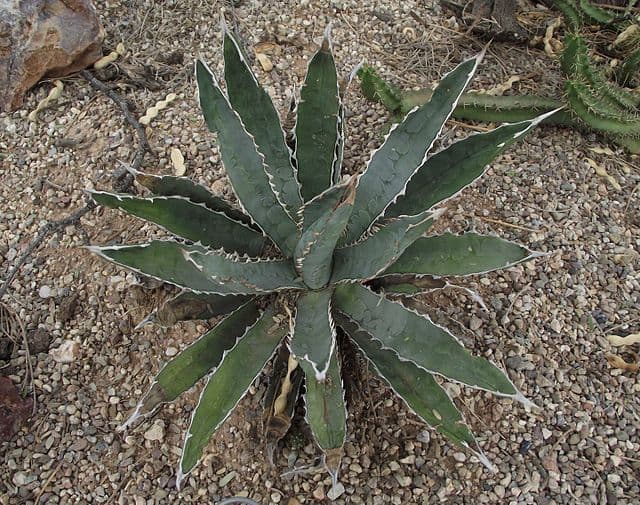
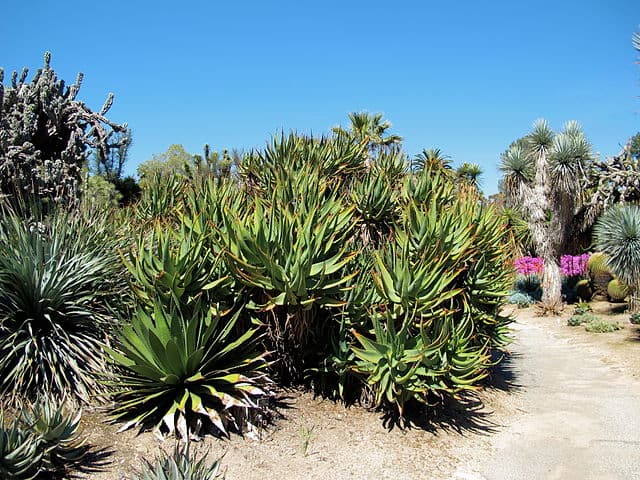
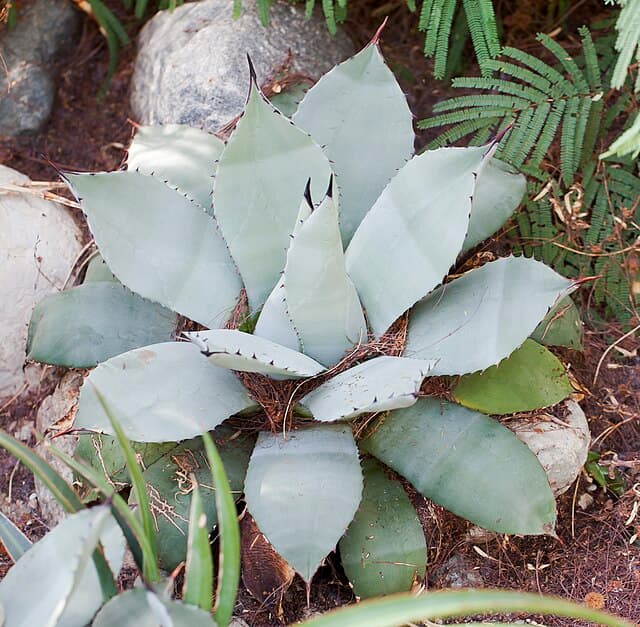
Find listings for this species
Browse Agave ListingsRelated Articles
Complete Agave Titanota Buying Guide — Types, Features & Pricing
Complete guide to choosing Agave titanota: popular types like Hakugei, Caesar, and Hime Ganryu, seed-grown vs imported plants, and fair pricing.
Agave Titanota Variety Guide — FO-076, Hakugei & Caesar Characteristics
In-depth comparison of popular Agave titanota varieties: FO-076, Hakugei, Caesar, Hime Genryu, Hades, Red Catweezle — teeth patterns, growth rates, pricing, and selection tips.
Agave Titanota vs Horrida: Care, Cost & Feature Comparison
Titanota vs Horrida: spines, shape, cold tolerance, and price comparison for first-time agave growers.
Popular Agave Titanota Clones — FO-076, Hakugei & Caesar Identification
Guide to popular Agave titanota clones: FO-076, Hakugei, Caesar, Hades — identification features and buying tips.