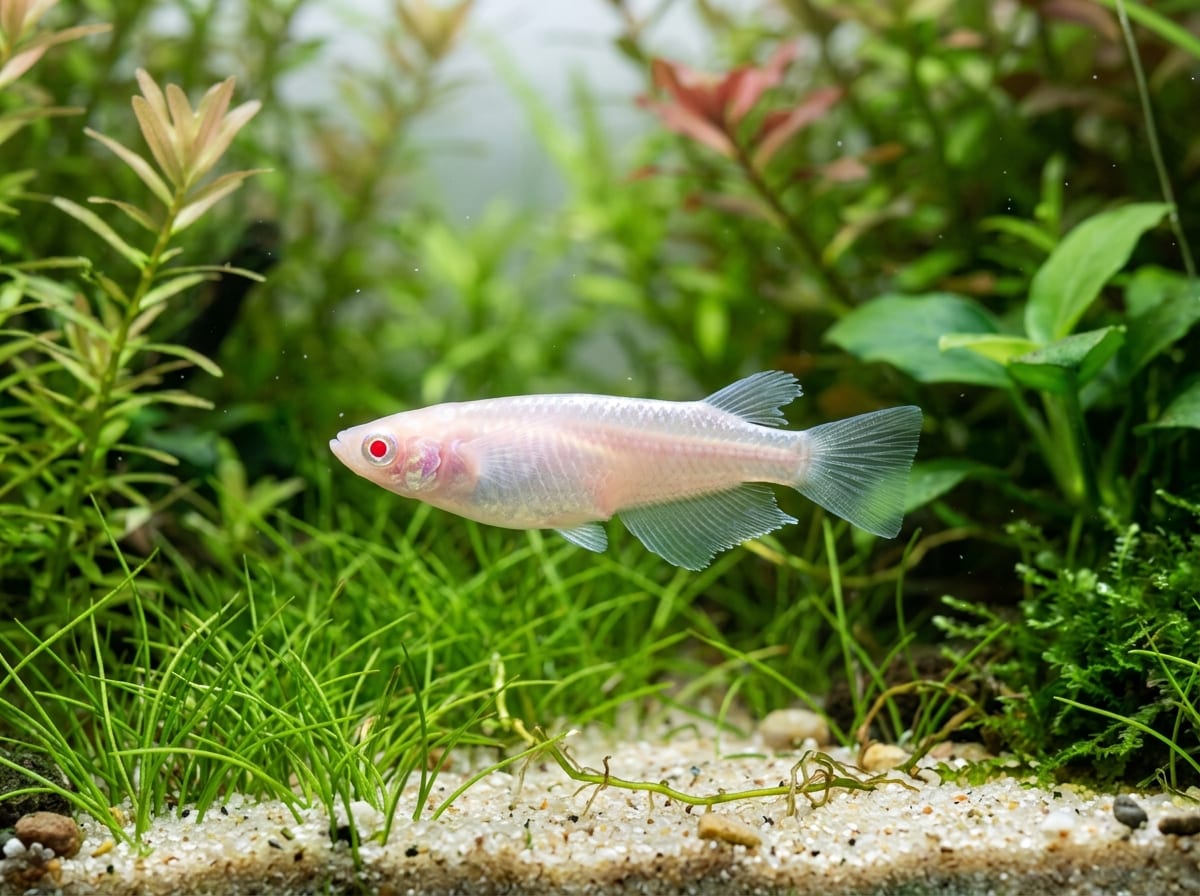
Albino medaka are a genetic variant that lack melanin pigment, giving them a white-to-pale-pink body and distinctive red eyes. They are somewhat sensitive to light and have slightly reduced vision, making a calm, low-stress environment ideal. Their ethereal, translucent appearance makes them highly popular as ornamental fish.
前3笔销售免佣金!在2026年7月31日前注册为繁殖者,前3笔销售免佣金!
繁殖者 招募中!
在BreederDirect发布商品,直接销售给全国客户!
青鳉的出品中繁殖者将明示以下信息。确保多种多样的色变(杨贵妃/幹之/闪鳞)和血统系统的透明度。
想上架青鳉吗?
注册成为繁殖者,即可与买家直接联系。
价格区间
地区
属性
Albino medaka emerged from a genetic mutation that disrupts melanin synthesis, and they gained widespread recognition in Japan as an ornamental variety from the 1960s onward. Their bodies display a white-to-pale-pink semi-translucent sheen, sometimes revealing underlying blood vessels. Their most striking feature is their vivid red irises, which shift from a deep ruby hue to soft orange depending on the angle of light. In temperament, they are calm and unhurried, rarely showing aggression toward other fish. Their appeal lies above all in their ethereal beauty — a dark substrate and deep-green plants make their pale bodies stand out dramatically, lending any aquarium a clean, mysterious atmosphere. With attention to light levels and gentle water flow, long-term care is quite manageable, making them a popular entry point for those new to ornamental fish keeping.
1Sensitivity to Light
Due to their lack of pigment, albino medaka are easily stressed by intense direct light. Avoid placing their tank in spots with prolonged direct sunlight, and ensure some shading is available. Limit aquarium lighting to around 8–10 hours per day.
2Poor Vision Needs Feeding Care
Albino medaka tend to have weaker vision than other varieties, making it harder to locate food. Reduce water flow during feeding so food doesn't scatter widely, or supplement with sinking pellets. Be mindful that tank mates don't consume all the food before the albinos can reach it.
3Choose Tank Mates Carefully
Because albinos swim somewhat less competitively and have poorer vision, they can easily lose out on food and become stressed when housed with highly active fish. Keeping them with other albinos or docile medaka varieties is the safest choice. Avoid cohabiting with large or aggressive species.
4Ideal Water Temp: 18–28°C
Albino medaka thrive in the same temperature range as standard medaka: 18–28°C. Sudden temperature swings can cause stress and disease, so use a heater or cooling fan during seasonal transitions. In regions where outdoor temperatures drop below 5°C in winter, supplemental heating is recommended.
5Health Changes Are More Visible
The absence of pigment makes it easier to spot health issues such as redness, spots, or scale abnormalities compared to pigmented varieties. Build a daily observation habit to catch problems early. However, since their bodies naturally have a reddish hue, take time to learn what normal looks like so you can distinguish it from signs of illness.
6Manage Genetics When Breeding
Albinism is a recessive trait, so crossing albino medaka with normally pigmented fish will rarely produce albino offspring in the first generation. To maintain the albino characteristic, breed albinos together. To avoid the health risks of inbreeding, consider periodically introducing albinos from a separate lineage.
7Wide Range of Price and Quality
Albino medaka are fairly widely available, with prices ranging from a few hundred yen to several thousand yen depending on fin shape and the clarity of coloration. When purchasing, select fish that are in good condition — look for vivid red eyes and intact fins. Buying from a reputable breeder helps ensure more consistent genetic quality.