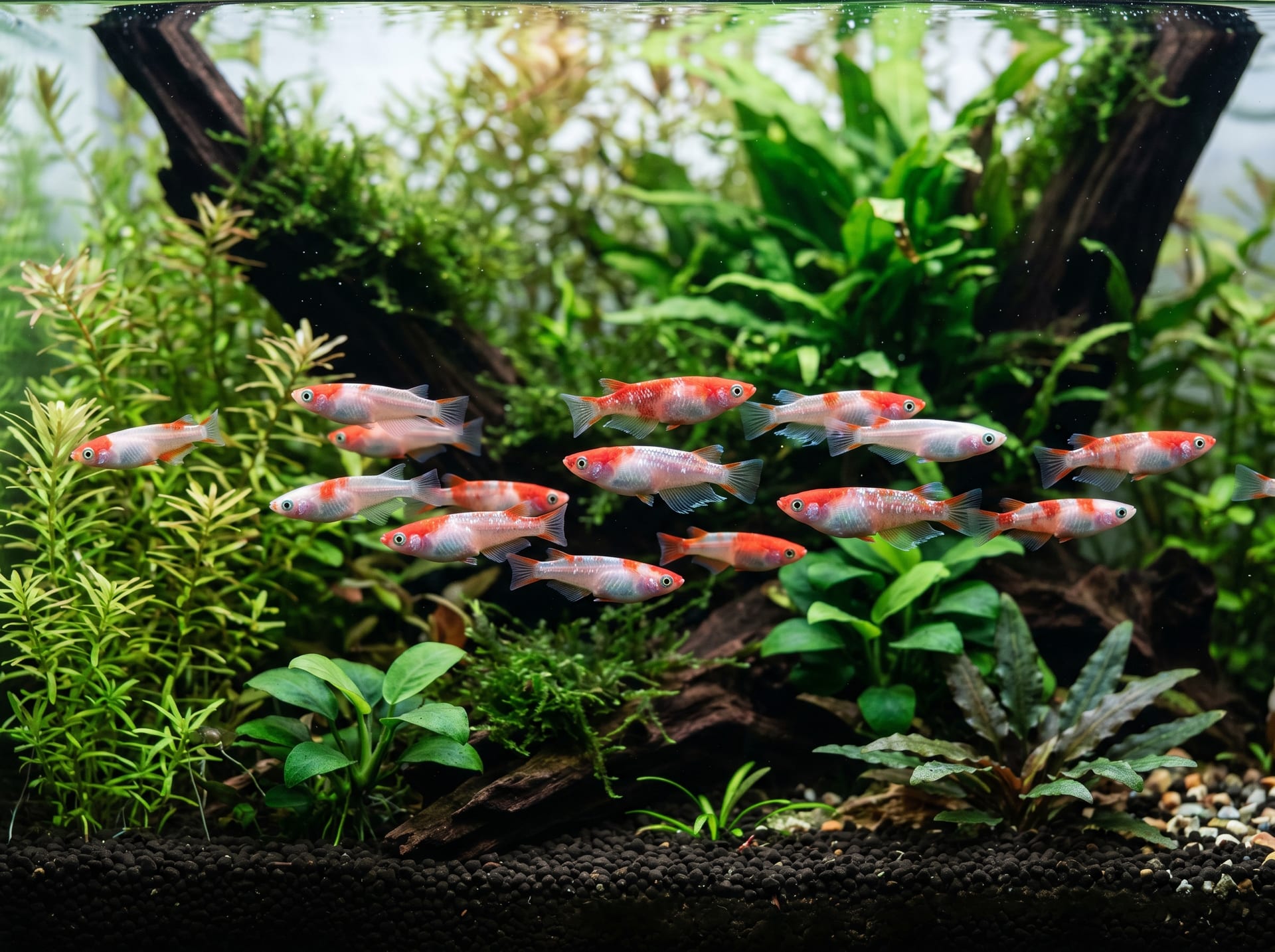
红白锦鲤
红白青鳉是一种白色身体配以鲜艳红(橙)色纹样的品种,呈现出如锦鲤般美丽的色彩对比,魅力无穷。它们性质强健,易于饲养,室内外都可以欣赏,因此深受青鳉初学者的欢迎。由于纹样的表现因个体而异,饲养自己独特的一条青鳉也是别有一番乐趣。
View 红白锦鲤 encyclopedia →- 价格范围
- ¥4,000〜¥4,000
成交手续费0%!2026年9月30日前注册,前 2 笔成交免佣金!
繁殖者 招募中!
在BreederDirect发布商品,直接销售给全国客户!
BreederDirect 承诺的 9 个透明度要点
青鳉的出品中繁殖者将明示以下信息。确保多种多样的色变(杨贵妃/幹之/闪鳞)和血统系统的透明度。
- 品种明示
- 系统名
- 实物照片
- 体色分类
- 体型标示
- 鳞片标示
- 尺寸标示
- 产地明示
- 世代标示
查看全部20个品种
青鳉分类正在招募认证繁殖者
繁殖者正在陆续注册,即将上架。设置上架通知,不错过新商品。
「接收上架通知」需免费注册会员即可设置。当有符合您保存条件的新商品上架时,我们会通过邮件和站内通知提醒您。

红白锦鲤的基本数据
- 饲养难度
- 适合中级者
- 寿命
- 2~3年
- 体型
- 3~4厘米
- 适宜温度
- 5〜30℃
- 饮食
- 米鱼专用配合饲料·水蚤
- 容器
- 白色容器中红白纹样显示清晰
- 水温
- 5~30℃(最适温度20~28℃)
- 纹样
- 随着成长纹样会发生变化
- 繁殖
- 纹样固定率低。大量繁殖和选别至关重要
- 注意事项
- 要获得理想的红白效果需要经过多代选别
关于红白锦鲤
红白青鳉是一种改良青鳉,具有白底加红(橙)纹样的特征,以在青鳉身上表现锦鲤的红白花纹而闻名。在改良青鳉全盛时期的相对早期就确立了这一品种,因为其易于亲近的外观而被高度评价为入门品种。外观上最大的特征是体色的对比度,白底的洁净感和红色的鲜艳度相结合,虽然体型小但具有很高的观赏价值。纹样的出现方式因个体而异,从头部集中出现红色的个体,到体侧出现大斑点的个体等,可以看到多样的图案。性格温和,喜欢成群生活,多匹悠闲地游泳的姿态给饲主带来治愈感。强壮性也是其魅力之一,只要进行适当的水质管理,长期饲养也不困难。维持发色需要日光、增色饵料、水温管理等重要因素,根据环境而变化的特点也是饲养的乐趣所在。
经营红白锦鲤的精选繁殖者
查看全部红白锦鲤繁殖者列表(2)→迎接红白锦鲤前需要了解的7件事
1纹样因个体而异
红白纹样中红色的出现方式因个体而有较大差异,购买时和成长后纹样可能会发生变化。由于水温、饵料、光环境会使发色变浓或变淡,所以要知道固定理想纹样是困难的。
2水温以5〜30℃为目安
红白青鳉相对适应较宽的水温范围,即使在室外饲养也能越冬。不过急剧的水温变化会导致压力和疾病,所以季节变化时特别需要注意。还要注意夏季强烈直射日光导致的水温上升。
3日光对发色很有效果
要使红色发色鲜艳,适度的日光照射是有效的。在室外睡莲盆或光线充足的室内水槽中,色彩容易提升。不过夏季强烈的直射日光会导致水温过高,请用遮光网或竹帘进行调节。
4可以通过饵料来支持发色
通过给予含有类胡萝卜素的增色专用饲料,可以帮助增强红色的发色。但是由于发色受遗传素质的影响很大,仅通过食物不会产生戏剧性的变化。基本的做法是每天喂食2〜3次,每次喂食量应为它们能吃完的量。
5混养伙伴应选择温和的种类
红白青鉉性格温和,适合与同种及其他品种青鉉混养。但是与啃食鱼鳍的鱼类或大型鱼混居会造成压力和外伤。与虾类(如南美小虾等)的相性良好,还能帮助防治水藻。
6不要错过水质恶化的迹象
食欲下降、体表腐烂、趴在底部等症状是水质恶化或疾病的表现。每周进行约1/3的换水一次,可以使水质更容易保持稳定。特别要注意氨和亚硝酸的积累。
7春~夏繁殖活跃
红白青鉉在水温18℃以上、日照时间变长时,繁殖行为会变得活跃。准备产卵床(凤眼莲或人工产卵床)可以使采卵更容易。卵容易被亲鱼吃掉,因此建议采卵后在单独的容器中管理。
红白锦鲤的常见问题
- Q.红白的红色花纹会随着成长而改变吗?
- A.是的,从幼鱼阶段到成鱼的过程中,花纹经常会发生变化。由于水温、光照和饵料的影响,即使成鱼后发色的深浅也可能改变,所以购买时的花纹不一定是最终形态。
- Q.在室外睡莲盆中也能饲养吗?
- A.可以。日光也可以促进发色,室外饲养是适合红白青鉉的环境之一。只要做好夏季水温上升和冬季防冻措施(确保充足的水深),就能全年饲养。
- Q.从多少条开始饲养比较合适?
- A.通常建议从5〜10尾开始饲养。青鉉具有群游习性,饲养多尾比少数几尾更容易观察到自然行为,应激也相对较少。请根据鱼缸大小合理规划数量,避免过密饲养。
- Q.能与其他品种的青鉉混合饲养吗?
- A.基本上可以混养。但如果体格差异较大或品种具有攻击性,最好避免混养。另外,不同品种间杂交可能导致花纹混杂,如果想保持品种的纯正性,建议分开在不同水槽中饲养。
- Q.红白青鉉的寿命大约是多少?
- A.在适当的环境中饲养,2~3年左右是一般的寿命目标。通过持续的水质、水温管理和营养均衡的饲料投喂,可以延长其寿命。由于个体差异,有些青鳉的寿命会超过这个范围。
适合饲养红白锦鲤的实用工具
在图鉴中详细了解红白锦鲤
查看红白锦鲤的图鉴条目 →
收录饲养难度、寿命、体长、食性等基础数据。