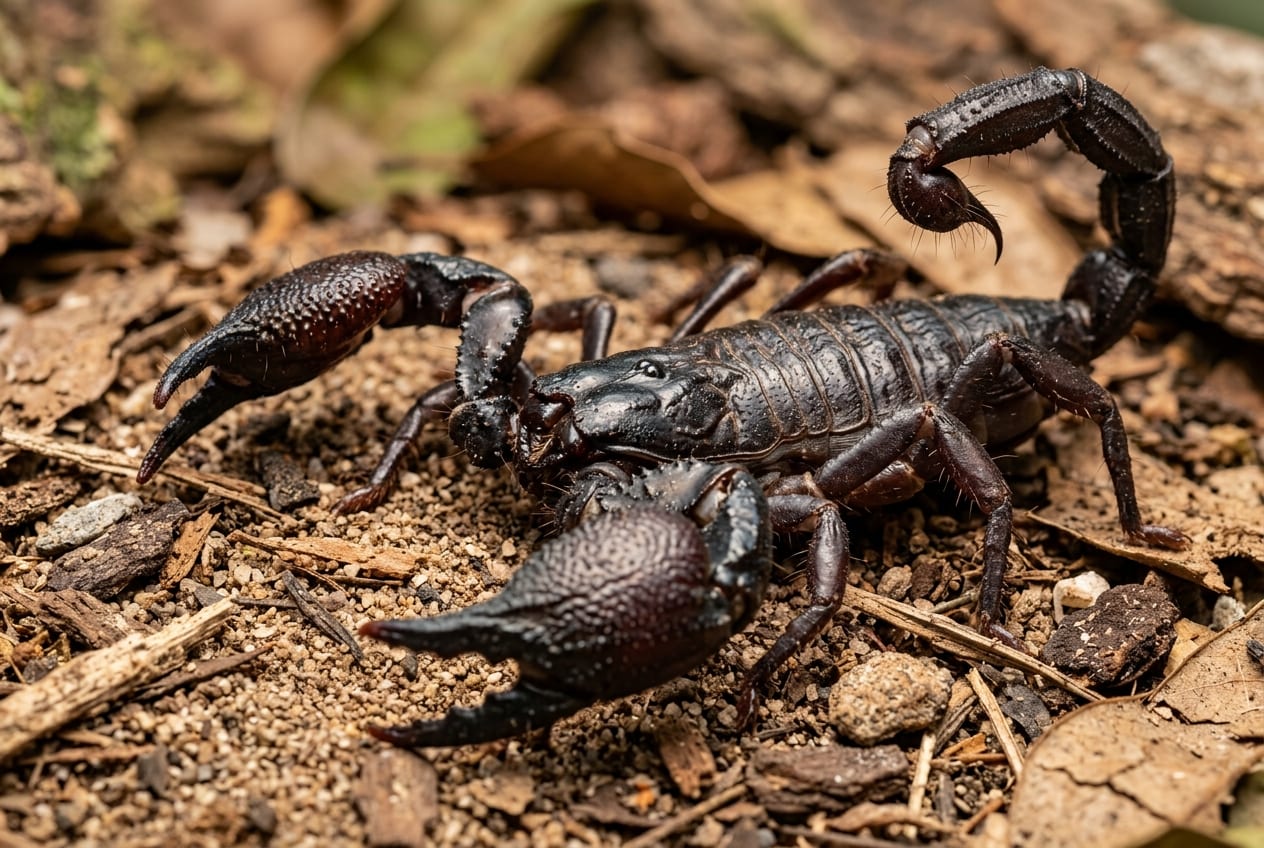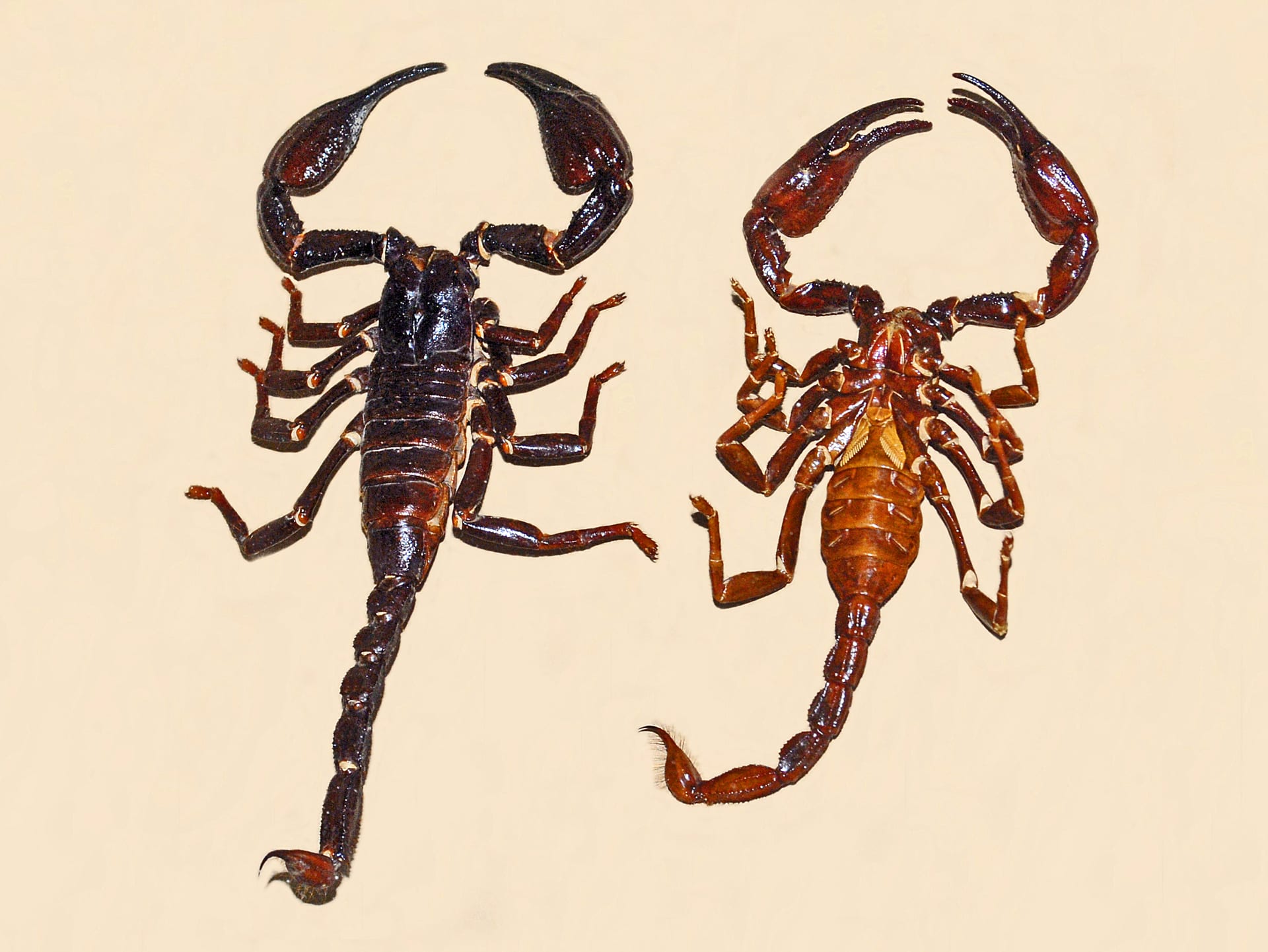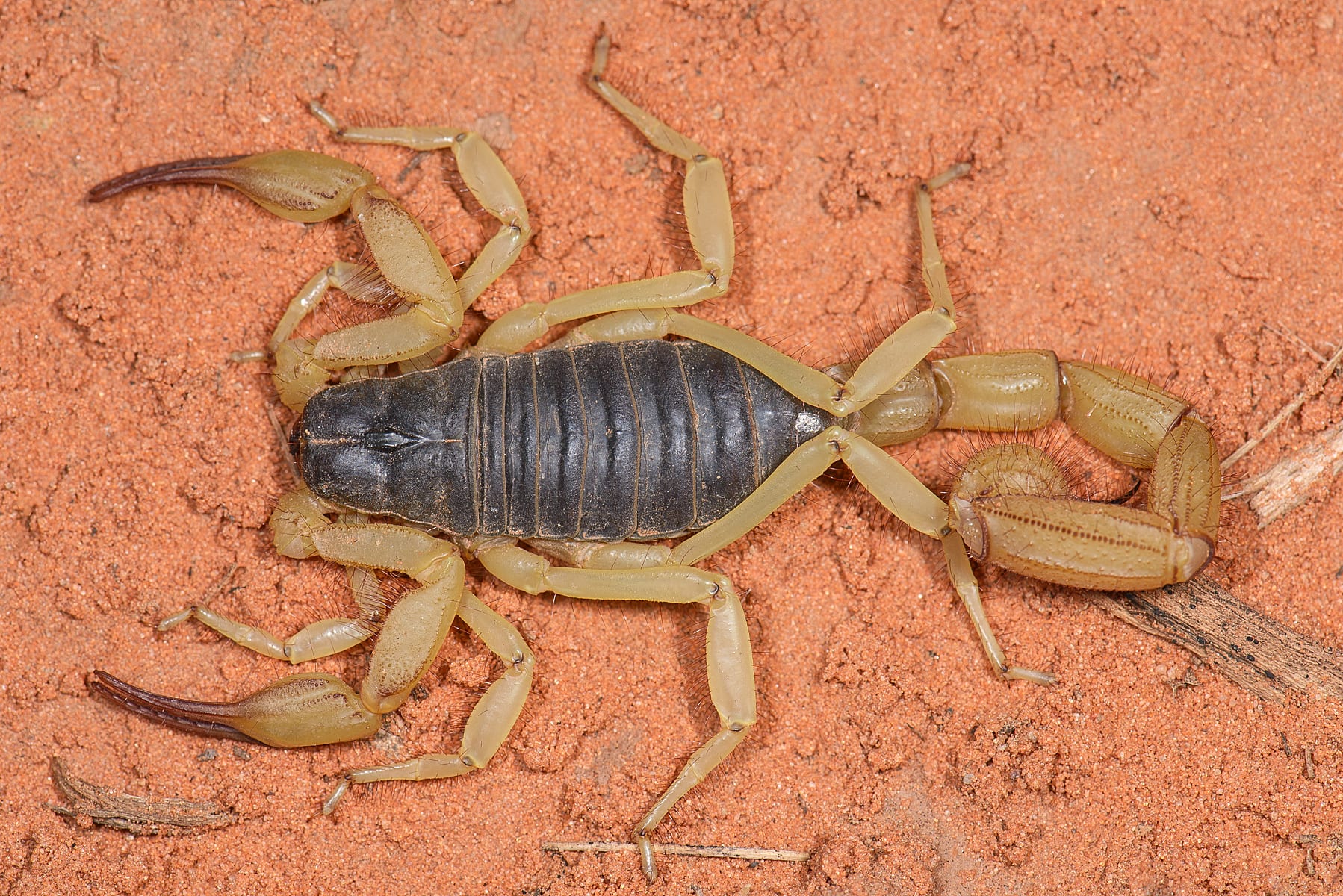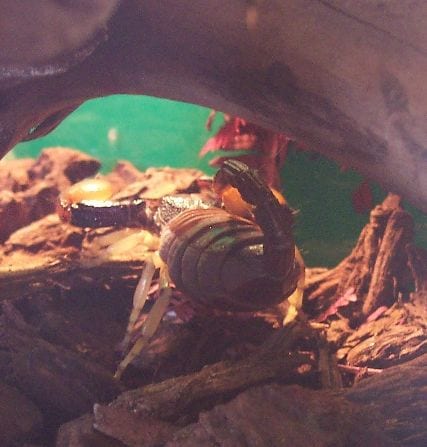
Source: Wikimedia Commons
Yellow-legged Burrowing Scorpion
IntermediateOpistophthalmus glabrifrons
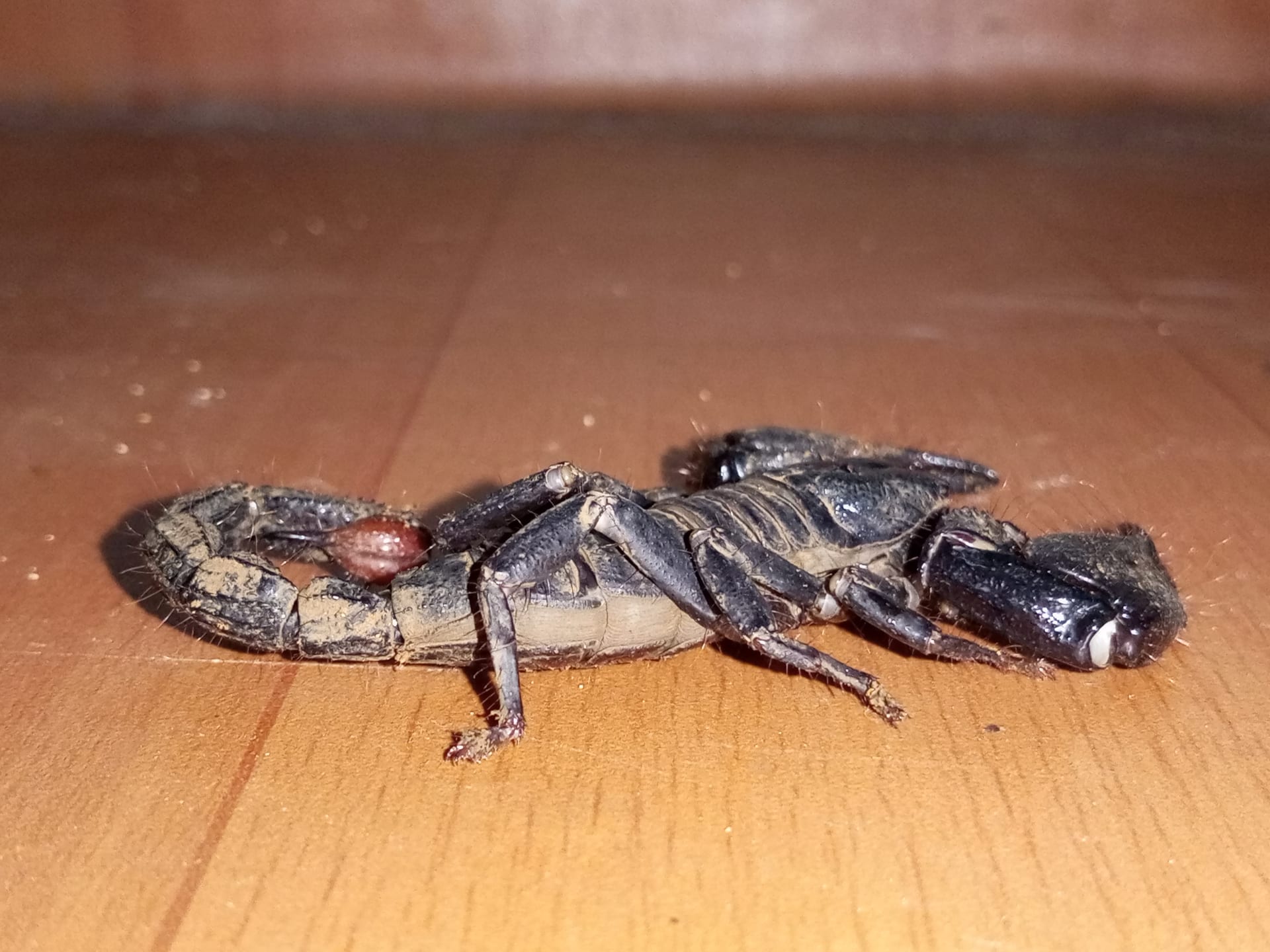
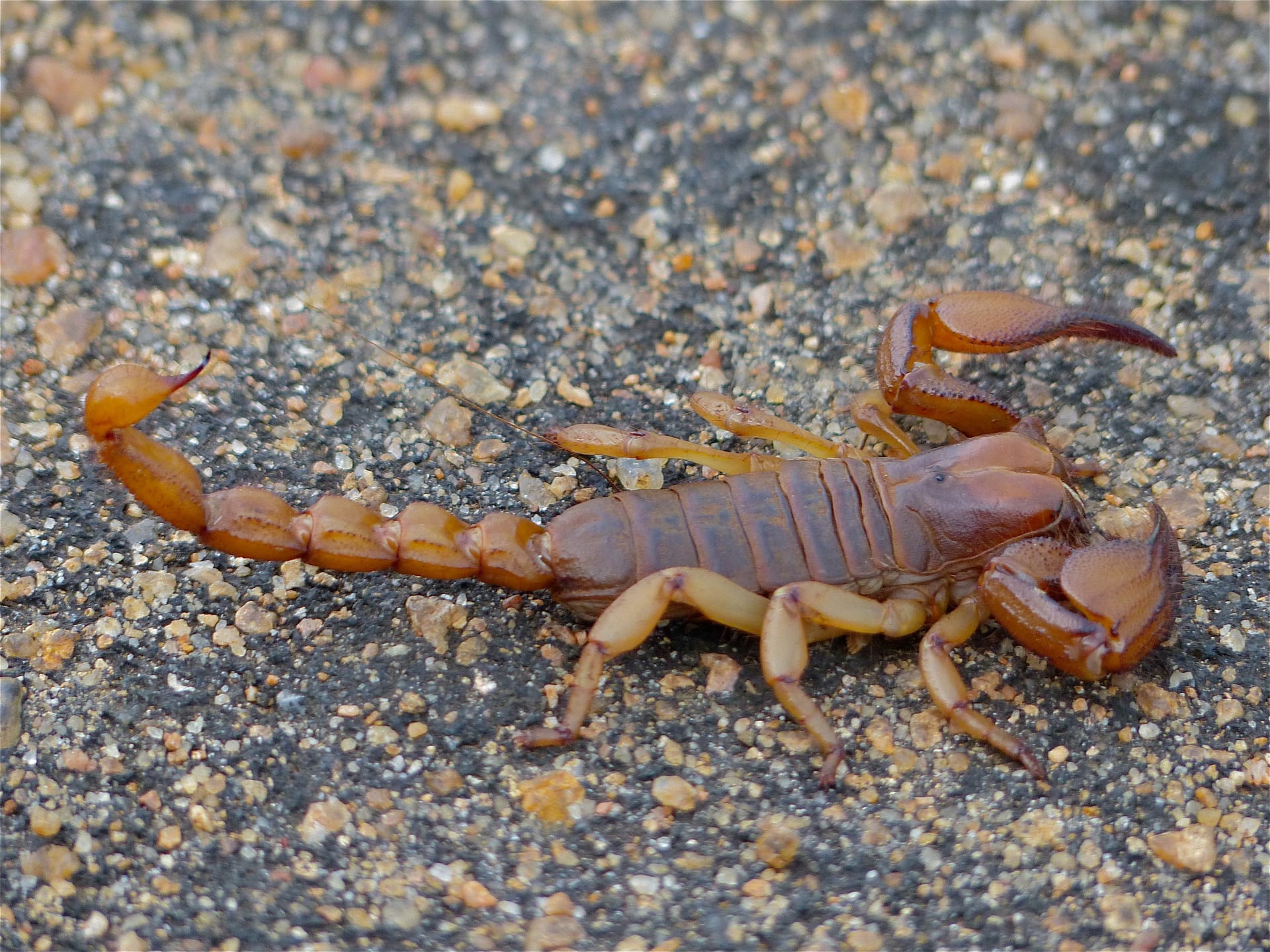
A large burrowing scorpion of 11-15cm as an adult, found in southern and eastern Africa. It has a glossy dark body with yellow legs, is fairly hardy in captivity but nervous, and stings more seriously than others in its genus.
Difficulty
Intermediate
Lifespan
8-12 years
Size
11-15cm total length as an adult
Diet
Live insects such as crickets
About
The yellow-legged burrowing scorpion (Opistophthalmus glabrifrons) is a large fossorial scorpion of southern and eastern Africa, reaching 11-15 cm as an adult. As its other common name, shiny burrow scorpion, suggests, the cuticle is glossy, and yellow legs contrast with the dark body. GBIF records are dominated by South Africa and extend to Zimbabwe, Mozambique, Malawi, Botswana, Eswatini, Tanzania and Zambia. The genus is widely available in the exotic pet trade and is generally hardy in captivity, though the animals are nervous; given deep substrate and a properly set up enclosure they stay in their burrows most of the time and are rarely seen. In southern Africa thick-clawed scorpions are usually assumed to be harmless, but this species is the exception and its sting is more serious than those of its relatives. Opistophthalmus species probably leave their burrows only to mate, which is thought to explain why stings are relatively rare.
Source: Wikipedia (CC BY-SA 4.0)
Lifespan of the Yellow-legged Burrowing Scorpion
The Yellow-legged Burrowing Scorpion lives 8-12 years.
Size of the Yellow-legged Burrowing Scorpion
The Yellow-legged Burrowing Scorpion grows to 11-15cm total length as an adult.
Basic Info
Origin
Southern and eastern Africa (South Africa, Zimbabwe, Mozambique, Botswana and neighbouring countries)
Lifespan
8-12 years
Size
11-15cm total length as an adult
Care Specifications
References & Sources
Edited & verified by: BreederDirect editorial team
The taxonomic, regulatory, and husbandry data on this page are compiled and verified against the authoritative primary sources below.
Taxonomy & Authority
Accepted name: Opistophthalmus glabrifrons Peters, 1861
Authority databases: GBIF
Nomenclature follows global taxonomic authority databases.
Regulations & Conservation Status
Not CITES-listed
Sources: CITES Appendices (species not listed)
Regulations may change. Always verify the latest information with the relevant authorities.
Yellow-legged Burrowing Scorpion Listings
Loading latest listingsFind listings for this species