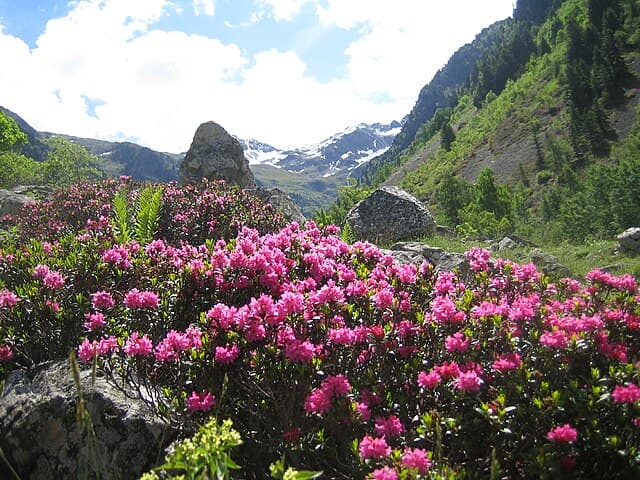
Source: Wikimedia Commons
Rhododendron
IntermediateEvergreen shrub with gorgeous flowers. Large flower clusters color spring. Alpine varieties prefer cool conditions, requiring some experience. Post-bloom care is crucial.
Difficulty
Intermediate
Temperature
-5〜35℃
Lifespan
50+ years (as bonsai)
Size
15-60cm (bonsai size)
Diet
Fertilizer (regular)
About
Rhododendron, from Ancient Greek ῥόδον (rhódon), meaning "rose", and δένδρον (déndron), meaning "tree", is a very large genus of about 1,024 species of woody plants in the heath family (Ericaceae). They can be either evergreen or deciduous. Most species are native to eastern Asia and the Himalayan region, but smaller numbers occur elsewhere in Asia, and in North America, Europe and Australia.
Source: Wikipedia (CC BY-SA 4.0)
Basic Info
Origin
East Asia (Himalayan region to Japan)
Lifespan
50+ years (as bonsai)
Size
15-60cm (bonsai size)
Temperature
-5〜35℃
Diet
Fertilizer (regular)
Care Guide
Placement
Semi-shade is ideal. Avoid direct summer sun and heat
Watering
Prefers acidic conditions. Never let dry, maintain moisture
Styling
Prune immediately after flowering. Emphasize natural form
Notes
Use acidic kanuma soil mix. Fine roots require careful repotting
IntermediateFloweringLarge bloomsAcidic soil
Rhododendron FAQ
QHow difficult is it to keep Rhododendron?
A
Intermediate. This is an intermediate-level species. Some prior experience and knowledge of environmental management are recommended.
QWhat is the ideal temperature for Rhododendron?
A
The ideal temperature for Rhododendron is -5〜35℃. Avoid sudden temperature changes and maintain a stable environment.
QWhat is the lifespan of Rhododendron?
A
The average lifespan of Rhododendron is 50+ years (as bonsai). With proper care and nutrition, they can live a long and healthy life.
Rhododendron Q&A
Find listings for this species