Source: Wikimedia Commons
Bougainvillea
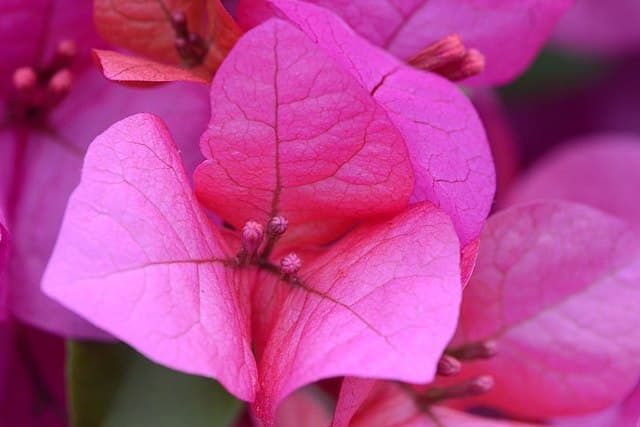
IntermediateIconic tropical flowering plant. The colorful parts are bracts, not flowers. Best in warm regions but can be grown indoors in cooler areas. Thick trunks add character.
Difficulty
Intermediate
Temperature
-5〜35℃
Lifespan
30+ years (as bonsai)
Size
15-60cm (bonsai size)
Diet
Fertilizer (regular)
About
Bougainvillea is a genus of thorny ornamental vines, bushes, and trees belonging to the family Nyctaginaceae. They are native to Mexico, Brazil, Bolivia, Paraguay, Peru, and Argentina. There are between 4 and 22 species in the genus. The inflorescence consists of large colorful sepal-like bracts which surround three simple waxy flowers, gaining popularity for the plant as an ornamental. The plant is named after explorer Louis Antoine de Bougainville (1729–1811), after it was documented on one of his expeditions.
Source: Wikipedia (CC BY-SA 4.0)
Basic Info
Origin
South America (Brazil, Bolivia, Peru, Argentina) and Mexico
Lifespan
30+ years (as bonsai)
Size
15-60cm (bonsai size)
Temperature
-5〜35℃
Diet
Fertilizer (regular)
Care Guide
Placement
Full sun required. Bring indoors in winter (above 5°C)
Watering
Keep slightly dry to promote blooming. Overwatering reduces flowers
Styling
Heavy pruning possible after flowering. Cut back regularly
Notes
Has thorns, gloves recommended. Low cold tolerance
IntermediateFloweringTropicalColorful
Bougainvillea FAQ
QHow difficult is it to keep Bougainvillea?
A
Intermediate. This is an intermediate-level species. Some prior experience and knowledge of environmental management are recommended.
QWhat is the ideal temperature for Bougainvillea?
A
The ideal temperature for Bougainvillea is -5〜35℃. Avoid sudden temperature changes and maintain a stable environment.
QWhat is the lifespan of Bougainvillea?
A
The average lifespan of Bougainvillea is 30+ years (as bonsai). With proper care and nutrition, they can live a long and healthy life.
Bougainvillea Q&A
Find listings for this species