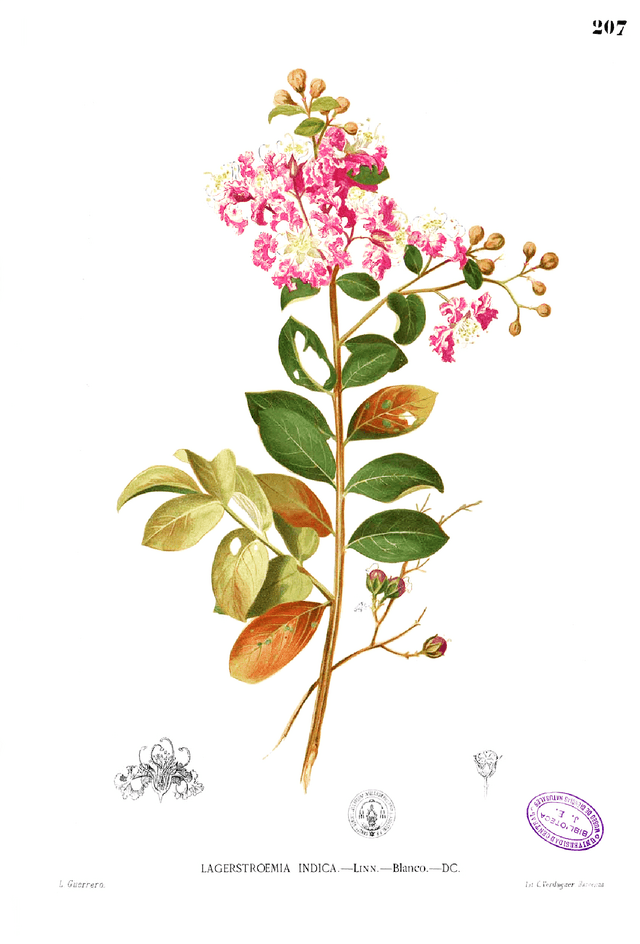
Source: Wikimedia Commons
Crape Myrtle
BeginnerFlowering bonsai blooming pink or white from summer to autumn. Smooth bark and twisted trunk create unique character. Named for bark so smooth even monkeys slip.
Difficulty
Beginner
Temperature
-5〜35℃
Lifespan
100+ years
Size
15-60cm (bonsai size)
Diet
Fertilizer (regular)
About
Lagerstroemia, commonly known as crape myrtle, is a genus of deciduous and evergreen trees and shrubs native to the Indian subcontinent, southeast Asia, northern Australia, and other parts of Oceania, cultivated in warmer climates around the world. It is a member of the family Lythraceae, which is also known as the loosestrife family. These flowering trees are beautifully colored and are often planted both privately and commercially as ornamentals.
Source: Wikipedia (CC BY-SA 4.0)
Basic Info
Origin
Indian subcontinent and Southeast Asia (introduced to Japan in the Edo period)
Lifespan
100+ years
Size
15-60cm (bonsai size)
Temperature
-5〜35℃
Diet
Fertilizer (regular)
Care Guide
Placement
Full sun outdoors. Poor flowering without enough light
Watering
Loves water. Watch for water shortage during flowering
Styling
Prune after flowering to promote next year's buds. Build with thick branches
Notes
Watch for powdery mildew. Ensure airflow and preventive spraying
BeginnerFloweringSummer bloomSmooth bark
Crape Myrtle FAQ
QHow difficult is it to keep Crape Myrtle?
A
Beginner. This is a beginner-friendly species. No special equipment or experience is required, and it can be kept successfully with basic care setup.
QWhat is the ideal temperature for Crape Myrtle?
A
The ideal temperature for Crape Myrtle is -5〜35℃. Avoid sudden temperature changes and maintain a stable environment.
QWhat is the lifespan of Crape Myrtle?
A
The average lifespan of Crape Myrtle is 100+ years. With proper care and nutrition, they can live a long and healthy life.
Crape Myrtle Q&A
Find listings for this species