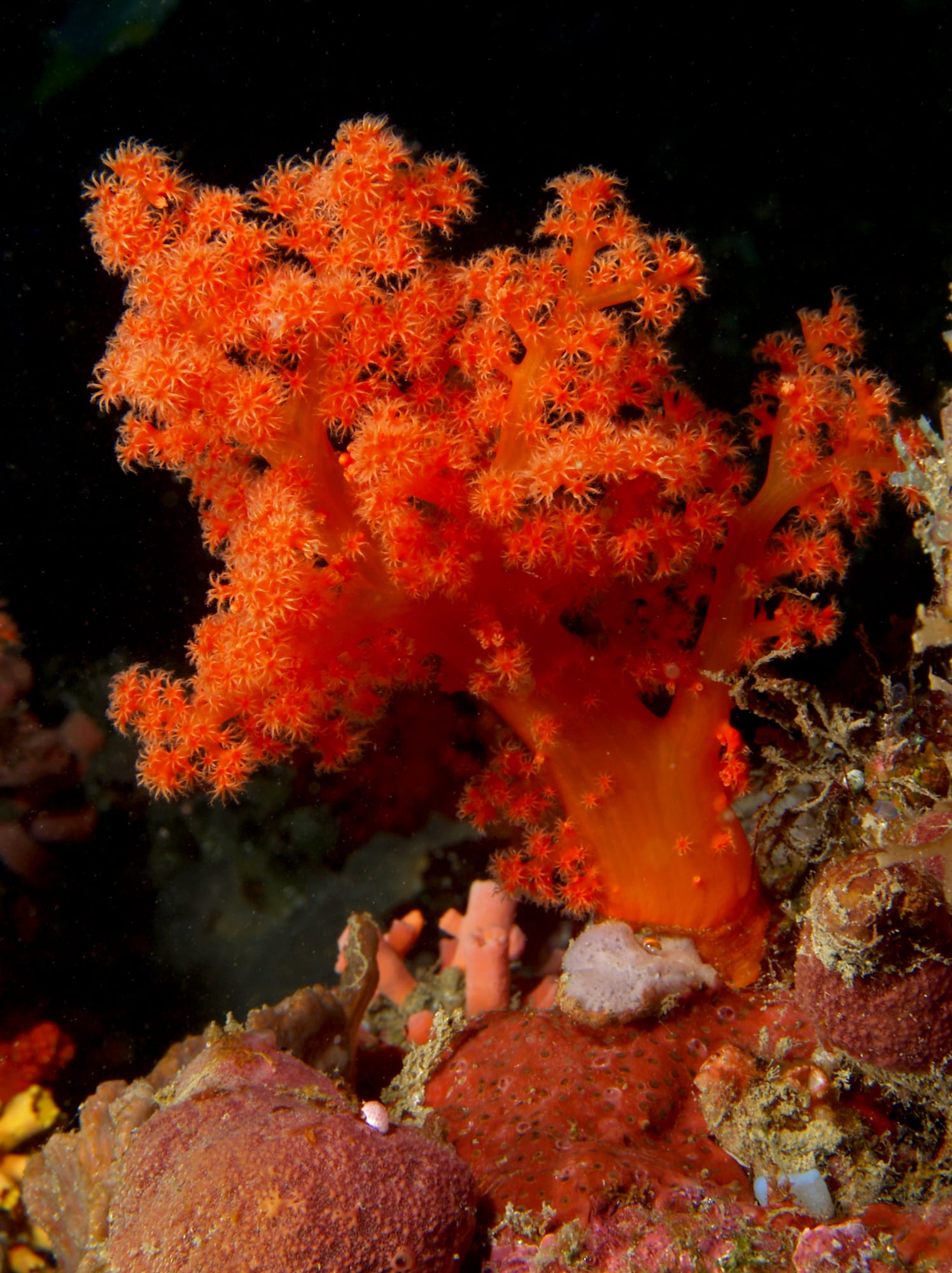
 © Nhobgood Nick Hobgood / CC BY-SA 3.0
紅指海羊毛
Scleronephthya, known as "umi-ichigo" (sea strawberry) in Japanese, is a non-photosynthetic soft coral prized for its vivid red, orange, and white coloration. Compared to related Dendronephthya species, it forms shorter, more compact branches tipped with dense, cluster-like bundles of polyps. Because it lacks zooxanthellae, it cannot rely on light for nutrition and instead needs a constant supply of fine particulate food to thrive. This demanding feeding regimen makes it a challenging species best suited to experienced keepers who can maintain stable water quality and flow while feeding attentively.
View 紅指海羊毛 encyclopedia →成交手續費 0%!2026年9月30日前註冊,前 2 筆成交免佣金!
繁殖者 招募中!
在 BreederDirect 上架,直接銷售給全國各地的客戶!
我們承諾的 6 個透明度標準
在珊瑚的上架商品中,繁殖者會明示下列資訊。避免過度捕撈的野生個體,確保養殖/CB為主、實物照片、飼育難度資訊的透明度。
- 養殖個體
- 實物照片
- 難度明示
- Frag/Colony
- 飼育資訊
- 標明流通名
查看全部210個品種
已註冊的繁殖者(搶先看)
關於紅指海羊毛
A guide to Scleronephthya (sea strawberry coral), a non-photosynthetic soft coral in red, orange, and white. This challenging species needs constant fine-particle feeding and suits experienced keepers.
迎接紅指海羊毛前需要了解的7件事
1A Non-Photosynthetic Species
Scleronephthya lacks zooxanthellae and does not photosynthesize. It relies on feeding rather than lighting for nutrition, which makes its care approach different from typical photosynthetic corals.
2Requires Constant Fine Feeding
Without zooxanthellae, it depends on frequent feedings of fine particulate food such as zooplankton. Gaps in feeding can gradually weaken the coral, so establishing a reliable feeding routine is essential.
3Cluster-Like Polyp Bundles
Its main appeal is the dense, cluster-like bundles of polyps that open at the branch tips. Compared to related Dendronephthya species, its branches are shorter and more compact, giving it a tidy overall shape.
4Water Flow and Quality Control
Frequent feeding tends to load the tank with extra nutrients, so consistent water flow is needed to distribute food evenly, alongside diligent water quality management.
5Vivid, Varied Coloration
Its standout feature is vivid coloration in shades of red, orange, and white. Since coloration varies between individuals, choosing one with your favorite hue is part of the enjoyment.
6A Species for Experienced Keepers
This coral is rated as suited to experienced keepers. Its demanding feeding routine and environmental requirements make it best attempted by those already comfortable with coral care.
7Before You Bring One Home
Before acquiring one, make sure you can consistently prepare and provide fine particulate food. Since feeding can shift water parameters, it also helps to have a habit of monitoring water quality in place.
紅指海羊毛的常見問題
- Q.Can beginners keep Scleronephthya?
- A.It is considered a challenging species suited to experienced keepers. Since it lacks zooxanthellae and cannot photosynthesize, it needs frequent feedings of fine food, which requires practiced feeding management.
- Q.Does it need strong lighting?
- A.Since Scleronephthya is non-photosynthetic and lacks zooxanthellae, it doesn't rely on strong light for nutrition. If lighting is used for tankmates, it's best positioned away from very intense direct light.
- Q.What kind of food does it need?
- A.It requires frequent feedings of fine particulate food such as zooplankton to sustain a near-constant food supply. Long gaps between feedings can cause it to weaken.
- Q.How is it different from Dendronephthya species?
- A.Scleronephthya is closely related to Dendronephthya but forms shorter, more compact branches, with polyps opening in dense cluster-like bundles at the branch tips, giving it a tidier overall shape.
- Q.Are there any international trade regulations?
- A.Scleronephthya is not subject to CITES.
適合飼養紅指海羊毛的實用工具
在圖鑑中詳細了解紅指海羊毛
查看紅指海羊毛的圖鑑條目 →
收錄飼養難度、壽命、體長、食性等基礎資料。