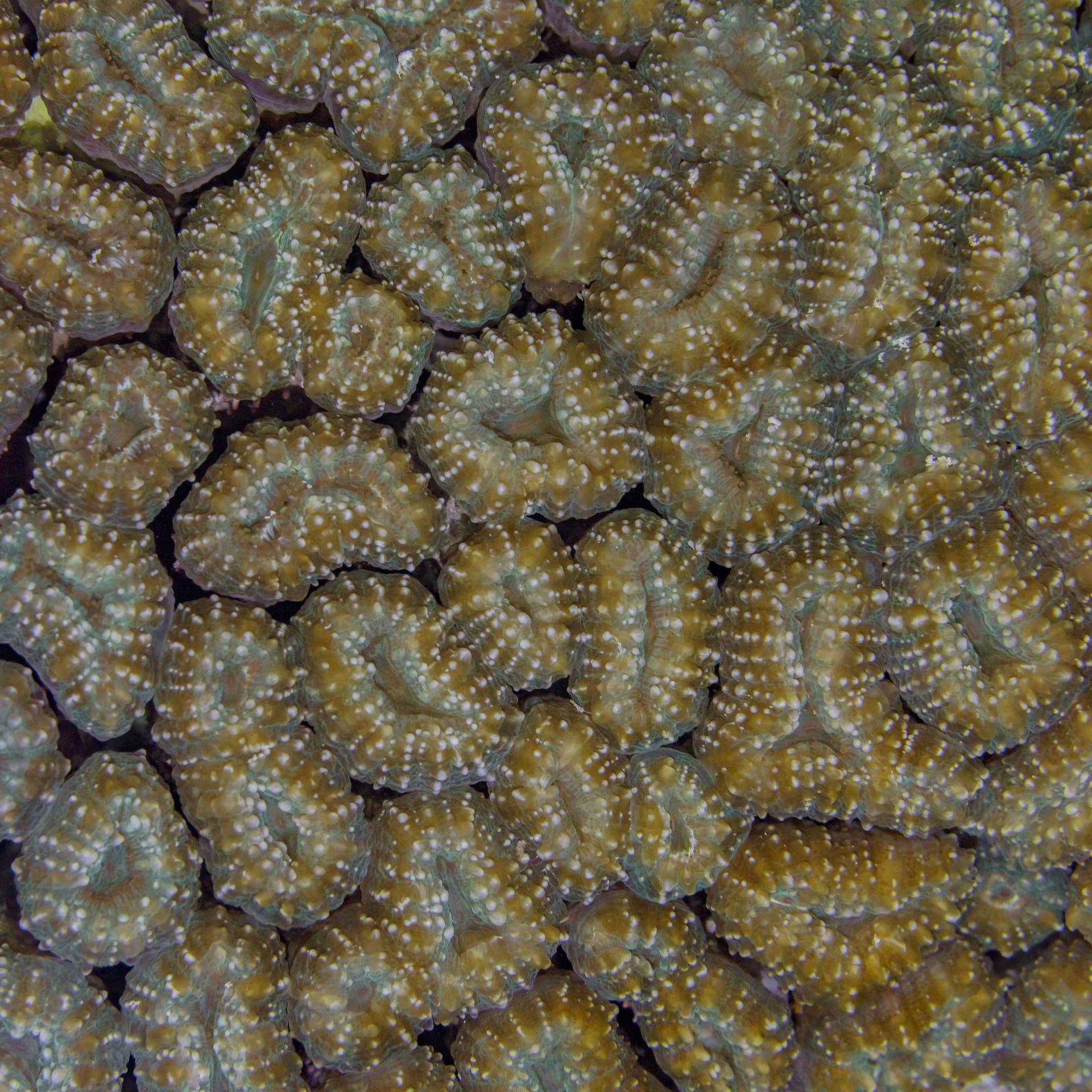
 © Diego Delso / CC BY-SA 4.0
圆叶珊瑚
Lobophyllia corymbosa is a large-polyp stony (LPS) coral found across shallow reefs from the Red Sea and East Africa through the Indo-Pacific. First described back in 1775, it's a long-established species whose polyps form as separate, cylinder-like domes rather than a continuous ridge. That sets it apart from its close relative Lobophyllia hemprichii, whose valleys run together in a more continuous pattern. Each rounded polyp stands out clearly, and its shape and coloring shift noticeably between day and night, making it a rewarding coral to watch closely. With a sturdy skeleton and a calm, undemanding disposition, it tends to settle in well for keepers who already have some experience with LPS corals.
View 圆叶珊瑚 encyclopedia →成交手续费0%!2026年9月30日前注册,前 2 笔成交免佣金!
繁殖者 招募中!
在BreederDirect发布商品,直接销售给全国客户!
Br-Choku 承诺的 6 个透明度要点
繁殖者在珊瑚的商品中公开以下信息。避免野生捕获个体,确保养殖CB为主、实物照片、饲养难易度信息的透明度。
- 养殖个体
- 实物照片
- 难易度标示
- Frag/Colony
- 包含饲养信息
- 标明流通名
查看全部210个品种
珊瑚分类正在招募认证繁殖者
繁殖者正在陆续注册,即将上架。设置上架通知,不错过新商品。
「接收上架通知」需免费注册会员即可设置。当有符合您保存条件的新商品上架时,我们会通过邮件和站内通知提醒您。
已注册的繁殖者(抢先看)
关于圆叶珊瑚
Lobophyllia corymbosa is an LPS coral from the Red Sea to Indo-Pacific shallows, known for its separate, cylinder-shaped polyps. Here's what to know before keeping this intermediate-level species.
迎接圆叶珊瑚前需要了解的7件事
1Distinct Cylindrical Polyps
Each polyp forms as a separate, cylinder-like dome, unlike Lobophyllia hemprichii where the valleys run together continuously. The polyps also inflate differently between day and night, so the coral looks different depending on when you view it.
2Stinging Tentacles
Like many LPS corals, it can extend long sweeper tentacles at night that irritate neighboring corals. Leave plenty of space between it and other corals so they never make direct contact.
3Avoid Strong Direct Flow
Its fleshy tissue can be damaged by strong, direct water flow hitting it continuously. Place it where gentle, diffused flow reaches instead.
4Moderate Lighting Preferred
This coral tends to prefer moderate rather than intense lighting. Start it in a lower-light spot and gradually acclimate it as you observe its condition.
5Occasional Feeding Helps
It naturally extends its tentacles at night to catch small food particles. Occasionally offering finely chopped seafood or prepared coral foods can support its condition.
6Stable Water Parameters
As with other LPS corals, stable temperature, salinity, calcium, and alkalinity are essential to keeping it healthy. Sudden shifts in water parameters can cause the polyps to shrink or lose color.
7Acclimate Slowly
When introducing it from a different water environment, a slow drip acclimation reduces stress. After placement, watch how the polyps open over the following days and avoid handling or moving it unnecessarily.
圆叶珊瑚的常见问题
- Q.How is it different from Lobophyllia hemprichii?
- A.Lobophyllia corymbosa forms separate, cylinder-shaped polyps, while Lobophyllia hemprichii has continuous, valley-like ridges. They're closely related, but the overall colony appearance differs.
- Q.Is this coral suitable for beginners?
- A.This coral is generally considered suitable for intermediate keepers rather than complete beginners. It's best to have some experience with water quality management and LPS corals first.
- Q.Can it be placed near other corals?
- A.Since LPS corals like this one can extend stinging tentacles at night, keep it a good distance from other corals. Avoid any placement where they might come into direct contact.
- Q.Does it need to be fed?
- A.Feeding isn't strictly necessary, but it naturally catches small food with its tentacles at night. Occasionally offering chopped seafood or coral food can support its growth.
- Q.What's the origin of its scientific name?
- A.The species name Lobophyllia corymbosa was first described by Forsskål in 1775, making it a long-established name in the literature. It belongs to the family Lobophylliidae among LPS corals.
适合饲养圆叶珊瑚的实用工具
在图鉴中详细了解圆叶珊瑚
查看圆叶珊瑚的图鉴条目 →
收录饲养难度、寿命、体长、食性等基础数据。