Affichage de 80 sur 80 espèces
🌹
Abraham Darby
An early David Austin masterpiece. Large cupped apricot to peach-pink blooms with strong fruity fragrance. Good repeat bloomer, hardy, and easy to grow. Can be trained as a climber.
Beginner-friendlyEnglish RoseStrong fragrance
🌹
Albertine
Rambler rose smothered in large salmon-pink blooms. Created 1921. Once-blooming but peak display is breathtaking, covering walls and pergolas entirely. Sweet strong fragrance. Especially popular in English gardens.
IntermediateRamblerOnce-blooming
🌹
Angela
A Kordes floribunda from Germany. Produces astonishing quantities of deep rose-pink cupped medium blooms in clusters. Can also be used as climber, covering fences completely. Extremely robust.
Beginner-friendlyVery hardyProlific bloomer
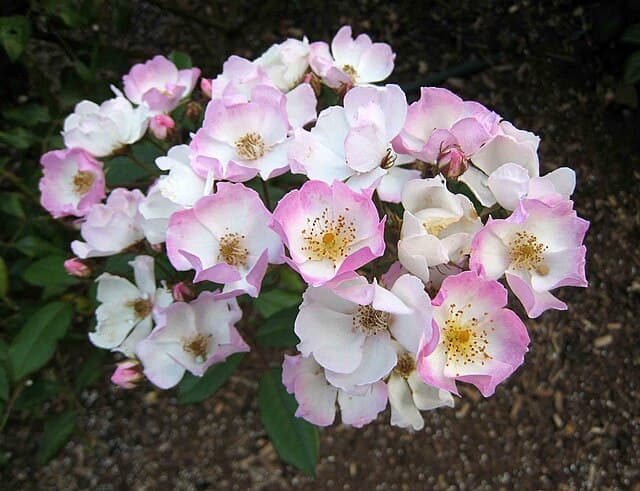
Ballerina
Hybrid Musk producing masses of small single blooms in clusters. Dainty light pink flowers with white eye resemble wild roses. Red hips follow blooms. Robust and beginner-friendly.
Small flowersCluster bloomingRobust
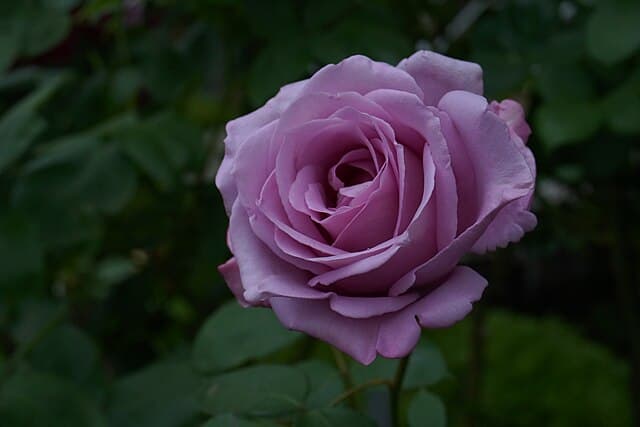
Blue Moon
Rosa 'Blue Moon'
Rare lavender-blue large blooms in the rose world. Celebrated for its rich blue-toned fragrance — a benchmark for scented roses. Somewhat delicate but its unique color and scent captivate enthusiasts.
IntermediateBlue roseStrong fragrance
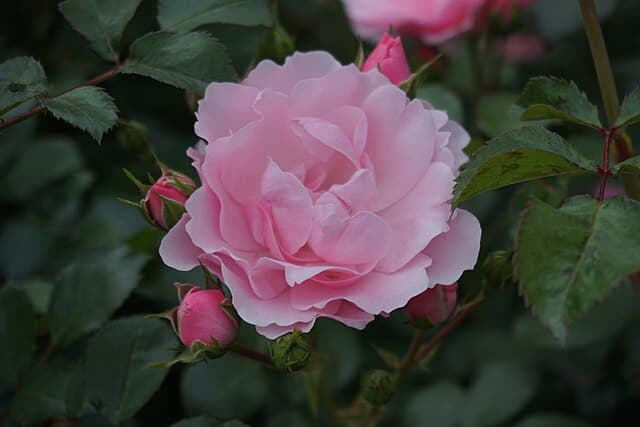
Bonica 82
Rosa ‘Bonica 82’
The benchmark landscape rose by Meilland. Continuous pale pink small-medium blooms. Outstanding cold hardiness and disease resistance, grows nearly spray-free. Used worldwide in parks and roadsides. Hall of Fame.
Beginner-friendlyVery hardyHall of Fame
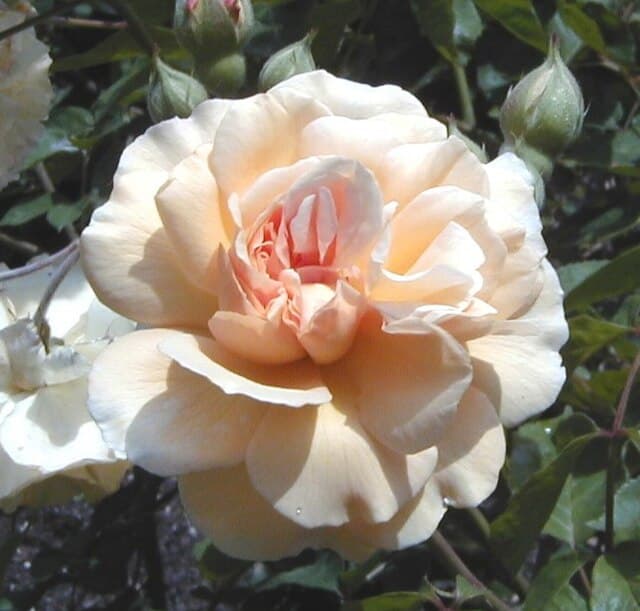
Buff Beauty
Distinctive buff-yellow Hybrid Musk. Color shifts from apricot to pale cream with temperature. Sweet Tea fragrance. Gracefully arching semi-climbing branches suit arches.
Buff yellowSemi-climbingModerate fragrance
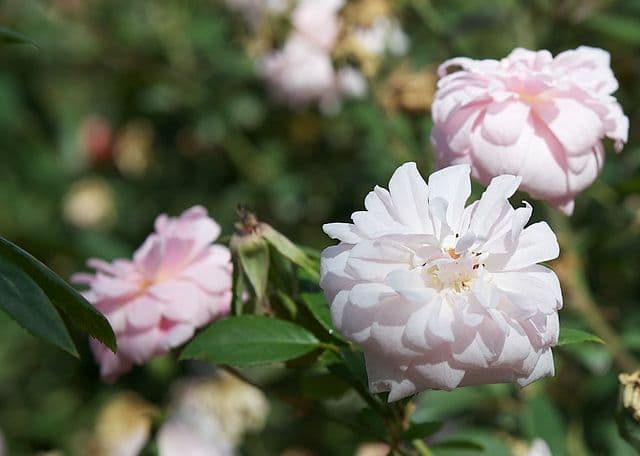
Cecile Brunner
Rosa ‘Cécile Brünner’
The 'Sweetheart Rose' — a Polyantha classic. Tiny 2cm pale pink blooms in perfect miniature HT form with unmatched elegance. Delicate Tea fragrance. A boutonniere staple beloved for generations.
Beginner-friendlyPolyanthaMiniature bloom
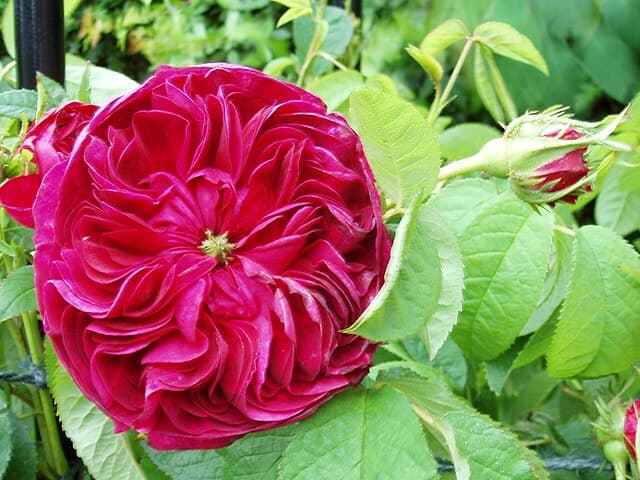
Charles de Mills
Rosa ‘Charles de Mills’
Considered the finest Gallica rose. Deep crimson to purple large flat rosette blooms packed with petals. Geometrically artistic flower form. Once-blooming but with overwhelming presence.
IntermediateOld RoseGallica
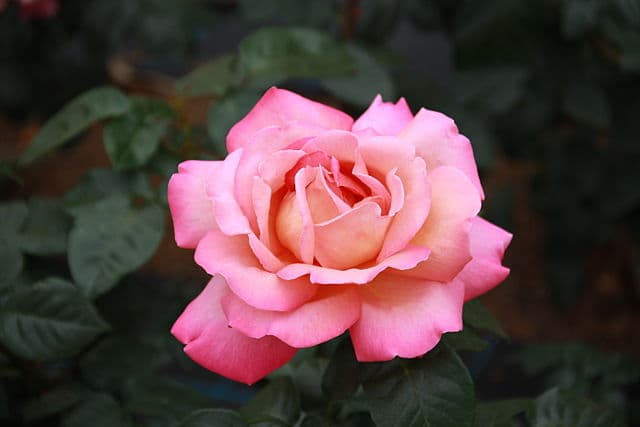
Chicago Peace
Rosa ‘Chicago Peace’
Sport of Peace with deeper pink and orange tones. More vivid colors than its parent while inheriting the same vigor and large blooms. Named for its discovery in Chicago. Perfect garden accent.
Beginner-friendlyLarge bloomBicolor
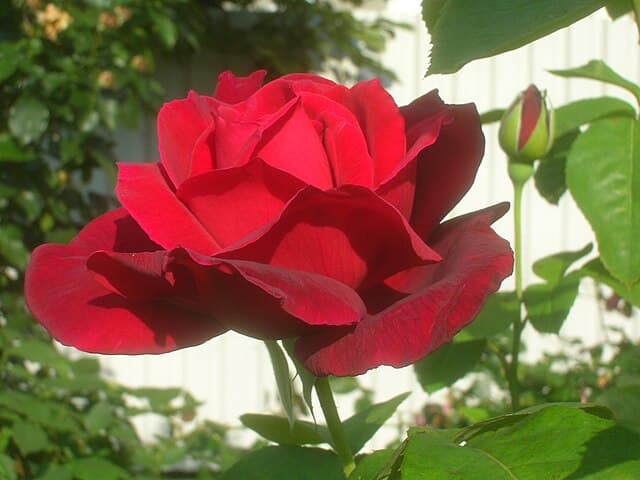
Chrysler Imperial
AARS winner from 1952. Deep crimson velvety petals with strong Damask fragrance. Classic high-centered form excels in competitions. Slightly heat-sensitive but autumn blooms are superb.
Deep crimsonStrong fragranceShow quality
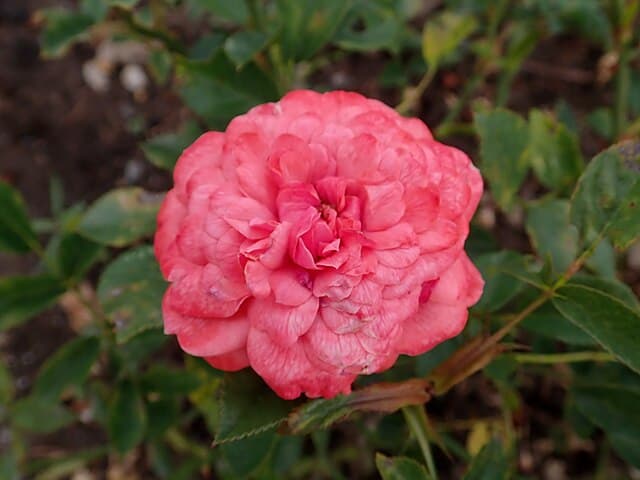
Cinderella (Miniature)
One of the earliest miniature roses from 1953. Tiny white to pale pink blooms (2cm) in clusters. Nearly thornless and easy to handle. Very compact 20-30cm, ideal for pots and edging.
MiniatureThornlessCompact
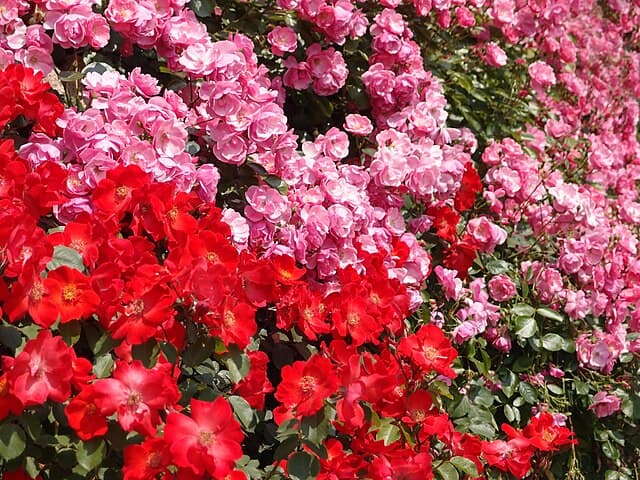
Cocktail
Single-petaled vivid red blooms with yellow eye on a climbing form. Simple but stunning in clusters. Strong repeat-blooming with excellent cold hardiness and disease resistance. A staple for fences and arches.
Beginner-friendlyClimbingRepeat-blooming
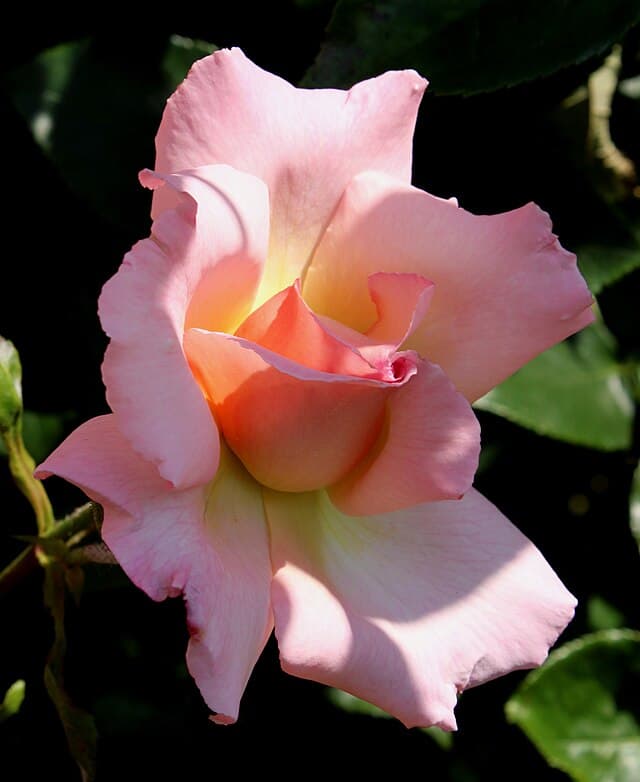
Compassion
Climbing rose with large salmon-pink and apricot blooms in classic HT form. Sweet strong fragrance with repeat-blooming ability. Consistently ranks high in UK rose popularity polls.
IntermediateClimbingStrong fragrance
🌹
Cornelia
Hybrid Musk from 1925. Masses of apricot-pink small flowers in sprays. Moderate Musk scent carries through the garden. Good autumn repeat. Semi-climbing suits arches.
Apricot pinkSemi-climbingCluster blooming
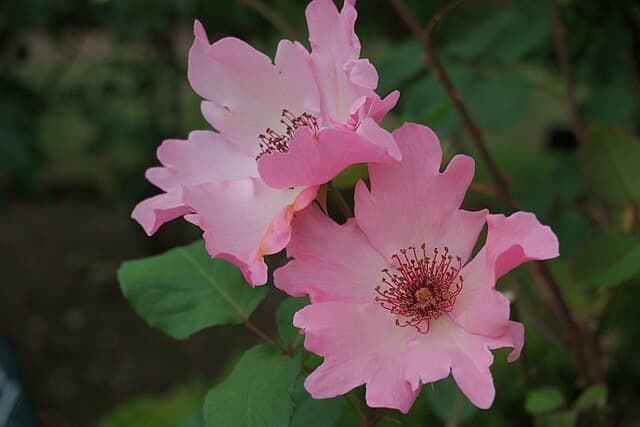
Dainty Bess
Rosa ‘Dainty Bess’
Masterpiece of single-flowered Hybrid Teas. Delicate pale pink 5-petal blooms with striking wine-red stamens. Historic 1925 variety that popularized single roses. Blooms in clusters for abundant flowers.
IntermediateSingle bloomHeritage
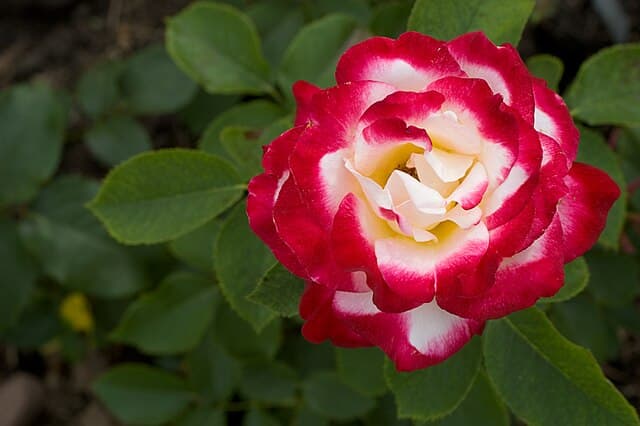
Double Delight
Rosa ‘Double Delight’
Cream-white petals blush cherry-red in sunlight — a double delight of color and fragrance. Strong Damask scent consistently wins awards. Every bloom is uniquely colored.
IntermediateStrong fragranceColor-changing
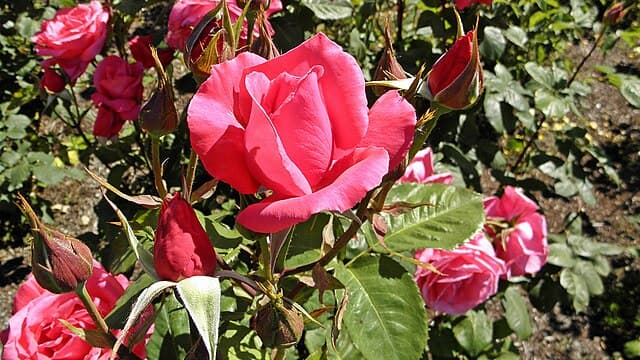
Electron
Vibrant rose-pink large blooms with substantial petal texture, relatively rain resistant. AARS 1973. Sweet strong fragrance and excellent vase life make it popular for cutting.
Rose pinkStrong fragranceGood for cutting
🌹
Elina
Pale cream-yellow large blooms with perfect high-centered form. World Rose Hall of Fame 1994. Excellent disease and cold resistance, ideal for beginners. Light scent but unrivaled bloom form.
Hall of FameBeginner-friendlyDisease resistant
🌹
Europeana
Powerful Floribunda with deep crimson rosette blooms in large clusters. AARS 1968 winner. Velvety dark red petals contrast beautifully with dark bronze new foliage. Low spreading habit perfect for garden fronts.
Beginner-friendlyCluster floweringCrimson
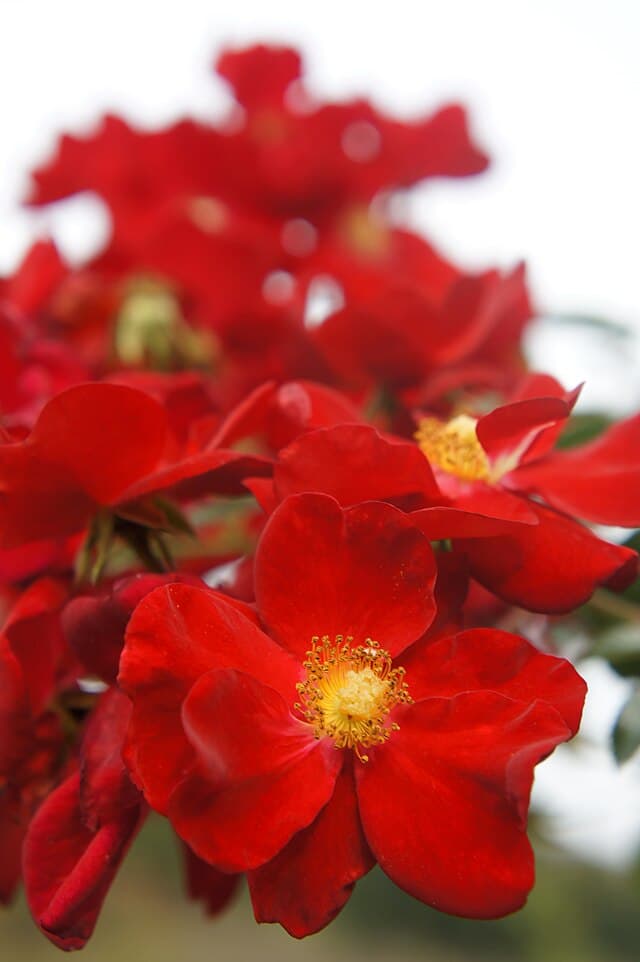
Flower Carpet
Flower carpet
The world's best-selling ground cover rose. Small pink blooms carpet the ground continuously from spring to late fall. Extremely disease-resistant, virtually pesticide-free. Widely used in public landscaping.
Beginner-friendlyGround coverDisease-resistant
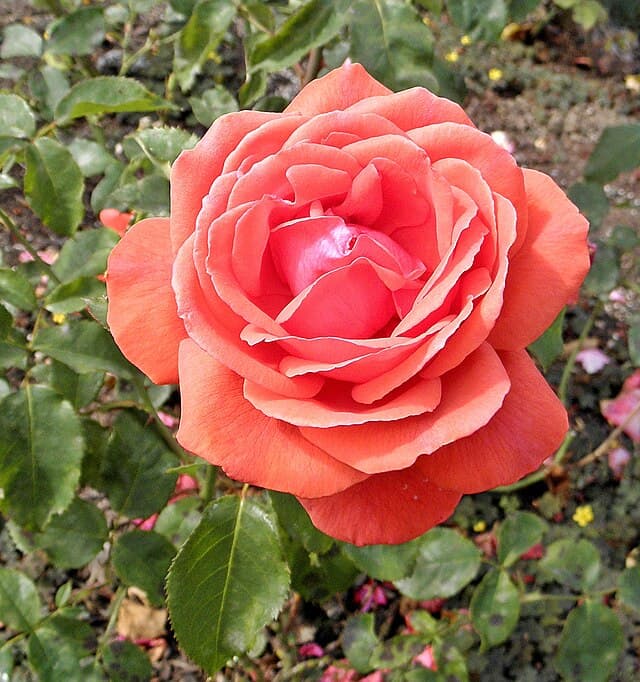
Fragrant Cloud
Rosa ‘Fragrant Cloud’
Hybrid Tea with large salmon-red blooms and overwhelming Damask fragrance. World Rose Hall of Fame 1981. Velvety petals resist fading and excel as cut flowers. Vigorous and easy to grow.
Beginner-friendlyStrong fragranceHall of Fame
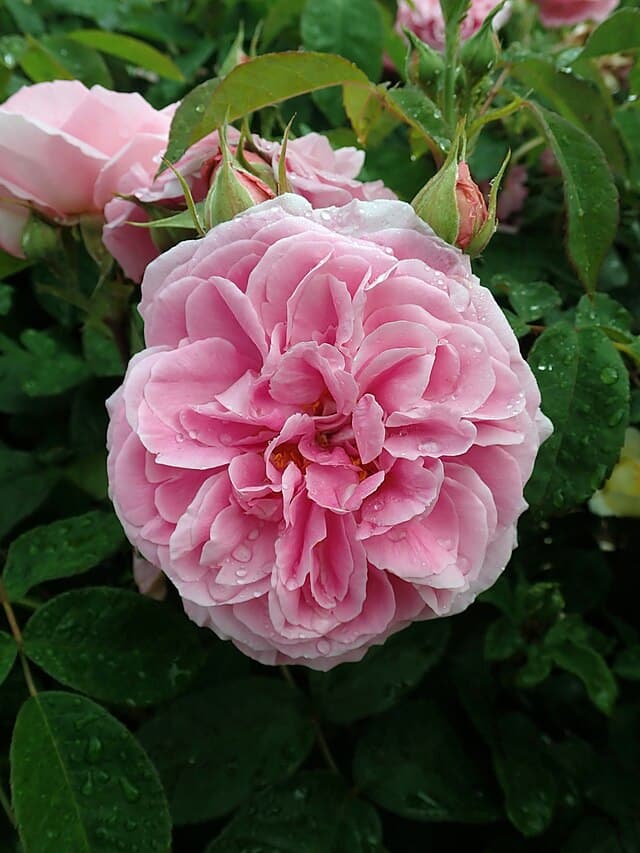
Gertrude Jekyll
Considered the most fragrant English Rose. Deep pink rosette blooms emit an Old Rose scent so fine it is used in perfume production. Versatile enough to train as a climber.
Strongest fragrancePinkCan train as climber
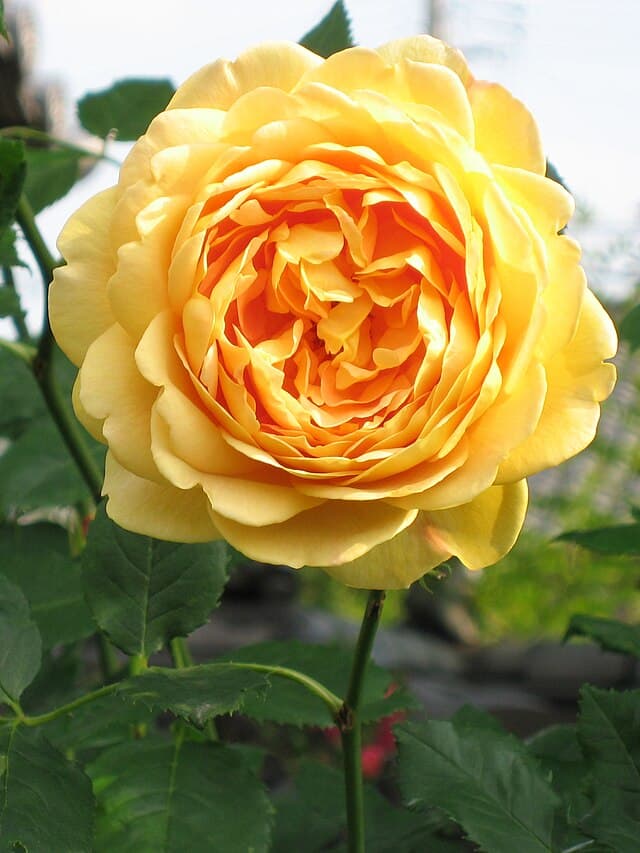
Golden Celebration
Rosa ‘Golden Celebration’
Golden giant cupped blooms up to 12cm across, a striking English Rose. Strong sweet fragrance reminiscent of Tea and Sauternes wine. Beautiful trained on arches or obelisks.
GoldenLarge bloomStrong fragrance
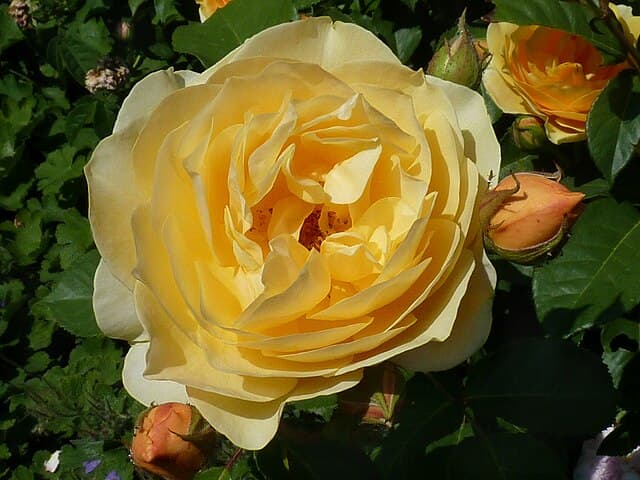
Graham Thomas
Quintessential David Austin English rose. Deep yellow cupped blooms with fresh Tea fragrance. Strong repeat-blooming from spring to fall. World Rose Hall of Fame inductee.
IntermediateEnglish RoseHall of Fame
🌹
Green Ice
Popular miniature rose. Buds open pink, turn white, then fade to green — a rare color transition. Strong repeat-bloomer, thrives even in small pots. Good disease resistance, ideal for balcony gardening.
Beginner-friendlyMiniatureColor-changing
🌹
Hanaguruma
Japanese climbing rose by Seizo Suzuki. Vivid vermilion single blooms in abundant clusters. 5-6cm flowers cover branches like 'flower wheels' as the name suggests. Excellent cold hardiness.
Japanese bredClimbingSingle bloom
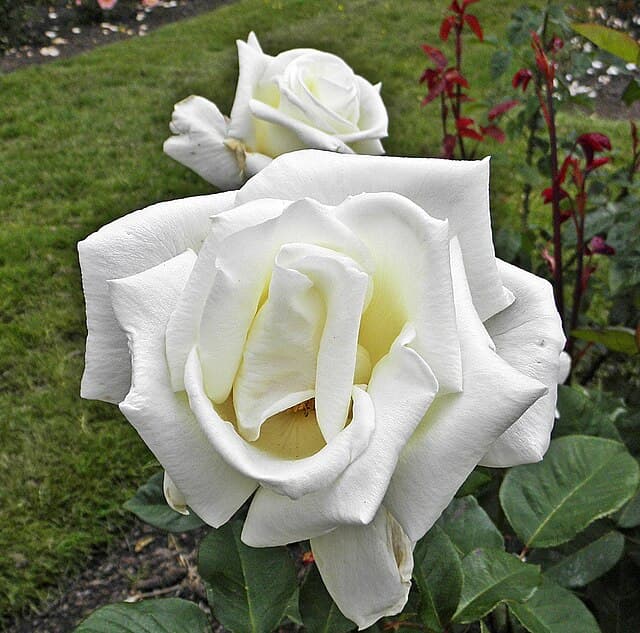
Honor
Pure white large-flowered Hybrid Tea. AARS winner 1980. Thick petals with excellent vase life. Upright habit and long stems ideal for cutting and competition. Part of the Love-Honor-Cherish trio.
IntermediateWhite roseLarge bloom
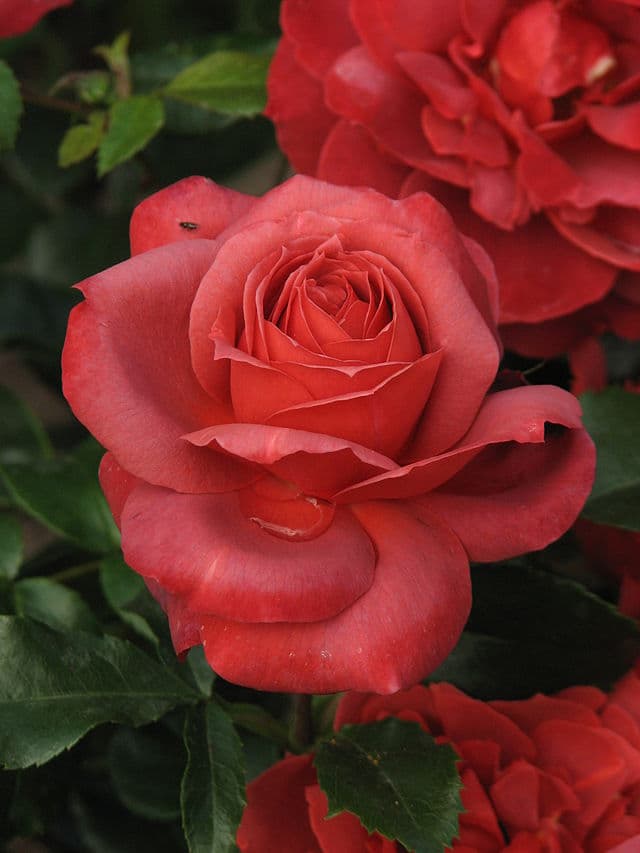
Hot Cocoa
Unique chocolate-brown Floribunda with orange reverse petals. AARS 2003 winner. Smoky tones unlike any other rose with distinctive spicy fragrance. Popular as cut flowers.
IntermediateUnique colorSpicy fragrance
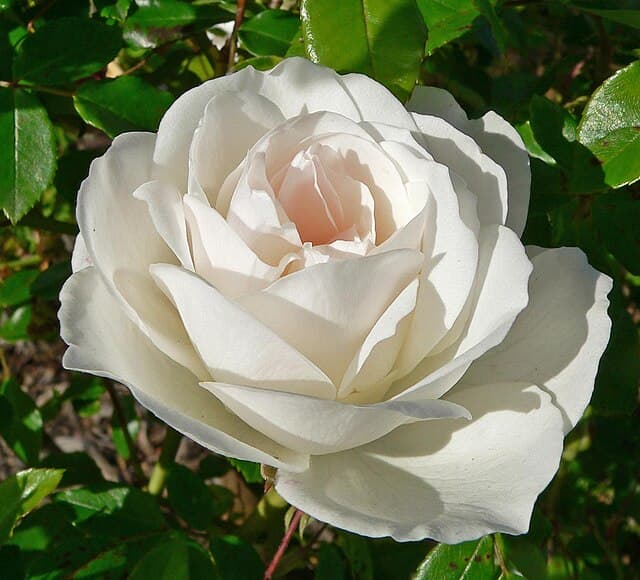
Iceberg
Rosa 'Iceberg'
Iconic floribunda producing clusters of pure white medium blooms. Outstanding repeat-blooming from spring to late fall. A garden staple worldwide. Climbing variant available.
Beginner-friendlyRepeat-bloomingPure white
🌹
Intrigue
Floribunda in deep plum to dark magenta. Uniquely ruffled petal form ideal for sophisticated garden design. Strong Damask fragrance. Unmatched color depth creates striking contrast, a superb supporting player.
IntermediateFloribundaSophisticated
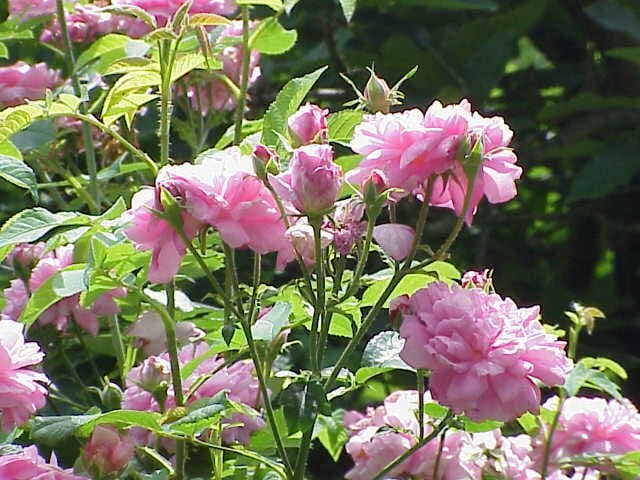
Ispahan
A Damask rose renowned for exceptionally long bloom season. Bright pink double rosette flowers open in succession. Strong Damask fragrance used for rose oil. Named after the ancient city of Isfahan.
IntermediateOld RoseDamask
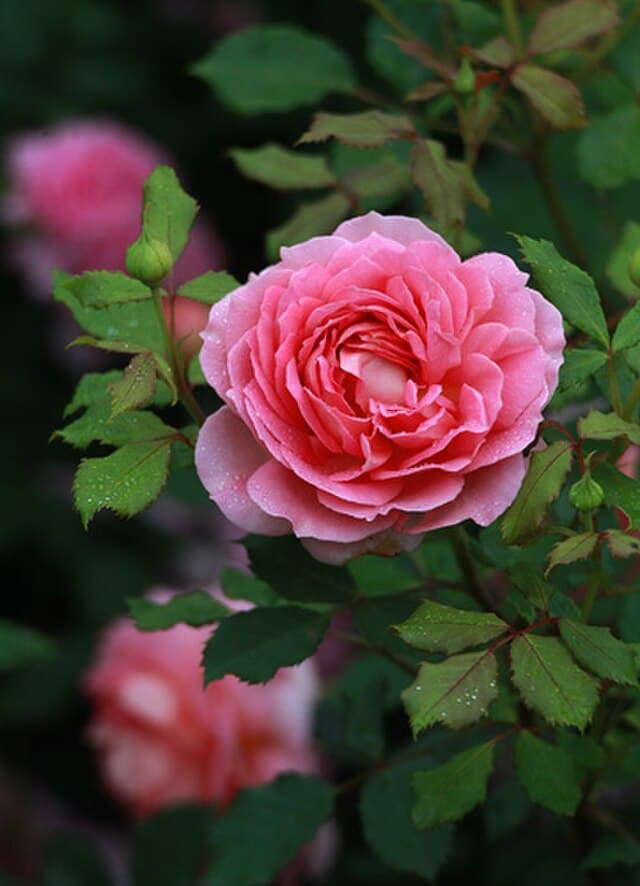
Jubilee Celebration
Rosa ‘Jubilee Celebration’
Named for Queen Elizabeth II's Golden Jubilee. Salmon-pink domed blooms with complex fruit and lemon fragrance. David Austin himself called it one of his finest achievements.
IntermediateEnglish RoseStrong fragrance
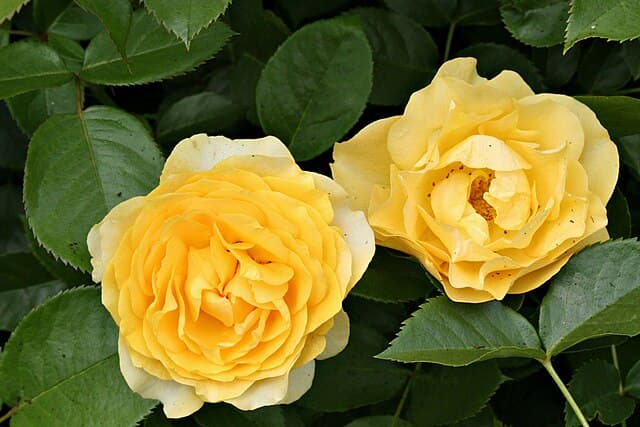
Julia Child
Butter-yellow cupped Floribunda dedicated to famed chef Julia Child. Sweet licorice fragrance with excellent disease resistance. Rounded blooms add cheerful brightness to any garden.
Beginner-friendlyYellowDisease-resistant
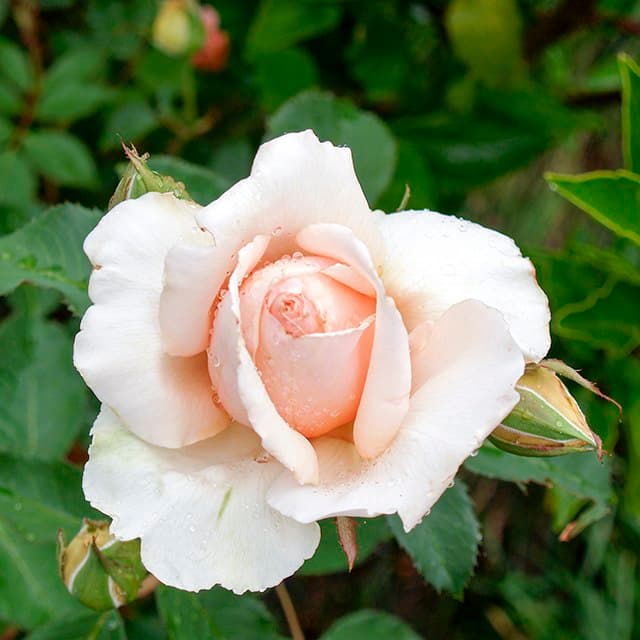
Just Joey
Rosa ‘Just Joey’
Hybrid Tea with large apricot-orange blooms that open in elegant ruffled waves. Unique form with frilled petal edges. Enjoyable fruity fragrance. Hall of Fame variety beloved worldwide.
IntermediateHall of FameRuffled bloom
🌹
Kaorino
Bred by Keisei Rose Nurseries. Gentle cream-pink color with strong Damask fragrance. Double gold at 2006 JRC (overall and fragrance). Frilled petals evoke Japanese elegance.
Japanese bredStrong fragranceFrilled petals
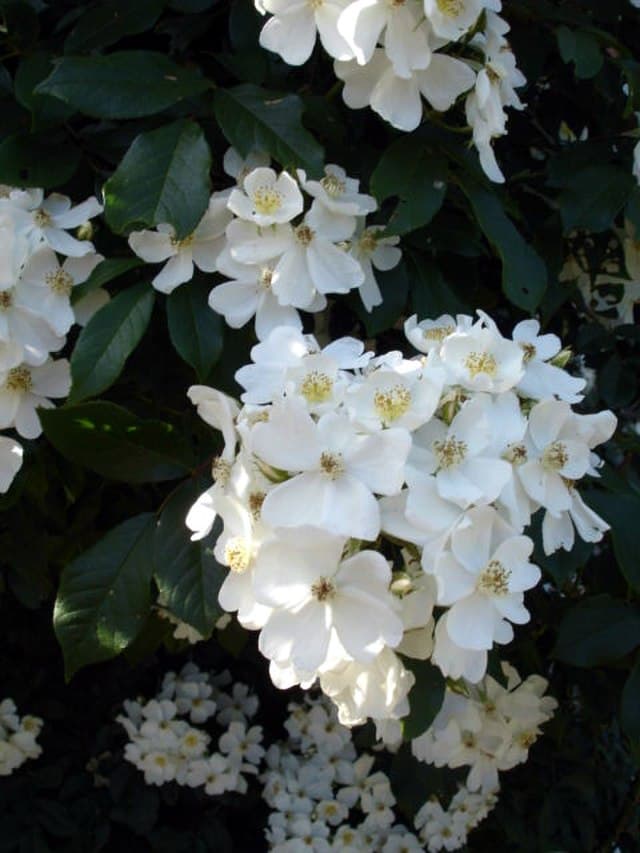
Kiftsgate
A Rosa filipes selection discovered at Kiftsgate Court, England. Spectacular cascades of tiny white flowers. Can grow over 10m, climbing into large trees. For experienced growers only.
AdvancedSpecies typeGiant
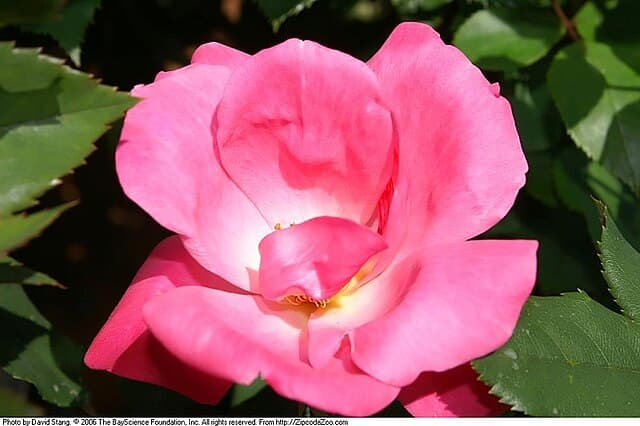
Knock Out
Revolutionary landscape rose, AARS winner 2000. Cherry-red semi-double blooms non-stop from spring to frost. Exceptional disease resistance, virtually immune to black spot. The definitive spray-free rose.
Beginner-friendlyLandscape roseDisease-resistant
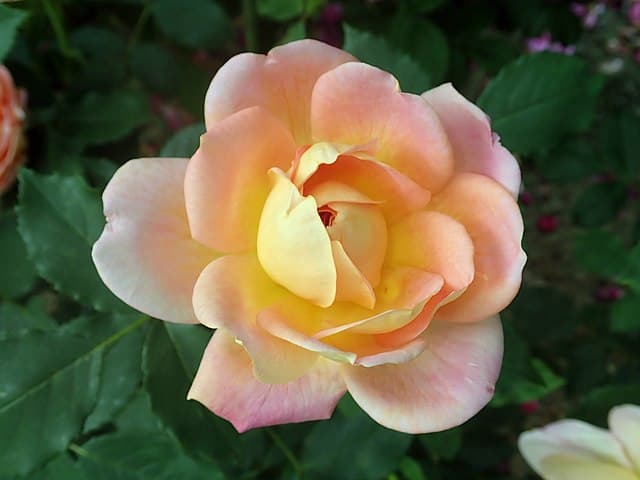
Lady of Shalott
Recommended by David Austin as one of the hardiest English Roses. Salmon-orange petals with golden reverse create a unique warm tone. Pleasant Tea fragrance. Good repeat flowering.
Disease resistantBeginner-friendlySalmon orange
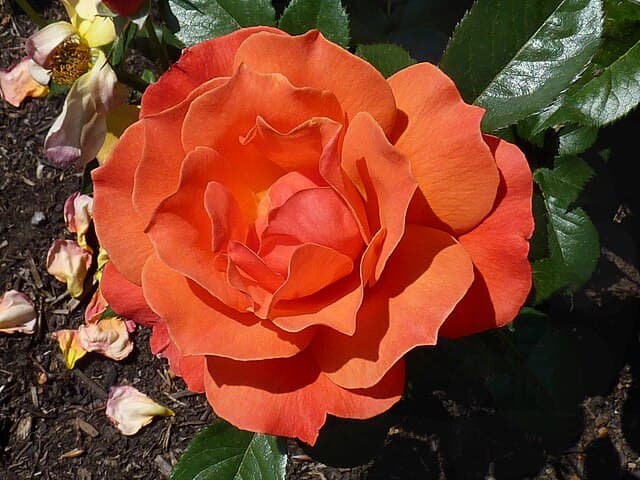
Livin' Easy
Rosa ‘Livin’ Easy’
Vivid apricot-orange Floribunda. AARS 1996 winner. True to its name, extremely easy to grow with excellent disease resistance. Fruity fragrance with outstanding repeat blooming from spring through fall.
Beginner-friendlyDisease-resistantRepeat blooming
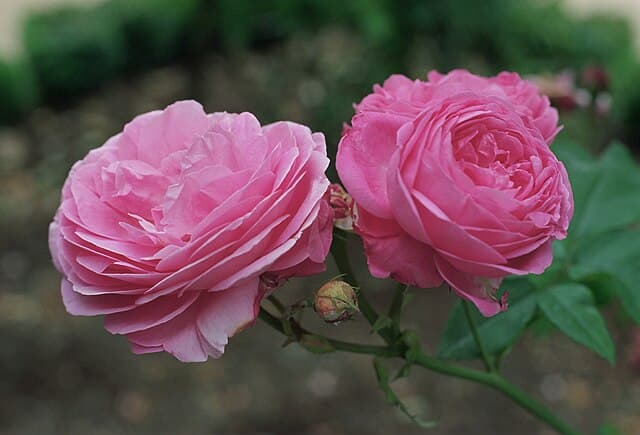
Louise Odier
Rosa ‘Louise Odier’
A celebrated Bourbon rose from 1851. Warm pink rounded cupped blooms in continuous succession. Rich Damask fragrance typical of Bourbons. Repeat-blooming, grown as shrub or trained as climber.
IntermediateOld RoseBourbon
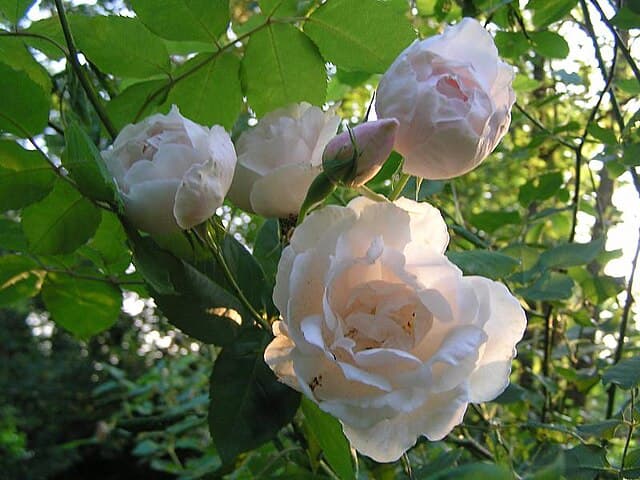
Madame Alfred Carriere
Rosa ‘Madame Alfred Carrière’
A Noisette old rose from 1879. Elegant white to pale pink large blooms with sweet fragrance. A rare climber that blooms in partial shade, even on north-facing walls. Very cold-hardy.
Beginner-friendlyOld RoseShade-tolerant
🌹
Marie Pavie
Rosa ‘Marie Pavié’
Nearly thornless Polyantha from 1888. White to pale pink small blooms in clusters. Thornless nature makes it safe near walkways and children's gardens. Hardy with shade tolerance, blooming even in partial shade.
Beginner-friendlyThornlessPolyantha
🌹
Misato
Japanese-bred rose by Keisei. Lavender-pink rounded cupped blooms in clusters. Strong sweet Damask Modern fragrance. Compact habit suitable for containers. Good repeat blooming.
Japanese bredLavender pinkStrong fragrance
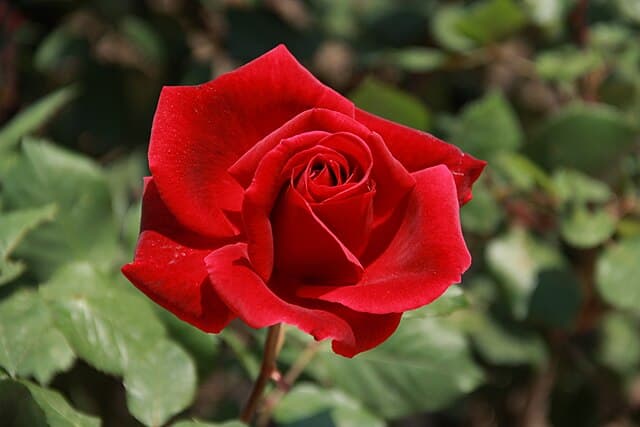
Mister Lincoln
America's iconic red rose masterpiece. Deep red large blooms with thick petals and excellent vase life. Strong Damask fragrance. Long straight stems perfect for cutting. Heat-tolerant and beginner-friendly.
Beginner-friendlyLarge bloomStrong fragrance
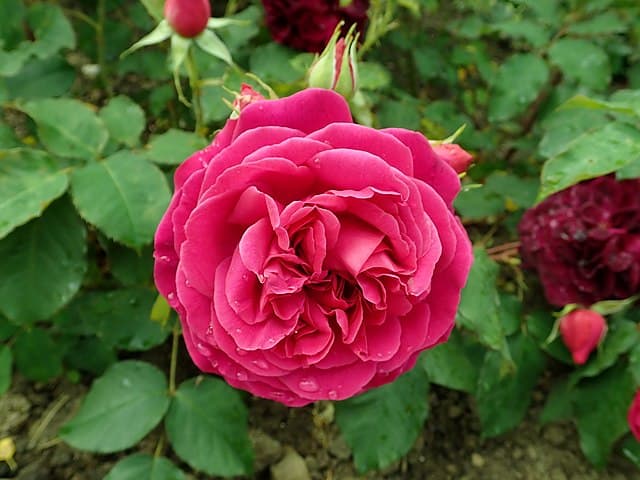
Munstead Wood
Deep crimson English Rose that darkens to velvety blackish-red as blooms open. Rich strong fragrance blending Old Rose with fruit notes. Compact bush habit.
Deep crimsonStrong fragranceEnglish Rose
🌹
New Dawn
The world's first patented rose (1930) and a global climbing rose icon. Masses of pale pearl-pink blooms create a breathtaking display. Repeat-blooming with outstanding cold and disease resistance. Hall of Fame.
Beginner-friendlyClimbingHall of Fame
🌹
Nozomi
Miniature climbing rose bred by Japanese hybridizer Onodera. Pale pearl-pink single blooms cascade beautifully. Once-blooming but with a long season, ideal for ground cover and trailing over walls. Worldwide popularity.
Beginner-friendlyGround coverJapanese-bred
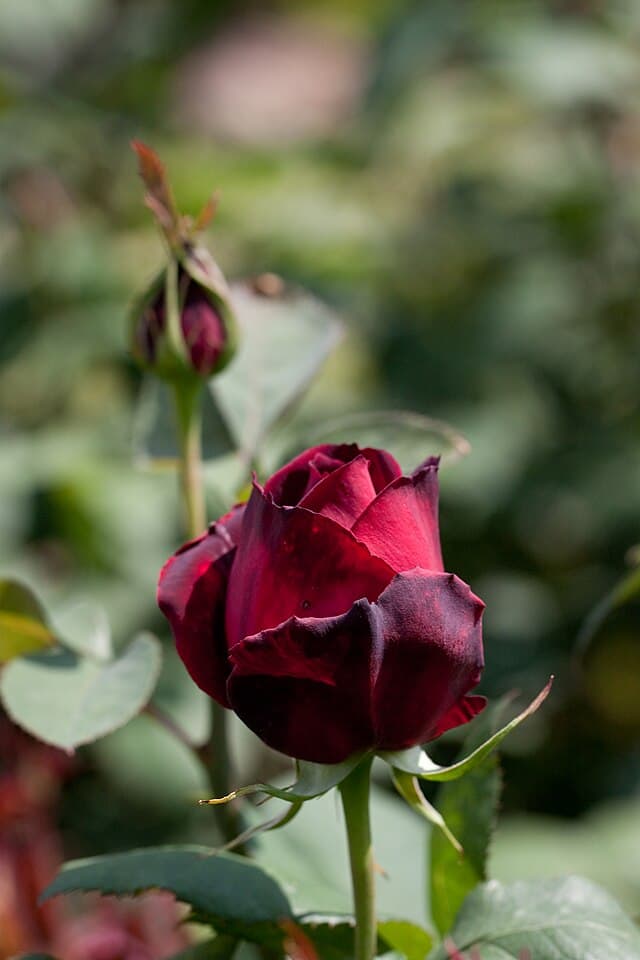
Oklahoma
A seedling of Chrysler Imperial producing enormous deep crimson blooms over 15cm across. Dark blackish-red petals emit strong Damask fragrance. A single bloom commands attention.
Extra large bloomDeep crimsonStrong fragrance
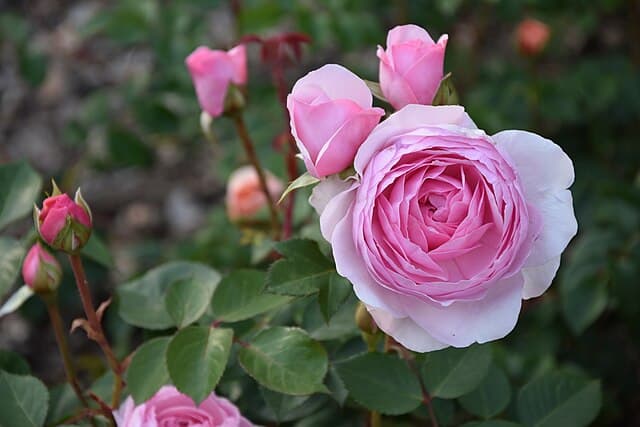
Olivia Rose Austin
Rosa ‘Olivia Rose Austin’
Named after David Austin's granddaughter. Soft pink cupped blooms deeper at center. Moderate fruity fragrance. Exceptionally disease resistant, loved by beginners and experts alike.
Disease resistantBeginner-friendlySoft pink
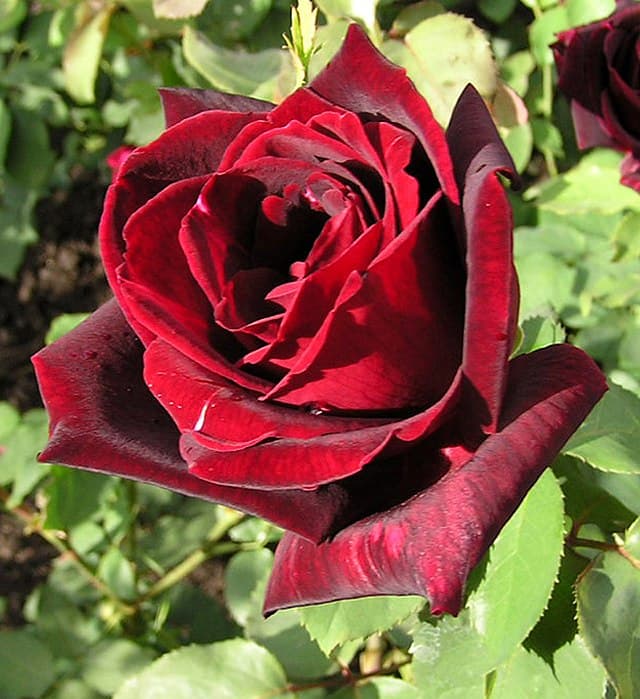
Papa Meilland
Rosa ‘Papa Meilland’
The ultimate red rose with velvety crimson blooms and rich Damask fragrance. World Rose Hall of Fame inductee. Dedicated to the Meilland family patriarch. Fewer petals but overwhelming color and scent.
IntermediateCrimsonStrong fragrance
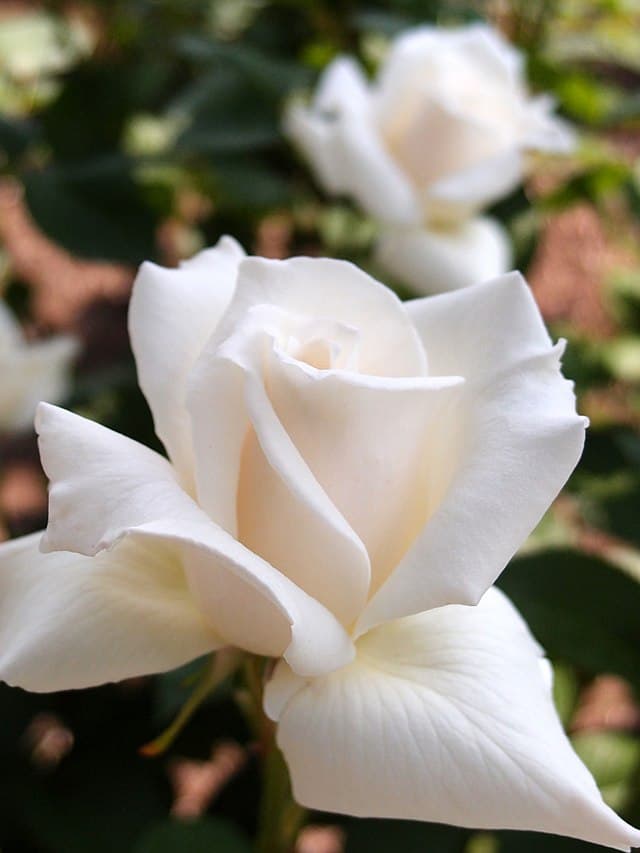
Pascali
Elegant pure white Hybrid Tea. World Rose Hall of Fame 1991. Excellent petal quality and rain resistance among white roses. Outstanding repeat blooming from spring through autumn. Light fragrance.
White roseHall of FameDisease resistant
🌹
Peace
Hailed as the greatest rose of the 20th century. Large cream-yellow blooms edged in pink radiate elegance. Named in 1945 to mark the founding of the UN, symbolizing world peace. Vigorous and easy to grow.
Beginner-friendlyLarge bloomHall of Fame
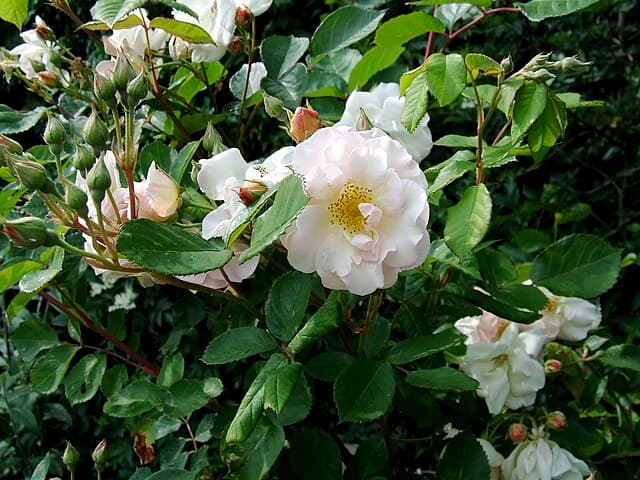
Penelope
Hybrid Musk from 1924. Salmon-pink buds open to creamy-white semi-double blooms. Sweet strong Musk fragrance. Pinkish rose hips after flowering add ornamental value.
Strong fragranceShade tolerantRose hips
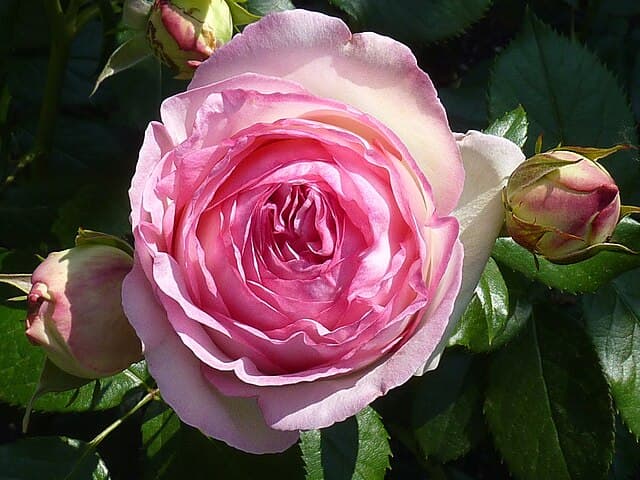
Pierre de Ronsard
Rosa 'Pierre de Ronsard'
The world's most beloved climbing rose. Large cupped blooms with cream outer petals and pink center. World Rose Hall of Fame 2006. Disease-resistant and easy to grow.
Beginner-friendlyClimbingHall of Fame
🌹
Pristine
Pristinella
Delicate ivory-white with a blush of pink. Large blooms over 14cm with 25-30 petals. Clean high-centered form earns high marks in shows. Moderate spicy fragrance.
Large bloomDelicateShow quality
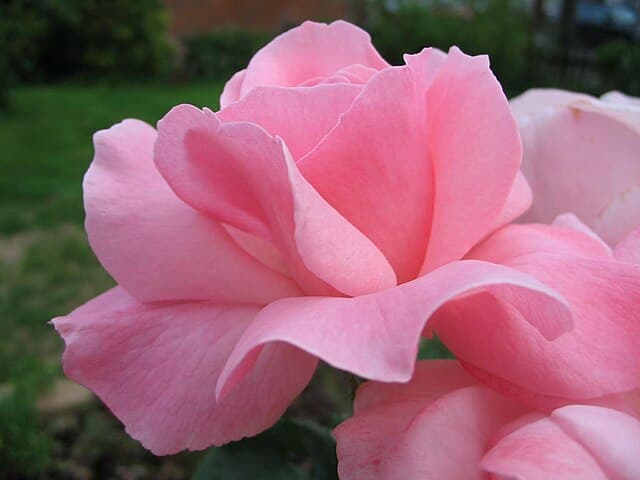
Queen Elizabeth
The original Grandiflora from 1954. Clusters of clear pink large blooms. Remarkably robust and beginner-proof. One of the most widely planted roses worldwide. Hall of Fame variety.
Beginner-friendlyVery hardyHall of Fame
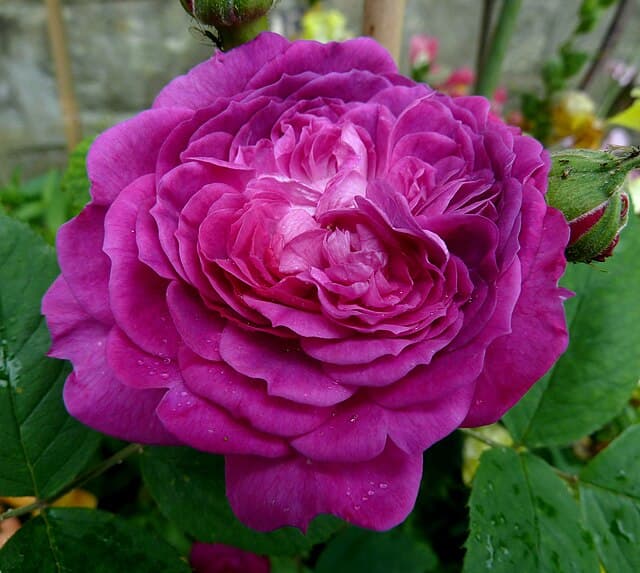
Reine des Violettes
Rosa ‘Reine des Violettes’
An 1860 Hybrid Perpetual. True to its name 'Queen of Violets', unique blue-tinted violet to mauve coloring. Flat rosette blooms with strong fragrance. Few thorns, easy to handle. Some repeat bloom.
IntermediateOld RoseViolet
🌹
Rise 'n' Shine
The definitive yellow miniature rose. Well-formed 4-5cm high-centered blooms. Known as the most color-fast yellow among miniatures. AOE (Award of Excellence) winner 1978.
MiniatureYellowColor-fast
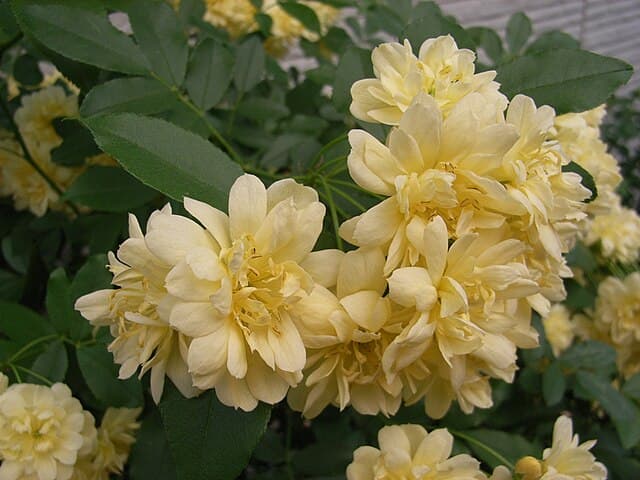
Rosa Banksiae
Species rose native to China. Thornless and easy to handle. Spectacular spring display of tiny yellow (or white) blooms in dense clusters. Excellent disease resistance, nearly spray-free. Once-blooming but overwhelmingly floriferous.
Beginner-friendlySpecies roseThornless
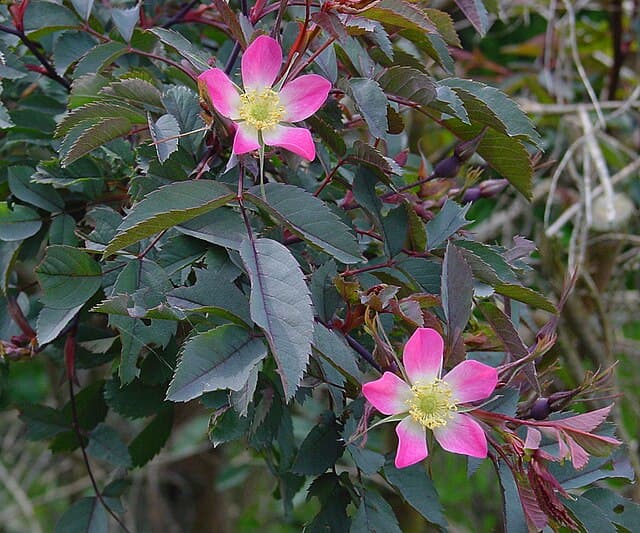
Rosa Glauca
Rosa glauca
Species rose prized for unique blue-grey purple foliage unmatched by any garden plant. Simple pale pink single flowers are modest but the leaf color is extraordinary. Red hips and fall color. Very hardy.
SpeciesColored foliageRobust
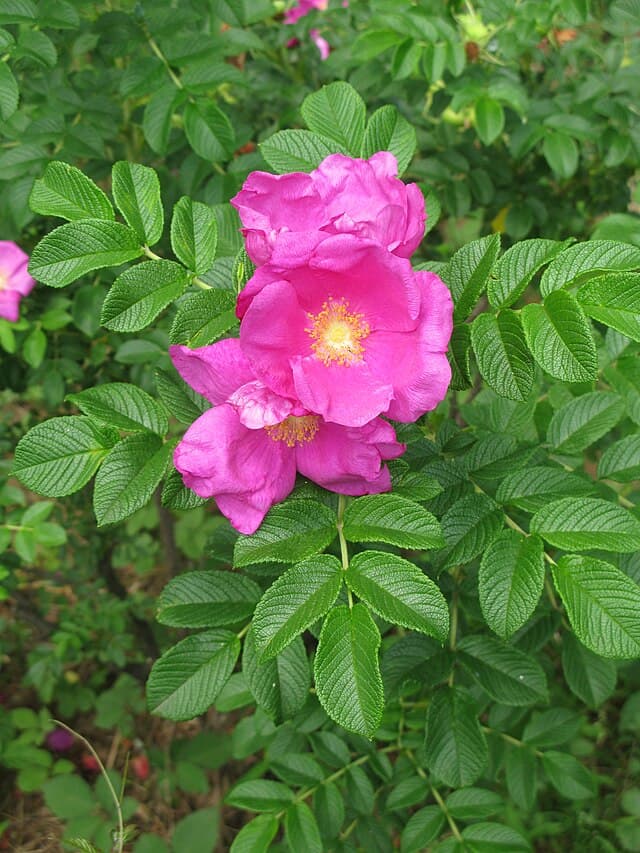
Rosa Rugosa
A species rose native to Japan. Grows wild along Hokkaido coasts and designated as Hokkaido's official flower. Deep pink single blooms with strong fragrance. Large rose hips in fall. Extremely cold-hardy, nearly spray-free.
Beginner-friendlySpecies roseCold-hardy
🌹
Sally Holmes
Shrub rose producing large clusters of cream-white single to semi-double blooms. Simple petals but clusters create a floral arrangement effect. Strong repeat-blooming with high disease resistance.
Beginner-friendlyShrubCluster bloom
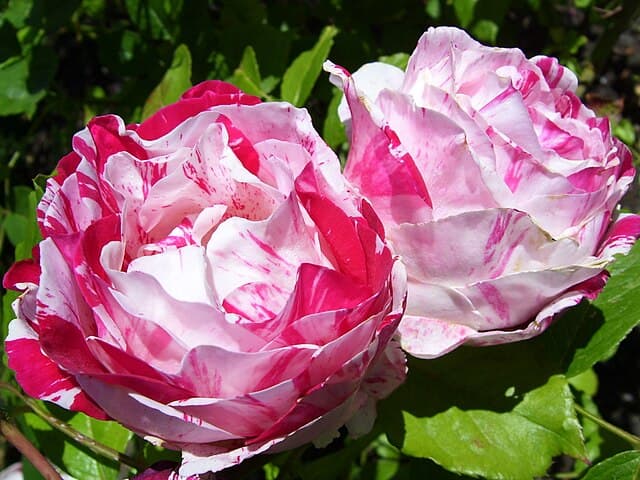
Scentimental
Rosa ‘Scentimental’
Unique Floribunda with red-striped white petals. AARS 1997 winner. Named for its strong spicy Damask scent. Every bloom has a different pattern making each flower a unique work of art.
IntermediateStripedStrong fragrance
🌹
Seiryuu
A Japanese blue-mauve rose by Kawamoto Rose Garden. Grayish pale wisteria-colored blooms evoke a uniquely Japanese aesthetic. Elegant blue-toned fragrance. Delicate petals sensitive to rain, but its ephemeral beauty captivates.
AdvancedBlue roseJapanese bred
🌹
Shikibu
Japanese rose with mauve-purple pink tones evoking Lady Murasaki. Medium old-rose-style rosette blooms. Delicate blue-toned fragrance befitting its namesake — a cultivar of refined dignity.
IntermediateJapanese-bredMauve
🌹
Shinkuu
A Japanese-bred red rose by Keisei Rose Nursery. Velvety crimson petals true to its name with Japanese elegance. Hybrid Tea with excellent form, popular in competitions. Heat-tolerant, suited to Japanese climate.
IntermediateJapanese bredCrimson
🌹
Silver Jubilee
Beautiful Hybrid Tea blending salmon-pink with peach tones. Named in 1977 for Queen Elizabeth II's Silver Jubilee. Well-formed long-lasting blooms with excellent disease resistance. A versatile competition regular.
Beginner-friendlyDisease-resistantCompact
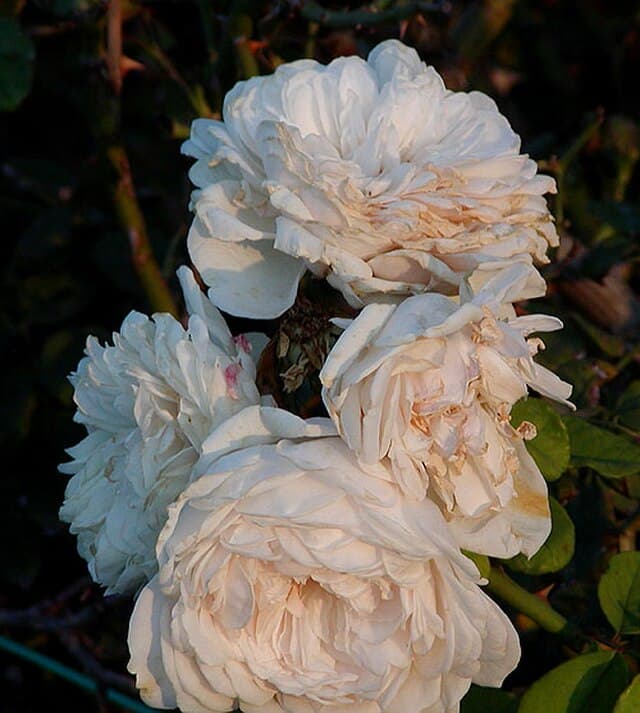
Sombreuil
Rosa ‘Mademoiselle de Sombreuil’
Climbing Tea rose from 1850 with exquisite cream-white quartered rosette blooms. Petals can exceed 100, creating layer upon layer of breathtaking beauty. Refined Tea fragrance.
IntermediateOld RoseMany petals
🌹
Someuil
A Tea rose masterpiece from 1850. Delicate pure white quartered rosette blooms of refined elegance. Fresh Tea fragrance. Repeat-blooming, trainable as climber. Prefers warm climates, less cold-hardy.
IntermediateOld RoseTea rose
🌹
Starina
Called the finest miniature rose ever. Vivid orange-red 4cm blooms with Hybrid Tea-like perfect form. A long-selling favorite loved for over 50 years since its 1968 introduction.
MiniatureOrange-redPerfect form
🌹
Sweet Chariot
Miniature rose with clusters of purple to lavender small blooms. Surprisingly strong sweet fragrance for a mini rose. Excellent repeat-blooming. Ideal for hanging baskets.
Beginner-friendlyMiniatureStrong fragrance
🌹
Tennyo
Japanese rose by hybridizer Kawai. Delicate cherry-blossom pink petals layer into large cupped blooms. Elegant strong Damask-Tea fragrance. Understated beauty that harmonizes with Japanese gardens, beloved by domestic enthusiasts.
IntermediateJapanese-bredStrong fragrance
The Fairy
Historic Polyantha from 1932 with countless small pink pompon blooms still beloved worldwide. Blooming starts late but continues nonstop until fall. Extremely hardy and thrives even with neglect.
Beginner-friendlyRobustPolyantha
🌹
The Pilgrim
Beautiful soft yellow rosette English Rose. Deeper yellow at center fading toward outer petals in an exquisite gradient. Tea and myrrh blended fragrance. Excellent as a climber.
YellowRosette formEnglish Rose
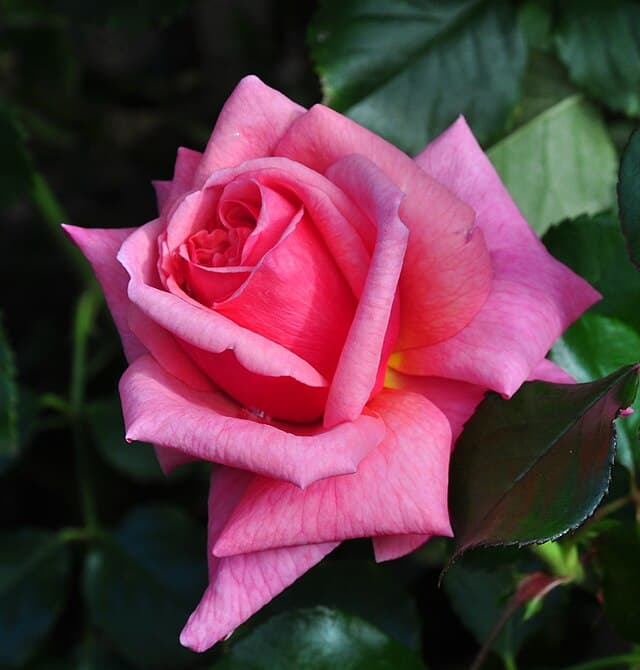
Tiffany
Elegant Hybrid Tea with pink blooms showing a yellow base. Fruity Damask fragrance won the ARS James Alexander Gamble Award. Long stems perfect for cutting.
IntermediateStrong fragranceGood for cutting
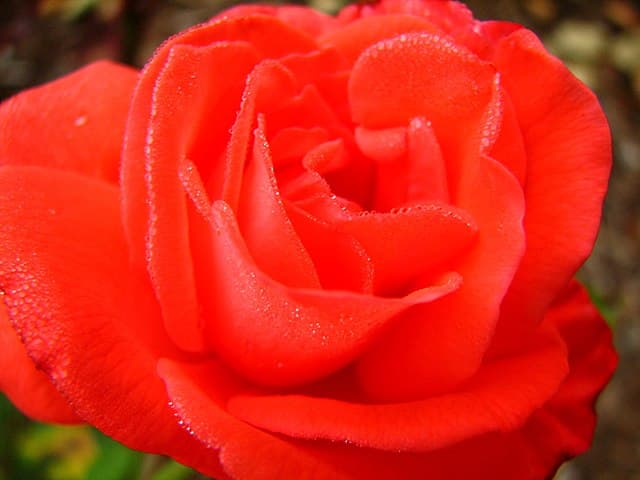
Tropicana
AARS 1963. Its vivid coral-orange color was revolutionary at introduction. Strong fruity fragrance combined with striking color captivated rose lovers worldwide.
Coral orangeStrong fragranceAARS winner
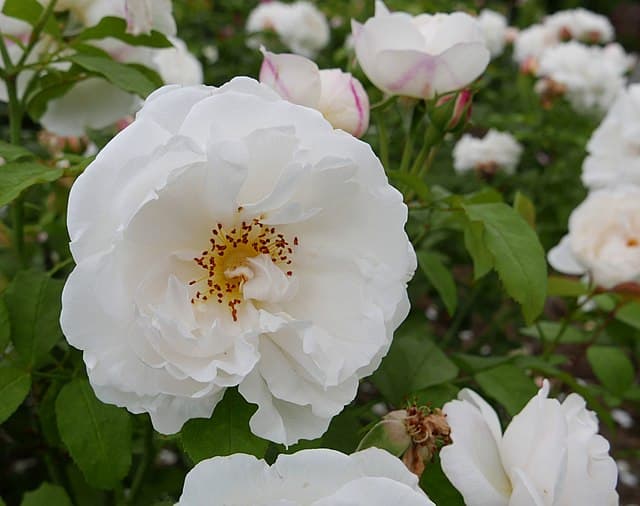
Winchester Cathedral
White sport of Mary Rose. Pure white rosettes with Old Rose character. Moderate honey-almond fragrance. Inherits Mary Rose's vigor and ease of care. Occasionally shows pink flecks.
White roseBeginner-friendlyEnglish Rose
🌹
Yume
Japanese-bred pink Hybrid Tea. Dreamlike gradient from soft salmon-pink to cream. Many-petaled with an elegantly slow opening. Excellent vase life as cut flower.
IntermediateJapanese bredGradient color
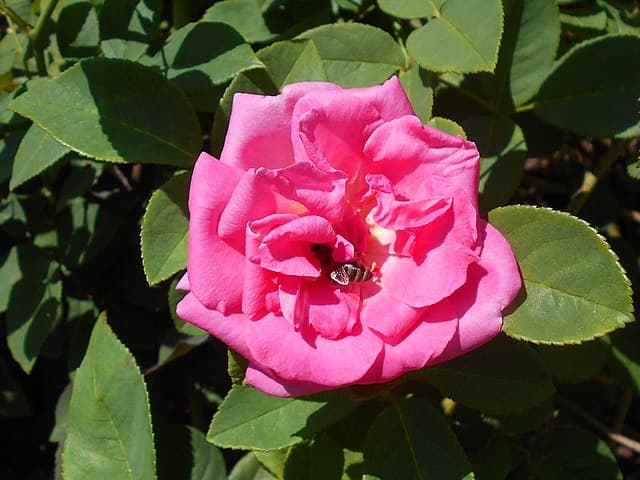
Zephirine Drouhin
The premier thornless climbing rose from 1868. Vivid cerise-pink semi-double blooms with strong Damask fragrance. Thornless for easy training, with shade tolerance to bloom even on north-facing walls.
IntermediateThornlessClimbing