Source: Wikimedia Commons
Kalanchoe
BeginnerFlowering succulent with rich flower colors. Popular as gifts. Many unique species like Mother of Thousands.
Difficulty
Beginner
Temperature
5〜30℃
Lifespan
5+ years
Size
10-50cm
Humidity
30〜50%
About
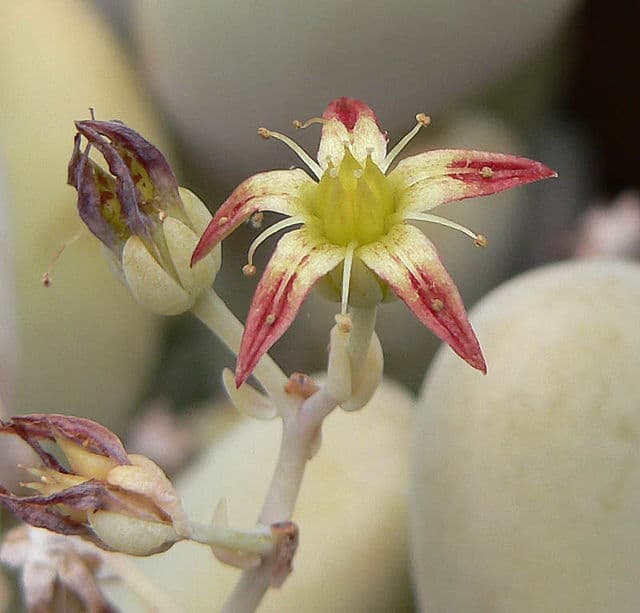
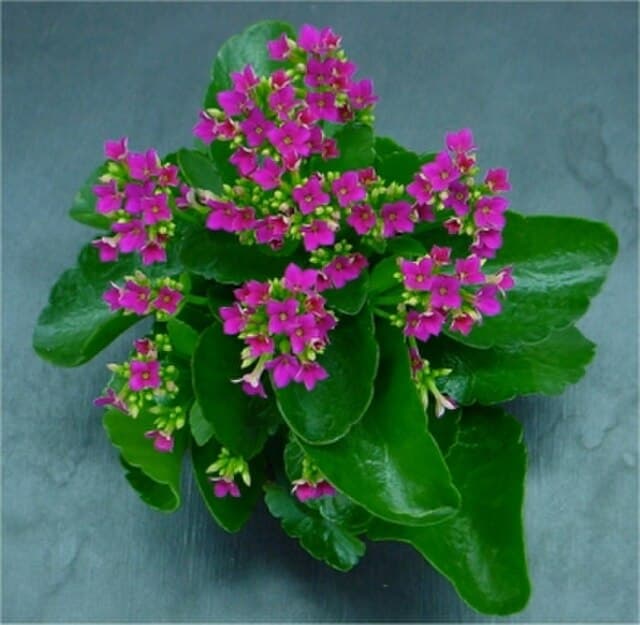
Kalanchoe is a genus of about 125 tropical succulent plants in the family Crassulaceae, predominantly native to Madagascar and tropical Africa. The genus is best known horticulturally for K. blossfeldiana and its hybrids, which produce long-lasting clusters of small flowers in red, orange, yellow, pink, or white and are among the best-selling potted plants worldwide. As short-day plants, they require extended periods of darkness to initiate flowering. Other notable species include K. daigremontiana (Mother of Thousands), which proliferates by producing tiny plantlets along leaf margins. Kalanchoes prefer bright indirect light and well-draining soil, with watering only when the substrate has dried. They are sensitive to overwatering and frost, but can be overwintered easily indoors above 5°C.
Source: Wikipedia (CC BY-SA 4.0)
Basic Info
Origin
Madagascar and tropical Africa
Lifespan
5+ years
Size
10-50cm
Temperature
5〜30℃
Humidity
30〜50%
Care Guide
Sunlight
Bright location. Short-day treatment induces flowering
Watering
When soil dries. Keep slightly on dry side
Flowers
Short-day treatment (12+ hours dark daily) promotes blooming
Propagation
Easy propagation by stem cuttings
Notes
Mother of Thousands species spread via aerial plantlets — invasive
FloweringGift plantMany varietiesBeginner-friendly
Kalanchoe FAQ
QHow difficult is it to keep Kalanchoe?
A
Beginner. This is a beginner-friendly species. No special equipment or experience is required, and it can be kept successfully with basic care setup.
QWhat is the ideal temperature for Kalanchoe?
A
The ideal temperature for Kalanchoe is 5〜30℃. Recommended humidity is 30〜50%. Avoid sudden temperature changes and maintain a stable environment.
QWhat is the lifespan of Kalanchoe?
A
The average lifespan of Kalanchoe is 5+ years. With proper care and nutrition, they can live a long and healthy life.
Kalanchoe Q&A
Find listings for this species