Source: Wikimedia Commons
Euphorbia
IntermediateMany resemble cacti but are entirely different family. Obesa and Horrida popular. Toxic white latex requires careful handling.
Difficulty
Intermediate
Temperature
5〜35℃
Lifespan
10+ years
Size
5cm-1m (varies by variety)
Humidity
30〜50%
About
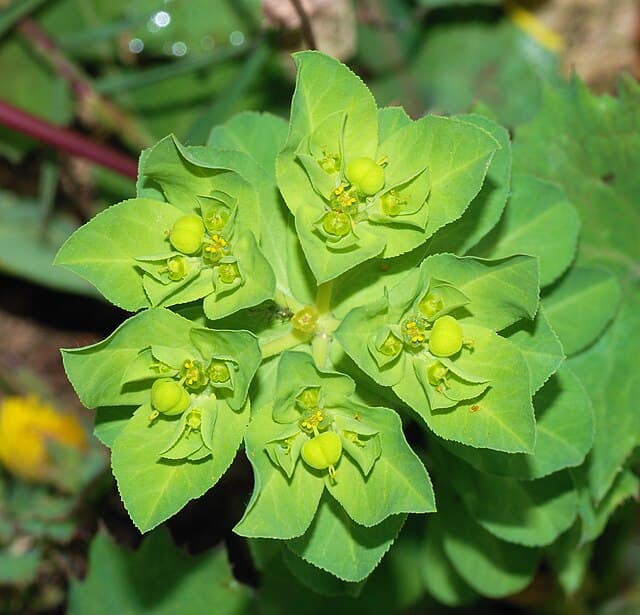
Euphorbia is a vast and extraordinarily diverse genus of over 2,000 species in the family Euphorbiaceae. Among these, numerous succulent species have evolved in Africa, Madagascar, the Arabian Peninsula, and the Americas, many of which closely resemble cacti in form despite being unrelated. Notable succulent examples include the spherical E. obesa, the ribbed columnar E. horrida, and the branching candelabra-like E. trigona. A defining characteristic of all Euphorbias is a milky white latex sap produced when tissue is damaged; this sap is caustic and can irritate skin and mucous membranes, requiring careful handling. Cultivation requirements vary by species, but most succulent Euphorbias prefer bright light, excellent drainage, and sparing watering. Overwatering is the most common cause of failure. Propagation is by cuttings (after allowing the latex to seal) or from seed.
Source: Wikipedia (CC BY-SA 4.0)
Basic Info
Origin
Africa, Madagascar, Arabian Peninsula, and the Americas (widespread)
Lifespan
10+ years
Size
5cm-1m (varies by variety)
Temperature
5〜35℃
Humidity
30〜50%
Care Guide
Sunlight
Loves sunlight. Good ventilation important
Watering
Moderate. Sensitive to overwatering
Soil
Well-draining soil. Add extra pumice
Varieties
Obesa, Horrida, Daimyojin among many popular varieties
Notes
Toxic white latex — avoid skin contact
Cactus-likeToxic latexMany varietiesCollectible
Euphorbia FAQ
QHow difficult is it to keep Euphorbia?
A
Intermediate. This is an intermediate-level species. Some prior experience and knowledge of environmental management are recommended.
QWhat is the ideal temperature for Euphorbia?
A
The ideal temperature for Euphorbia is 5〜35℃. Recommended humidity is 30〜50%. Avoid sudden temperature changes and maintain a stable environment.
QWhat is the lifespan of Euphorbia?
A
The average lifespan of Euphorbia is 10+ years. With proper care and nutrition, they can live a long and healthy life.
Euphorbia Q&A
Find listings for this species