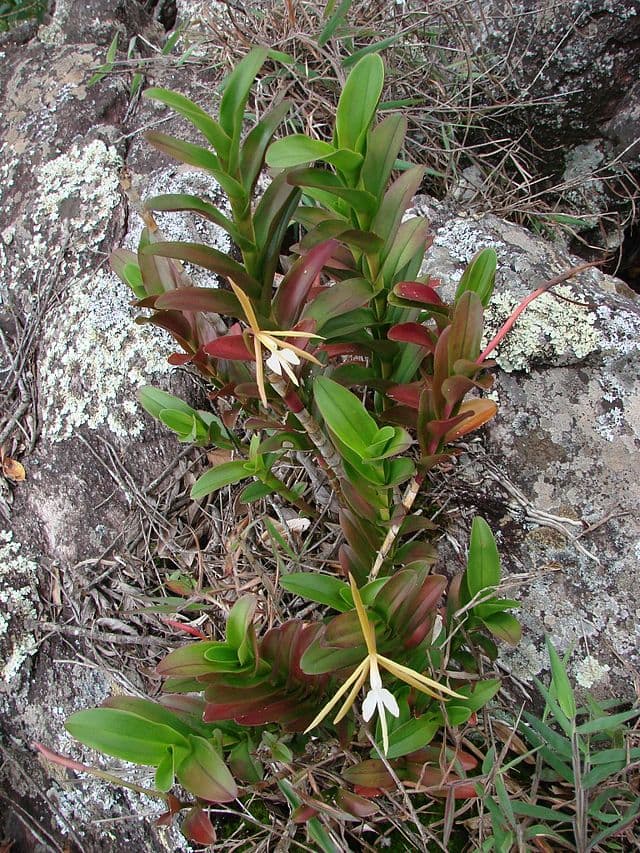
Source: Wikimedia Commons
Epidendrum
BeginnerA hardy orchid with ball-shaped clusters of small flowers in red, orange, yellow and more.
Difficulty
Beginner
Temperature
15〜30℃
Lifespan
10+ years
Size
30-80cm
Humidity
50〜70%
Diet
−
About
Epidendrum, abbreviated Epi in the horticultural trade, is a large neotropical genus of the orchid family. With more than 1,500 species, some authors describe it as a mega-genus. The genus name refers to its epiphytic growth habit.
Source: Wikipedia (CC BY-SA 4.0)
Basic Info
Origin
tropical and subtropical Americas (Neotropics), Mexico to South America
Lifespan
10+ years
Size
30-80cm
Temperature
15〜30℃
Humidity
50〜70%
Diet
−
Care Guide
Light
Bright location
Temperature
10-30°C
Hardiness
Very hardy
Bloom
Nearly year-round
OrchidEpidendrumHardyColorful
Epidendrum FAQ
QHow difficult is it to keep Epidendrum?
A
Beginner. This is a beginner-friendly species. No special equipment or experience is required, and it can be kept successfully with basic care setup.
QWhat is the ideal temperature for Epidendrum?
A
The ideal temperature for Epidendrum is 15〜30℃. Recommended humidity is 50〜70%. Avoid sudden temperature changes and maintain a stable environment.
QWhat is the lifespan of Epidendrum?
A
The average lifespan of Epidendrum is 10+ years. With proper care and nutrition, they can live a long and healthy life.
QHow large does Epidendrum get?
A
Epidendrum typically reaches 30-80cm as an adult. Size may vary depending on care conditions and individual genetics.
QWhat should I feed Epidendrum?
A
Epidendrum feeds on: −. Aim for a balanced diet with appropriate feeding frequency.
QWhat is the typical price for Epidendrum?
A
The price of Epidendrum varies significantly depending on morph, size, and lineage. Check our market price page for the latest pricing information.
Epidendrum Q&A
Related Species
Find listings for this species
Browse Orchid ListingsRelated Articles
Complete Beginner's Guide to Orchid Growing
Everything beginners need to start growing orchids: placement, watering, fertilizing, repotting, blooming tips, and recommended starter species.
Orchid Encyclopedia — Popular Species & Care Guide
An encyclopedia of popular orchid species with blooming conditions, care difficulty, and fragrance for each.
How Much Does Orchid Growing Cost? Monthly Running Costs Explained
Monthly orchid care costs: sphagnum moss, bark, fertilizer, and chemicals, with cost breakdowns by orchid type.
Orchid Growth Cycles & Time to Bloom by Species
Orchid growth cycles and bloom timelines for phalaenopsis, cattleya, and dendrobium, with tips for reblooming.