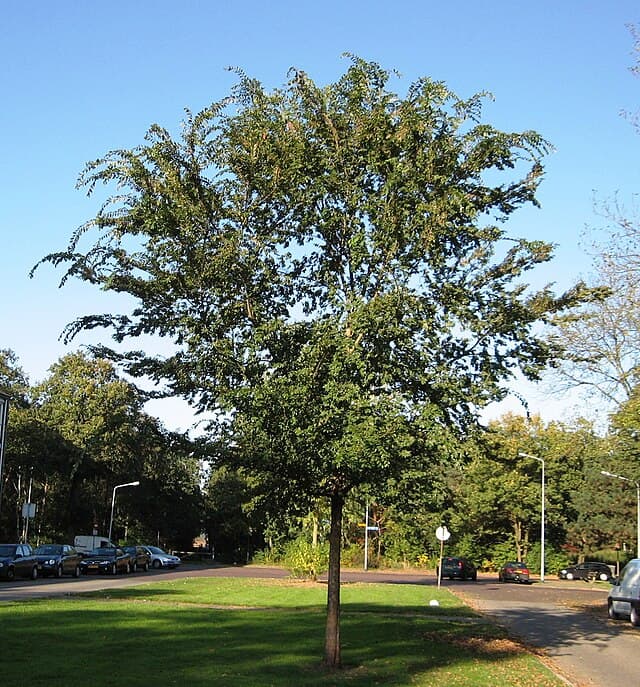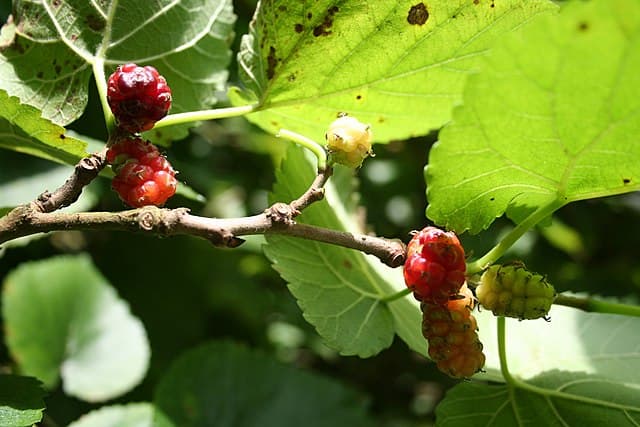
Source: Wikimedia Commons
Mulberry
BeginnerDeciduous tree known for silkworm farming. In bonsai, exposed roots and hollow trunks are highlights. Sweet berries are a bonus. Hardy and tolerant of pruning.
Difficulty
Beginner
Temperature
-5〜35℃
Lifespan
100+ years
Size
15-60cm (bonsai size)
Diet
Fertilizer (regular)
About
Morus, a genus of flowering plants in the family Moraceae, consists of 19 species of deciduous trees commonly known as mulberries, growing wild and under cultivation in many temperate world regions. Generally, the genus has 64 subordinate taxa, though the three most common are referred to as white, red, and black, originating from the color of their dormant buds and not necessarily the fruit color, with numerous cultivars and some taxa currently unchecked and awaiting taxonomic scrutiny. M. alba is native to South Asia, but is widely distributed across Europe, Southern Africa, South America, and North America. M. alba is also the species most preferred by the silkworm. It is regarded as an invasive species in Brazil, the United States and some states of Australia.
Source: Wikipedia (CC BY-SA 4.0)
Basic Info
Origin
South Asia (India and China), distributed worldwide
Lifespan
100+ years
Size
15-60cm (bonsai size)
Temperature
-5〜35℃
Diet
Fertilizer (regular)
Care Guide
Placement
Full sun outdoors. Extremely hardy
Watering
Loves water. Water generously in growing season
Styling
Utilize hollow trunk and exposed roots. Tolerates heavy pruning
Notes
Fast growing. Frequent pruning builds fine ramification
BeginnerFruit bearingExposed rootsHardy
Mulberry FAQ
QHow difficult is it to keep Mulberry?
A
Beginner. This is a beginner-friendly species. No special equipment or experience is required, and it can be kept successfully with basic care setup.
QWhat is the ideal temperature for Mulberry?
A
The ideal temperature for Mulberry is -5〜35℃. Avoid sudden temperature changes and maintain a stable environment.
QWhat is the lifespan of Mulberry?
A
The average lifespan of Mulberry is 100+ years. With proper care and nutrition, they can live a long and healthy life.
Mulberry Q&A
Find listings for this species