Source: Wikimedia Commons
Japanese Umbrella Pine
AdvancedSciadopitys verticillata
Endemic Japanese conifer, one of the world's three great garden trees. Distinctive umbrella-like needles. Often planted at shrines and temples. Prized as an elegant bonsai.
Difficulty
Advanced
Temperature
-5〜35℃
Lifespan
Centuries
Size
15-70cm (bonsai size)
Diet
Fertilizer (regular)
About
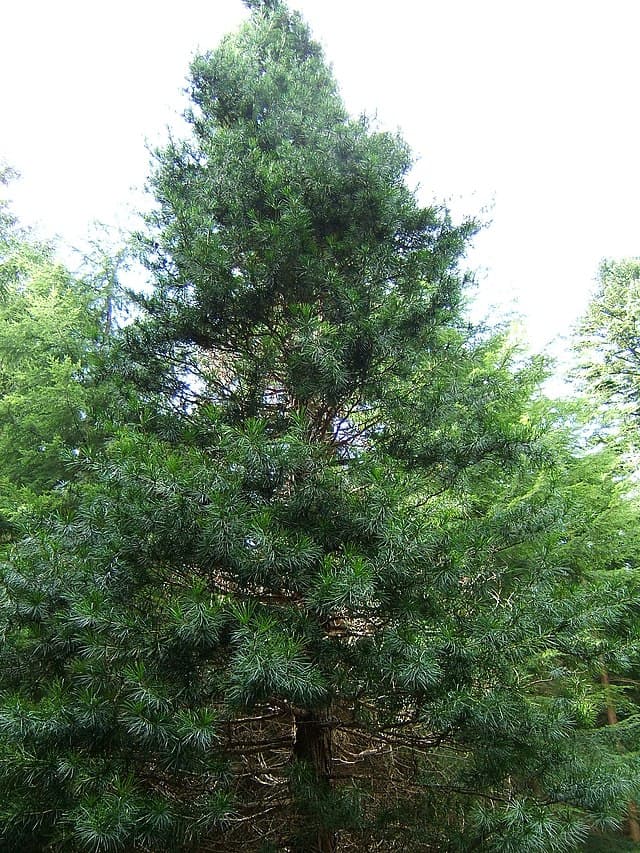
Sciadopitys verticillata, the kōyamaki or Japanese umbrella-pine, is a unique conifer endemic to Japan. It is the sole living member of the family Sciadopityaceae and genus Sciadopitys, a living fossil with no close relatives. The oldest fossils of Sciadopitys are from the Late Cretaceous of Japan, and the genus was widespread in Laurasia during most of the Cenozoic, especially in Europe until the Pliocene. A European relative of this species may have been the primary source of Baltic amber, according to some studies.
Source: Wikipedia (CC BY-SA 4.0)
Basic Info
Origin
Japan (mountainous regions of central Honshu)
Lifespan
Centuries
Size
15-70cm (bonsai size)
Temperature
-5〜35℃
Diet
Fertilizer (regular)
Care Guide
Placement
Semi-shade is ideal. Avoid direct summer sun
Watering
Loves water. Important not to let it dry out
Styling
Emphasize natural form. Avoid heavy pruning
Notes
Very slow growth. Takes time to recover from repotting
AdvancedConiferJapan endemicElegant
Japanese Umbrella Pine FAQ
QHow difficult is it to keep Japanese Umbrella Pine?
A
Advanced. This is an advanced-level species. It requires specialized equipment and advanced husbandry skills with precise environmental control.
QWhat is the ideal temperature for Japanese Umbrella Pine?
A
The ideal temperature for Japanese Umbrella Pine is -5〜35℃. Avoid sudden temperature changes and maintain a stable environment.
QWhat is the lifespan of Japanese Umbrella Pine?
A
Japanese Umbrella Pine Q&A
Find listings for this species