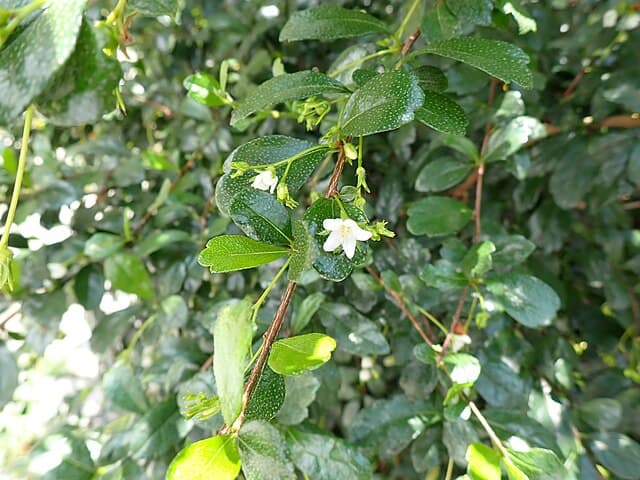
Fukien Tea
IntermediateTropical tree characterized by nyctinastic leaf movements, closing at night and in rain. Delicate pinnate leaves and white flowers. Peeling bark adds interest. Indoor management required.
Pithecellobium tortum, commonly known as the Brazilian rain tree, is a semi-evergreen shrub or small tree in the family Fabaceae, native to Brazil and other parts of South America. Its most distinctive and well-known characteristic is nyctinasty: the bipinnate leaves fold closed at night and on overcast or rainy days, opening again in sunlight — the behavior that gives the tree its common name. In bonsai, this leaf movement adds a dynamic, living quality rarely seen in other species. The delicate, finely divided pinnate leaves create a feathery texture, white flowers appear seasonally, and the trunk tends to develop a naturally twisted, tortuous form with attractive mottled bark. It is one of the most popular tropical bonsai species in Japan.
產地
South America (Brazil)
壽命
30+ years (as bonsai)
體型
15-50cm (bonsai size)
溫度
-5〜35℃
Fertilizer (regular)
Bright indoor spot. Minimum 15°C
Loves water. Water before completely dry. Daily misting
Utilize delicate branching. Wire to direct branch angles
Very cold-sensitive. Air conditioning drafts damage leaves
Intermediate. 這是一個中級難度的物種。建議有一定的飼養經驗和環境管理知識。
Brazilian Rain Tree的理想溫度為-5〜35℃。避免溫度驟變,保持穩定的環境。
Brazilian Rain Tree的平均壽命為30+ years (as bonsai)。透過適當的護理和營養,牠們可以長壽健康地生活。
尋找此物種的商品
Brazilian Rain Tree成年後通常可達15-50cm (bonsai size)。大小可能因飼養條件和個體遺傳而異。
Brazilian Rain Tree的食物為:Fertilizer (regular)。目標是適當的餵食頻率和均衡的飲食。
Brazilian Rain Tree的價格因品系、大小和血統而有很大差異。請查看我們的市場價格頁面獲取最新價格資訊。