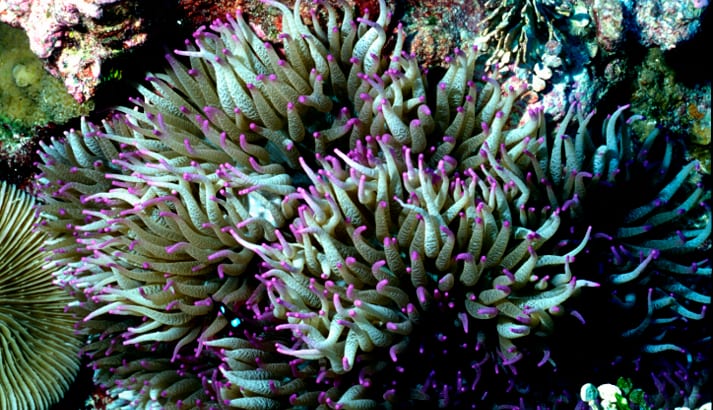
 © U.S. Fish & Wildlife Service / Public domain
馬魯海葵
The Malu Anemone (Radianthus malu) is easy to recognize by its short, sparse tentacles tipped in magenta. It buries its pale cream-to-yellow column in the sand, leaving only its disc-shaped oral surface visible above the substrate — a striking, minimalist look accented by a white radiating pattern across the disc. Once settled into a spot it likes, it tends to stay put, but it responds quickly to shifts in water quality or lighting, which is why it is generally recommended for experienced reefkeepers. It is also a popular choice for those hoping to host clownfish in a sand-bed setup.
View 馬魯海葵 encyclopedia →成交手續費 0%!2026年9月30日前註冊,前 2 筆成交免佣金!
繁殖者 招募中!
在 BreederDirect 上架,直接銷售給全國各地的客戶!
我們承諾的 6 個透明度標準
在珊瑚的上架商品中,繁殖者會明示下列資訊。避免過度捕撈的野生個體,確保養殖/CB為主、實物照片、飼育難度資訊的透明度。
- 養殖個體
- 實物照片
- 難度明示
- Frag/Colony
- 飼育資訊
- 標明流通名
查看全部210個品種
已註冊的繁殖者(搶先看)
關於馬魯海葵
Malu Anemone (Radianthus malu): a sand-dwelling anemone with short, magenta-tipped tentacles and an oral disc up to 200mm across marked with white radial patterns. Suited to experienced reefkeepers and popular for hosting clownfish.
迎接馬魯海葵前需要了解的7件事
1A Sand Bed Is Essential
This anemone buries its column in the substrate and needs a reasonably deep sand bed to settle into. A bare-bottom, rock-dominated tank will not give it anywhere to anchor.
2Best Left to Experienced Keepers
It reacts quickly to shifts in water quality and lighting, which is why it is generally considered an advanced species. Adding it to a newly cycled tank is best avoided.
3It May Relocate Itself
If it is not happy with its spot, it can move around the tank using its tentacles and foot. It is often searching for the flow and light levels it prefers.
4Watch Its Neighbors
If it wanders into contact with corals or fish, its sting can cause harm. Leave generous spacing in your layout and check its position regularly.
5The Disc's White Pattern Stands Out
Its oral disc can reach up to 200mm across and displays a white radiating pattern that contrasts nicely with the magenta-tipped tentacles. It rewards close, patient observation.
6A Potential Clownfish Host
Some keepers add this species hoping to host clownfish, and pairings do occur. That said, hosting is not guaranteed, so it should not be the only reason for getting one.
7Give It Time to Settle
Right after introduction, it may wander as it looks for a spot it likes. Avoid changing its position, lighting, or flow too soon, and just observe quietly for a while.
馬魯海葵的常見問題
- Q.Is this anemone suitable for beginners?
- A.It is generally classified as an advanced-level species, so it is not recommended for beginners. It responds sensitively to changes in water quality and lighting, so it is best kept by more experienced aquarists.
- Q.How large does it get?
- A.The oral disc can reach up to about 200mm across. The tentacles themselves are naturally short, staying under 40mm in length.
- Q.Does the tank need a sand bed?
- A.Yes — it buries its column in the sand, so a reasonably deep sand bed is necessary. A tank built mainly around rockwork will not give it a good place to settle.
- Q.Will it always host a clownfish?
- A.Hosting can happen, but it is not guaranteed. Since results depend on compatibility and tank conditions, it is best not to get one solely for that purpose.
- Q.Are there any legal restrictions on this species?
- A.This species is not subject to CITES.
適合飼養馬魯海葵的實用工具
在圖鑑中詳細了解馬魯海葵
查看馬魯海葵的圖鑑條目 →
收錄飼養難度、壽命、體長、食性等基礎資料。