Complete care guide for Chinese and Australian water dragons: enclosure design, water features, temperature/humidity management, and feeding.
要點總結
Complete care guide for Chinese and Australian water dragons: enclosure design, water features, temperature/humidity management, and feeding.
Water dragons are semi-arboreal lizards that live near bodies of water, prized for their beautiful green coloration and active behavior. However, because they grow large and require access to water, adequate preparation and knowledge are essential for their care. This article provides a detailed guide to creating the right environment and managing care for a healthy, long-lived water dragon.
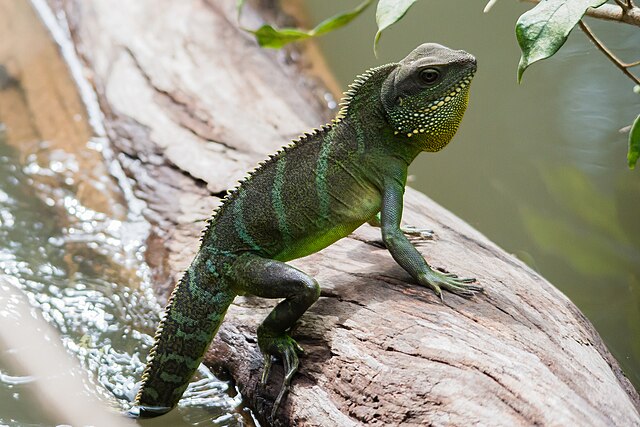
Two species are primarily available as pets: the Chinese water dragon (Physignathus cocincinus) and the Australian water dragon (Intellagama lesueurii). Chinese water dragons grow to 80–100 cm in total length, while Australian water dragons reach 60–90 cm, with the tail accounting for about two-thirds of the total length in both species. Under proper care, lifespan ranges from 10 to 15 years. Their temperament is relatively mild, though juveniles are often skittish. They are prone to "nose rub"—repeatedly ramming their snouts against the glass—so the initial enclosure setup is critical.
Water dragons require a minimum enclosure of 120 cm wide × 60 cm deep × 120 cm tall (a vertically oriented setup). For adult males, an even larger space is ideal—150 cm wide × 60 cm deep × 150 cm tall or larger if possible. Since they are semi-arboreal, arrange thick driftwood and branches at angles to create multiple climbing routes. Covering the sides of the enclosure with background panels or live plants helps prevent glass-ramming injuries. The water area should cover about one-third of the floor space, with sufficient depth for complete submersion (15–20 cm for adults). Install a filter in the water area to maintain water quality, and perform full water changes two to three times per week. Keep the water temperature at 25–28°C (77–82°F), and if using a submersible heater, choose one with a protective cover to prevent burns.
Daytime basking spot temperatures should be 32–35°C (90–95°F), with the overall enclosure at 26–30°C (79–86°F), dropping to 22–25°C (72–77°F) at night. Position the basking light so it shines onto a branch, creating a temperature gradient that allows the dragon to thermoregulate freely. Humidity should ideally be 70–80%, achievable through misting two to three times daily or using an automatic misting system. Low humidity can cause incomplete shedding. UVB lighting is essential—select an appropriate wattage for your enclosure size. Mercury vapor bulbs (such as Mega-Ray) can provide both basking heat and UVB, making them especially suitable for large enclosures. Replace UVB lamps every 6–12 months, watching for declining UV output.
Water dragons are omnivorous, with a diet centered on insects supplemented by vegetables and fruits. Primary insect feeders include crickets, dubia roaches, and silkworms. Feed juveniles daily and adults every 2–3 days. Dust all feeder insects with calcium powder at every feeding, and add vitamin D3 supplements once or twice weekly. Offer finely chopped vegetables such as komatsuna (Japanese mustard greens), bok choy, pumpkin, and green beans. Fruits like banana and strawberry can be given sparingly as treats. During the juvenile growth phase, keep the insect proportion at about 80% to ensure adequate protein intake. For adults, increase vegetables to about 40% of the diet to prevent obesity.
The most frequent problem is the nose rub (snout abrasion) mentioned above. Effective countermeasures include covering enclosure sides, providing ample hiding spots, and avoiding sudden noises. The next most common issue is metabolic bone disease (MBD), caused by insufficient UVB exposure or calcium and vitamin D3 deficiency. Early symptoms include jaw deformity and limb swelling, so early detection is crucial. Additionally, unclean water raises the risk of skin infections. Maintain strict water quality, and if you notice any abnormalities, visit a veterinarian experienced with reptiles. Incomplete shedding is a sign of insufficient humidity—address it by increasing soaking and misting frequency.
Keeping a water dragon requires considerable effort, but the joy of having a tame individual climb onto your shoulder is truly special. On BriChoku, you can purchase healthy captive-bred (CB) individuals directly from experienced breeders, and receive specific advice on enclosure design and habitat setup. Even first-time large lizard keepers can start their journey with confidence thanks to the breeder support available.
Reptile Temperature Calculator
View basking, cool-side, night temps, humidity & UVB requirements by species
Morph Genetics Calculator
Calculate morph breeding outcomes for leopard geckos & ball pythons
Breeding Calendar
Visual monthly breeding season guide for each species
Feeding Guide
Check feeding frequency, portion sizes & supplements by species and growth stage