Complete beginner's guide to chameleon care: enclosure selection, humidity and temperature management, feeding methods, the science behind color change, and health monitoring tips.
要點總結
Complete beginner's guide to chameleon care: enclosure selection, humidity and temperature management, feeding methods, the science behind color change, and health monitoring tips.
Chameleons are arboreal lizards with unique eye movements and body color changes that other reptiles don't possess. While they have a moderately high difficulty level to care for, long-term maintenance is possible if the environment is set up correctly. Here, we explain the basics of chameleon care for beginners.
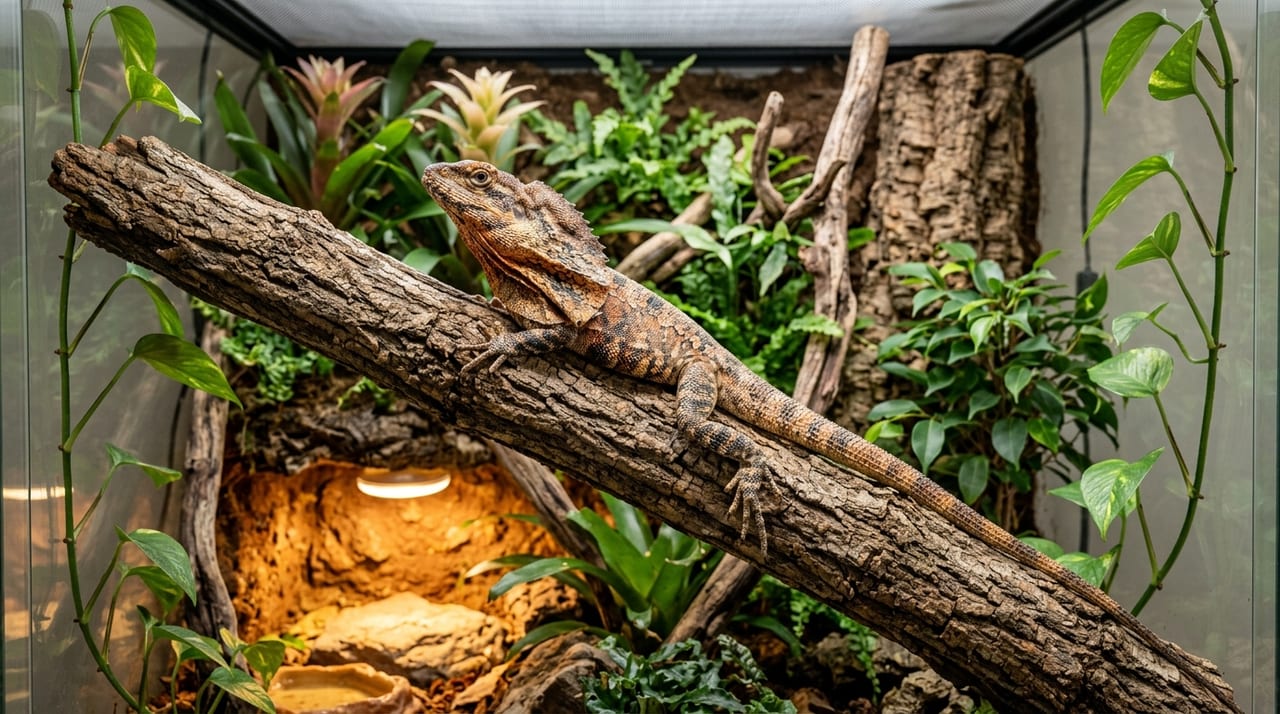
Chameleons are reptiles that prioritize ventilation extremely highly. Rather than a sealed glass terrarium, a cage with many mesh panels is appropriate. For veiled chameleons, a size of 60cm width × 45cm depth × 90cm height or larger is recommended. Panther chameleons also require the same or larger size. Inside the cage, place foliage plants (such as pothos and ficus, non-toxic varieties) and arrange branches and vines horizontally to ensure movement routes. Since chameleons dislike being looked at from above, ideally the cage should be positioned higher than eye level. Kitchen paper or newspaper is sufficient for substrate to prevent accidental ingestion.
The daytime basking spot should be 30-35°C, with the overall cage around 24-28°C. It's fine if nighttime drops to around 20-22°C. Rather, the temperature difference between day and night is important for maintaining chameleon health. Humidity should be maintained at 50-70%, but rather than keeping it constantly high, cycling between temporarily raising humidity with misting and allowing drying is closer to natural environment management. Mist the entire cage twice daily, in the morning and evening. Installing an automatic misting system makes management easier. Using a dripper (drip-feed water dispenser) in conjunction also helps them recognize water. Understanding that chameleons don't drink accumulated water and instead have the habit of licking water droplets that drip on leaves for hydration is important.
The main diet is crickets (European house crickets or two-spotted crickets). For adults, feed approximately 5-8 crickets about 3-4 times per week. Incorporate variety by also using Dubia roaches, silkworms, and honey worms. Dust food insects with calcium powder every time, and use supplements containing Vitamin D3 once or twice per week. Supplementing Vitamin D3 is especially important when UVB light exposure is insufficient. Feed insects either directly with tweezers or by releasing them in the cage, but remove uneaten insects promptly as they may bite the chameleon. For juveniles, feed small crickets daily and increase the size as they grow.
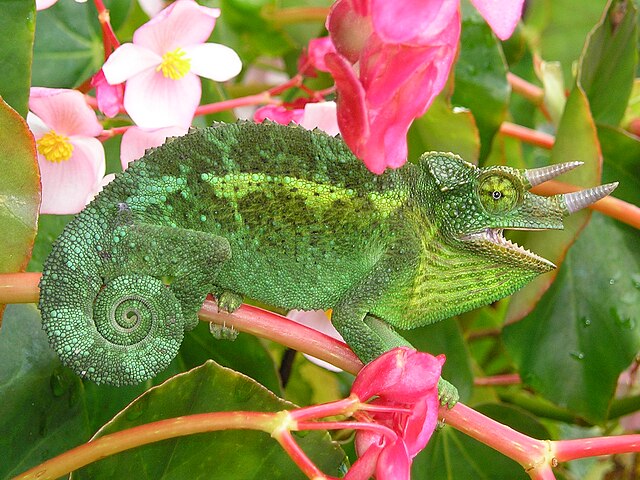
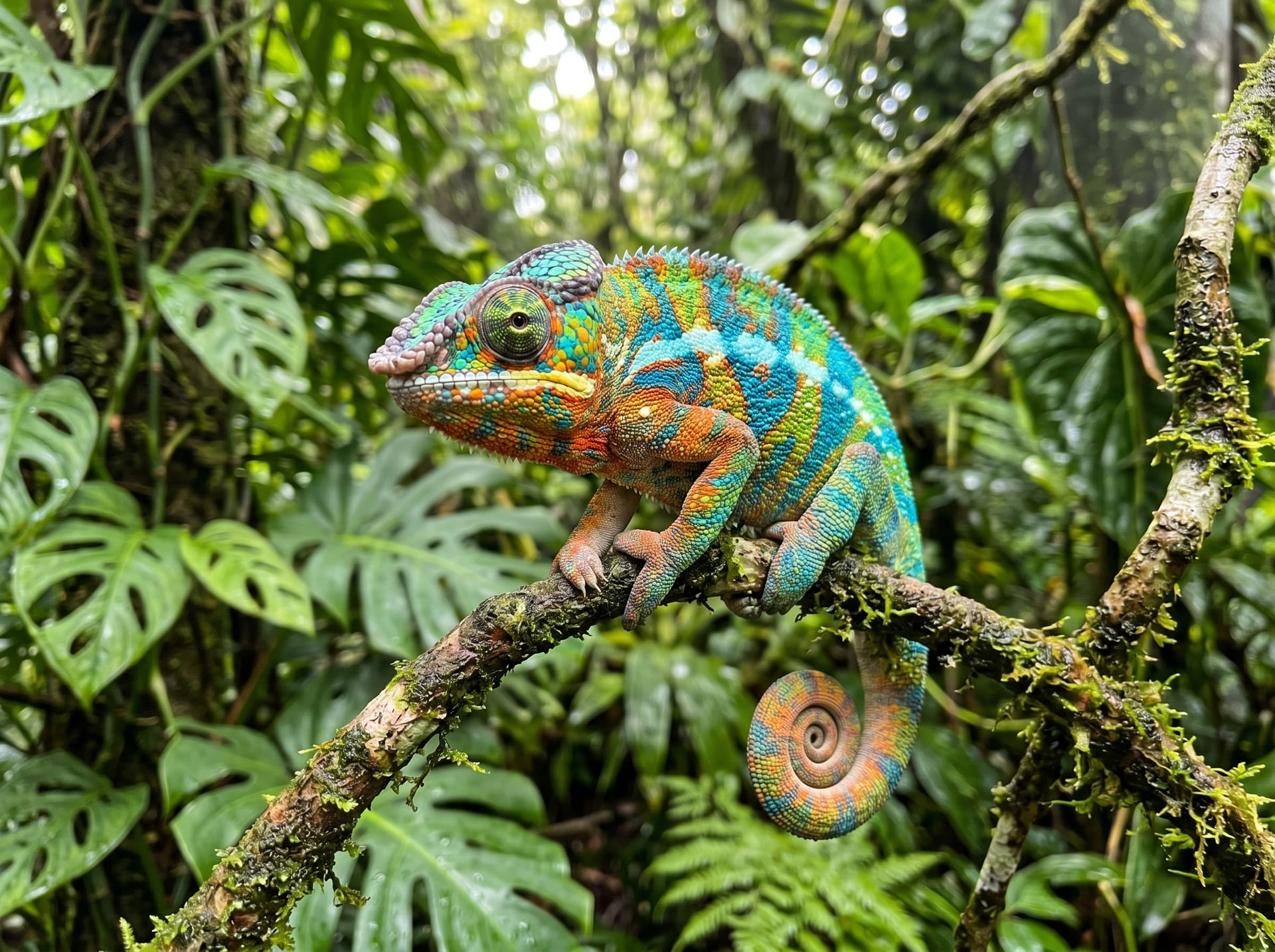
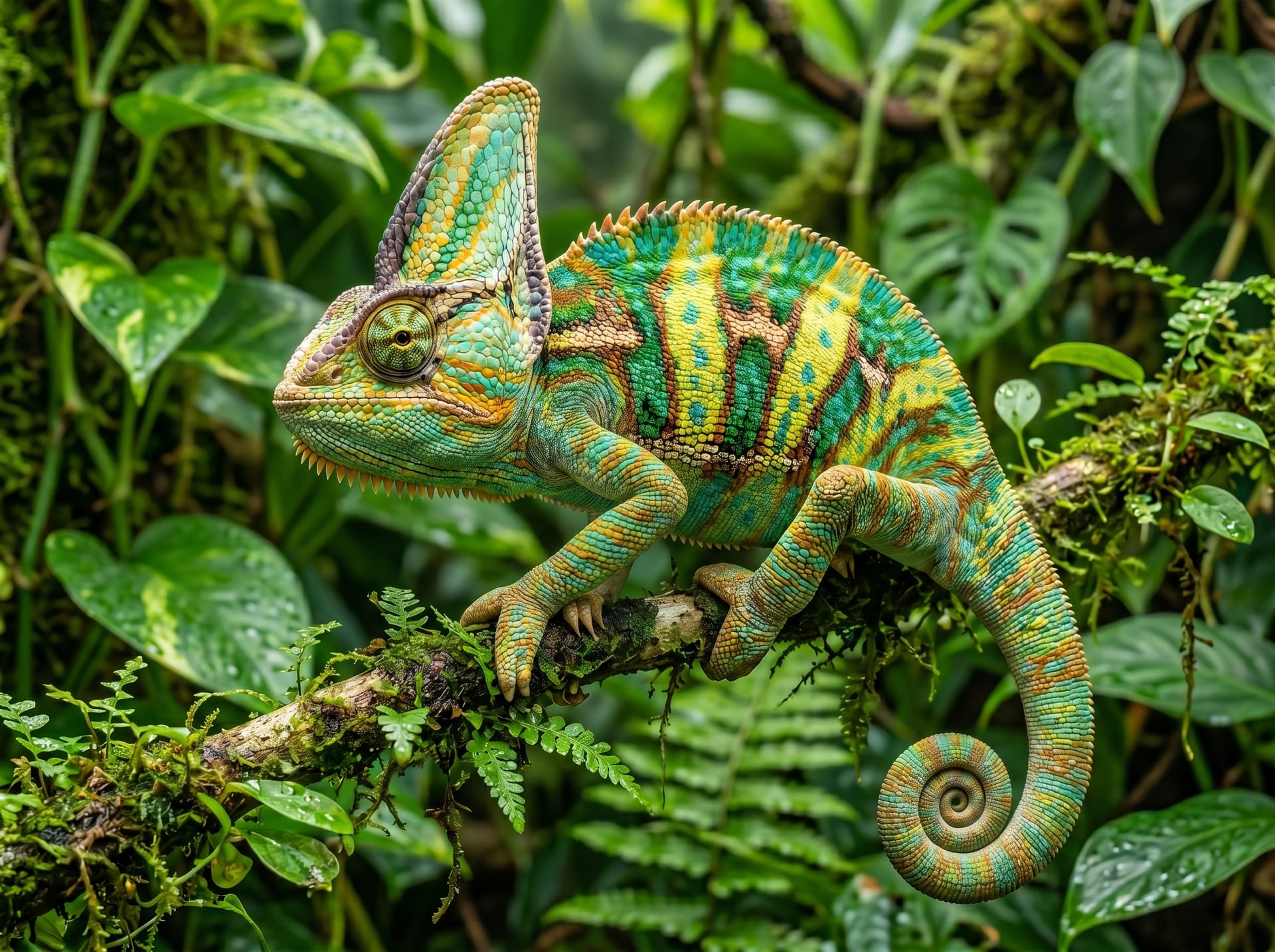
Chameleon color changes occur not primarily to match surrounding colors, but mainly for emotional expression and thermoregulation. The spacing of nanocrystals within iridophore cells in the skin changes, altering the wavelength of reflected light and causing color change. Bright, vivid colors indicate a relaxed state or courtship signals, while dark colors may indicate stress or poor health. If the chameleon remains constantly dark, suspect insufficient temperature, stress, or illness. Additionally, sunken eyes indicate dehydration, and an open mouth indicates respiratory infection. Regularly observe color change patterns so you can notice abnormalities.
Chameleons are susceptible to transport stress, and individuals displayed in shops for extended periods often suffer health issues. At Br-choku, you can acquire healthy chameleons directly from breeders who specialize in their breeding. Breeders provide detailed information about the individual's personality, parent information, and previous care environment, making post-purchase environmental adaptation smooth. If you have concerns about care, the ability to consult after purchase is a major advantage.
Reptile Temperature Calculator
View basking, cool-side, night temps, humidity & UVB requirements by species
Morph Genetics Calculator
Calculate morph breeding outcomes for leopard geckos & ball pythons
Breeding Calendar
Visual monthly breeding season guide for each species
Feeding Guide
Check feeding frequency, portion sizes & supplements by species and growth stage