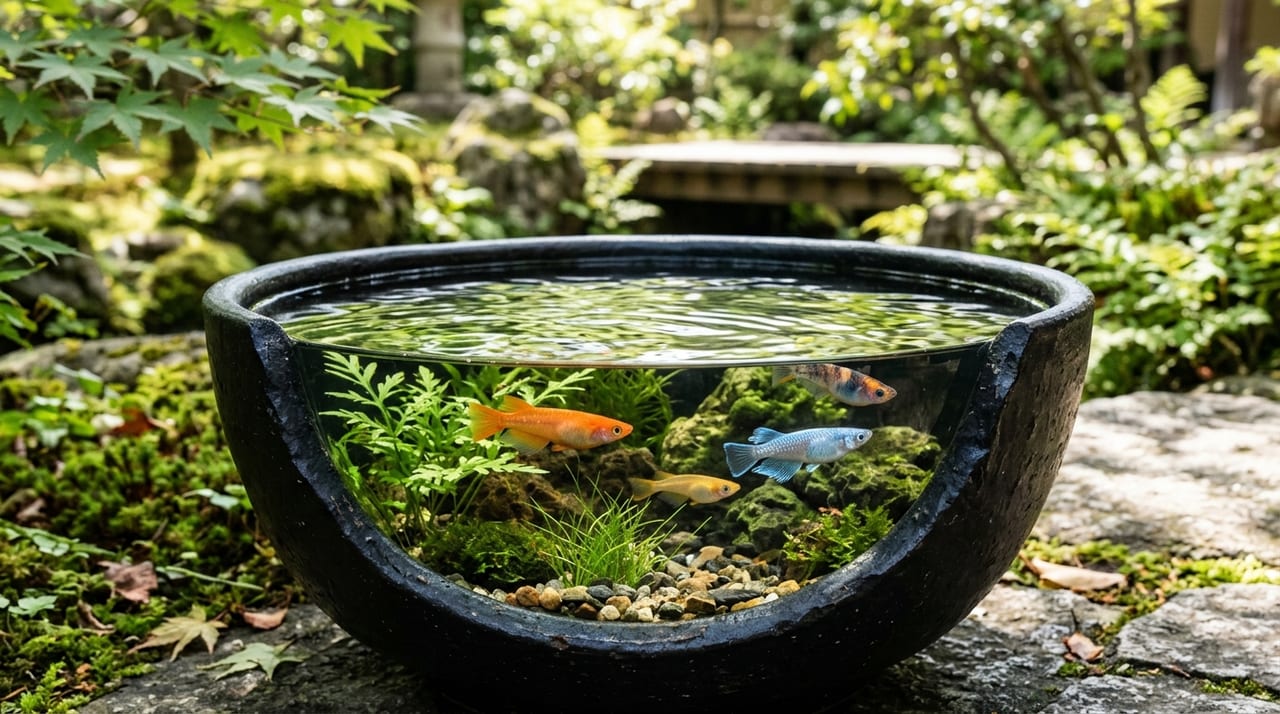
Complete guide to overwintering medaka: outdoor and indoor methods.
Medaka (Japanese rice fish) are relatively cold-tolerant, and with proper preparation, can overwinter outdoors. However, entering winter without preparation significantly increases mortality risk. Here are overwintering methods for both outdoor and indoor keeping.
Medaka Overwintering Basics
Medaka activity decreases when water temperature drops below 10 degrees C, entering a pseudo-hibernation state below 5 degrees C.
- Building reserves is crucial: Fatten them up well during autumn
- When to stop feeding: Cease feeding when water drops below 10 degrees C
- Reduce water changes: Sudden temperature shifts during hibernation are dangerous
Outdoor Overwintering
Water Depth
- **Guideline**: Minimum 30cm depth required
- **Reason**: Surface freezes but bottom remains unfrozen
- **Solution**: Transfer to deeper containers or add water to shallow ones
Insulation
- **Styrofoam lid**: Effective for insulation and freeze prevention
- **Reed screens or cardboard**: Wrap around container for insulation
- **Fallen leaves**: Adding a few to the bottom provides insulation and hiding spots (too many degrades water quality)
Freeze Prevention
- **Partially cover surface**: Complete coverage causes oxygen depletion
- **Heater**: Submersible heaters are effective in very cold regions
- **If frozen**: Don't force thawing (medaka are often alive at the bottom)
Things to Avoid
- Don't shake or move containers
- Don't feed medaka during hibernation, even on warm days
- Keep water changes to absolute minimum (if necessary, use same-temperature water in small amounts)
Indoor Heated Overwintering
For those who want to keep medaka active through winter.
Required Equipment
- **Heater**: Auto-heater set to 26 degrees C is convenient
- **Lighting**: Supplement winter daylight shortage (8-10 hours/day)
- **Filter**: Essential for indoor keeping
Management Tips
- Keep water temperature constant, avoiding sudden changes
- Algae tends to increase indoors; adjust lighting duration
- Normal feeding schedule can be maintained
Post-Winter Care
When spring arrives and water exceeds 10 degrees C, gradually return to normal management.
- Resume feeding with small amounts
- Resume water changes
- Prepare the environment for spawning season
Benefits of Buying from Breeders
On Bri-Choku, you can purchase from medaka breeders experienced in overwintering.
- Hardy specimens: Healthy fish that have passed rigorous selection
- Region-appropriate varieties: Advice on breeds suited to cold or warm climates
- Overwintering guidance: Get specific winter care methods