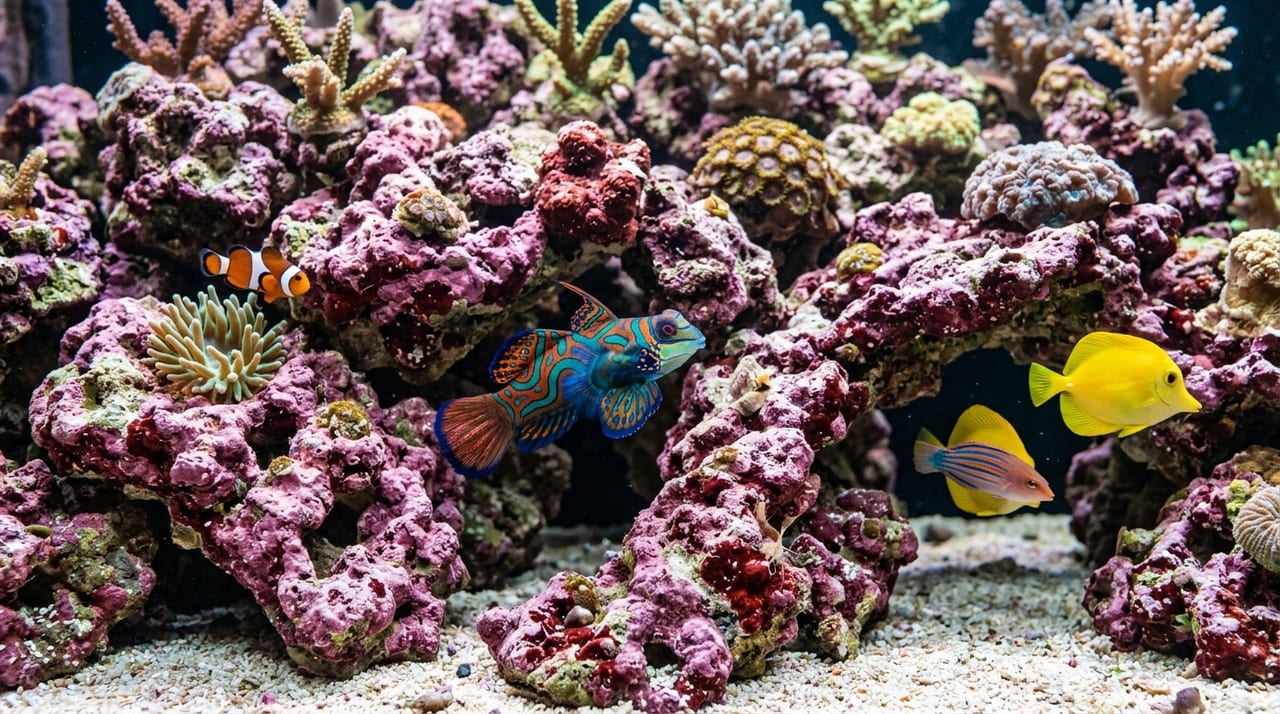
Keep saltwater fish cool in summer: chiller and fan options, air conditioning tips, and feeding adjustments during hot weather.
要點總結
Keep saltwater fish cool in summer: chiller and fan options, air conditioning tips, and feeding adjustments during hot weather.
Most marine fish thrive at 24–26°C. When summer temperatures exceed 28°C, dissolved oxygen decreases and fish immunity drops, making white spot disease (Ichthyophthirius) more likely. Temperature fluctuations are particularly stressful, so stable management is essential.
Seawater has lower oxygen solubility than freshwater, making temperature increases more impactful. Even a 1°C rise visibly reduces dissolved oxygen, and oxygen deprivation risk spikes in overstocked tanks. Species with high oxygen demands like angelfish and butterflyfish are particularly vulnerable to summer heat.
The most reliable cooling method is an aquarium chiller. Adding cooling fans reduces chiller run time, saving electricity. Setting room air conditioning to 27–28°C dramatically reduces equipment load. This three-pronged approach is the ideal summer cooling system.
When selecting a chiller, account for heat output from lighting and pumps in addition to total water volume. Metal halide lamps generate significant heat, requiring more cooling capacity. Also ensure chiller exhaust heat doesn't raise room temperature—a counterproductive outcome.
Higher water temperatures reduce dissolved oxygen. Strengthen aeration and agitate the water surface to increase oxygen supply. Reduce feeding slightly from normal amounts. Leftover food accelerates water quality deterioration, and decomposition speeds up in warm water, risking ammonia spikes.
Feed small amounts multiple times daily to distribute water quality impact. Flake food dirties water easily, so feed only what's consumed immediately. When using frozen food, thaw completely before feeding and discard the drip (thaw liquid) to reduce water contamination.
Summer requires special vigilance for white spot disease from temperature fluctuations. If white spots appear on the body, isolate and treat immediately. Developing a habit of daily fish observation is essential.
The most effective prevention is maintaining stable temperatures. Prevent day-night temperature swings of more than 2°C. Take extra care when introducing new fish in summer—extend quarantine periods to prevent disease introduction. If fish are rubbing against rocks or live rock, this may indicate early white spot symptoms.
Accelerated water quality deterioration in warm periods may warrant increasing water change frequency. However, always adjust replacement saltwater to match tank temperature before adding. Large volumes of temperature-mismatched water cause severe fish stress.
When using fan cooling, heavy evaporation raises salinity. Monitor with a refractometer and top off with RO water. An auto top-off system helps maintain stable salinity.
On Buri-Choku, you can purchase marine fish raised with care directly from breeders. Summer care and management advice is available directly from experienced breeders, providing peace of mind for beginners.
Aquarium Volume Calculator
Calculate water volume, weight, and heater wattage from tank dimensions
Water Quality Checker
Find compatible fish, shrimp, plants & corals based on pH, temperature & hardness
Feeding Guide
Check feeding frequency, portion sizes & supplements by species and growth stage
Compatibility Checker
Check compatibility between two species on a 5-level scale