Goldfish photography: top-down and side-view techniques, lighting, backgrounds, and smartphone tips.
Capturing the beauty of goldfish in photographs is a surprisingly deep art. The subject is constantly moving through water, and challenges unique to aquatic photography abound, from surface reflections to glass glare. However, by mastering a few key points, you can take strikingly beautiful goldfish photos even with a smartphone. This guide covers everything from top-view and side-view shooting methods to lighting techniques and background selection.
Top-View (Donburi) Photography Basics
Top-view photography is the best way to showcase breeds that are most beautiful when viewed from above, such as Ranchu and Tosa-kin. Traditionally, shallow containers called "donburi" are used.
- Container selection: White or black shallow containers work best. A depth of 10-15 cm keeps the goldfish swimming near the bottom for better focus
- Water depth adjustment: Shallower water stabilizes the goldfish and makes focusing easier. Set depth to 5-10 cm depending on the breed
- Camera angle: Shoot directly from above. Keep your smartphone parallel to the water surface to prevent distortion
- Dealing with reflections: Use a PL (polarizing) filter to prevent your own shadow and reflections from appearing. Clip-on PL filters for smartphones are also available
- Using a tripod: An overhead shooting stand for smartphones helps stabilize the directly-above angle
In top-view photography, the head shape (head growth), back line, and tail fin spread are key elements. For Ranchu show photography in particular, aim for the moment when the balance between head and back looks most impressive.
Side-View (Tank) Photography Tips
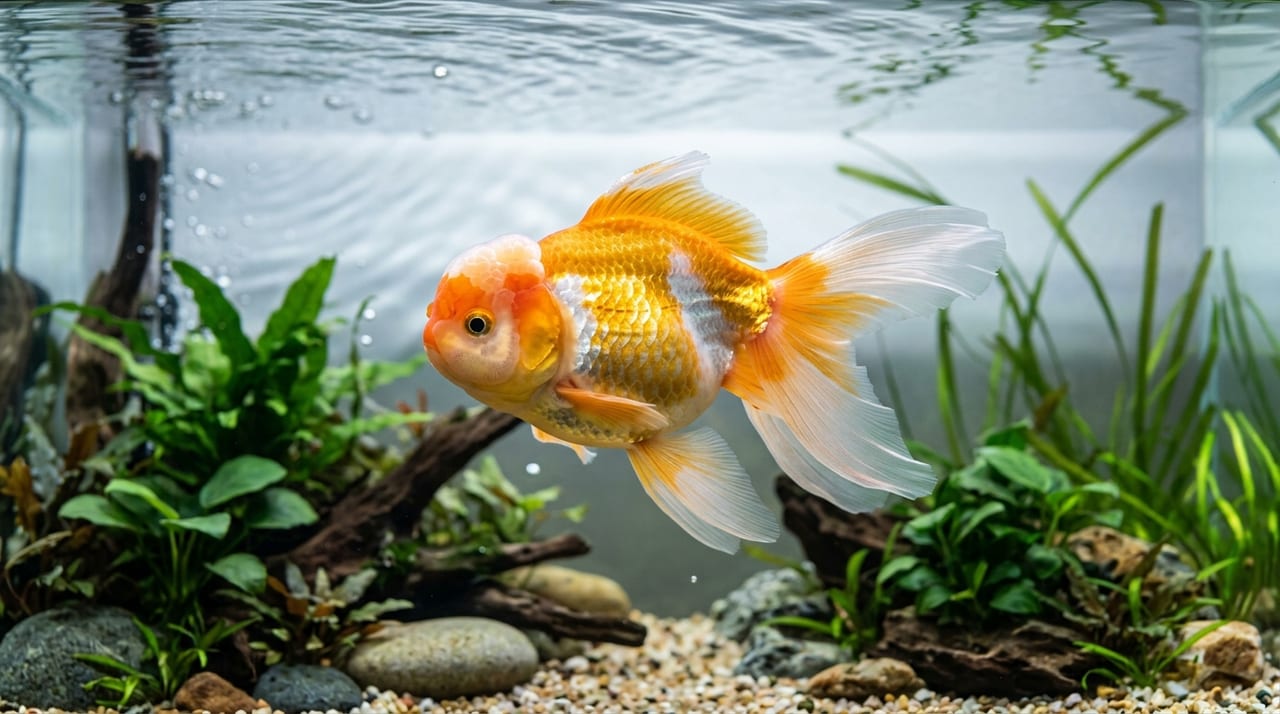
Side-view photography captures the full body of the goldfish through the tank glass. It is ideal for breeds with beautiful profiles, such as Ryukin and Telescope Eye.
- Clean the glass: Carefully wipe both inside and outside surfaces before shooting. Algae and water spots significantly affect photos
- Prevent reflections: Turn off room lights and use only aquarium lighting. Wearing dark clothing minimizes your own reflection
- Use a photo tank: A dedicated small tank (photo tank) with a narrow front-to-back dimension makes focusing easier
- Get close to the glass: Bring the lens as close to the glass as possible (without touching) to reduce reflections
- Focus on the eye: Focus on the goldfish's eye as standard practice. On a smartphone, tap the eye position on screen to lock focus
The most important factor in tank photography is water clarity. Increase water change frequency 2-3 days before shooting, and skip feeding on the day of the shoot to maintain crystal-clear water.
Lighting Placement and Color Temperature
Lighting is one of the most critical factors determining the success of goldfish photography. The way light is directed can dramatically change how the fish's colors appear.
- Natural light: Window-side light on an overcast day provides the most natural, beautiful illumination. Avoid direct sunlight (it raises water temperature and creates harsh contrast)
- LED lighting choice: A color temperature around 6500K (daylight white) renders goldfish reds naturally. Choose lights with high color rendering index (CRI)
- Light direction: In addition to a main light from above, adding supplementary light from the side highlights scale luster
- Backlighting: Intentional backlighting creates beautiful silhouettes, highlighting tail fin translucency and body contours
- Brightness adjustment: Too much light washes out the goldfish's colors. Use dimmable lights to find the right brightness
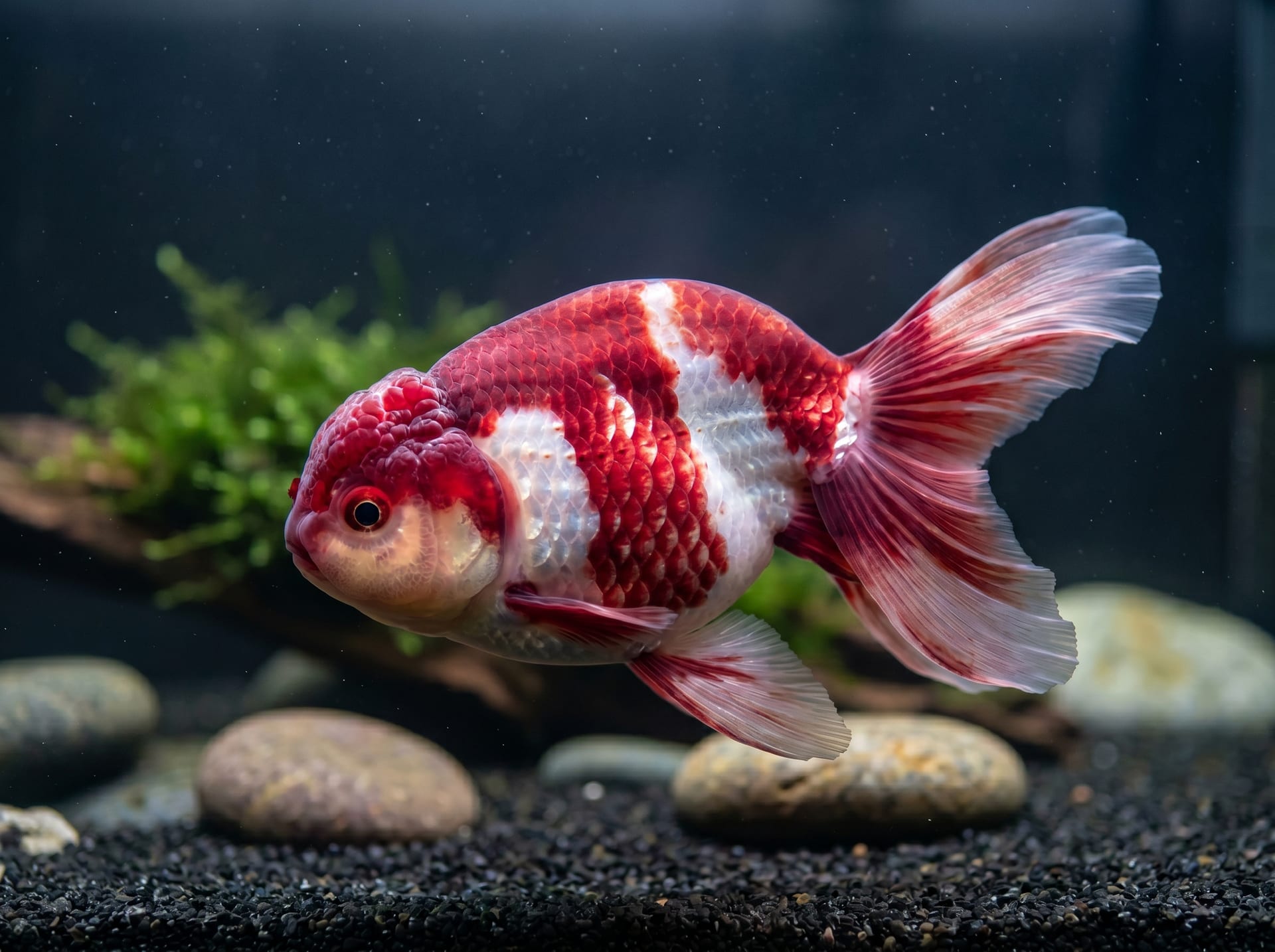
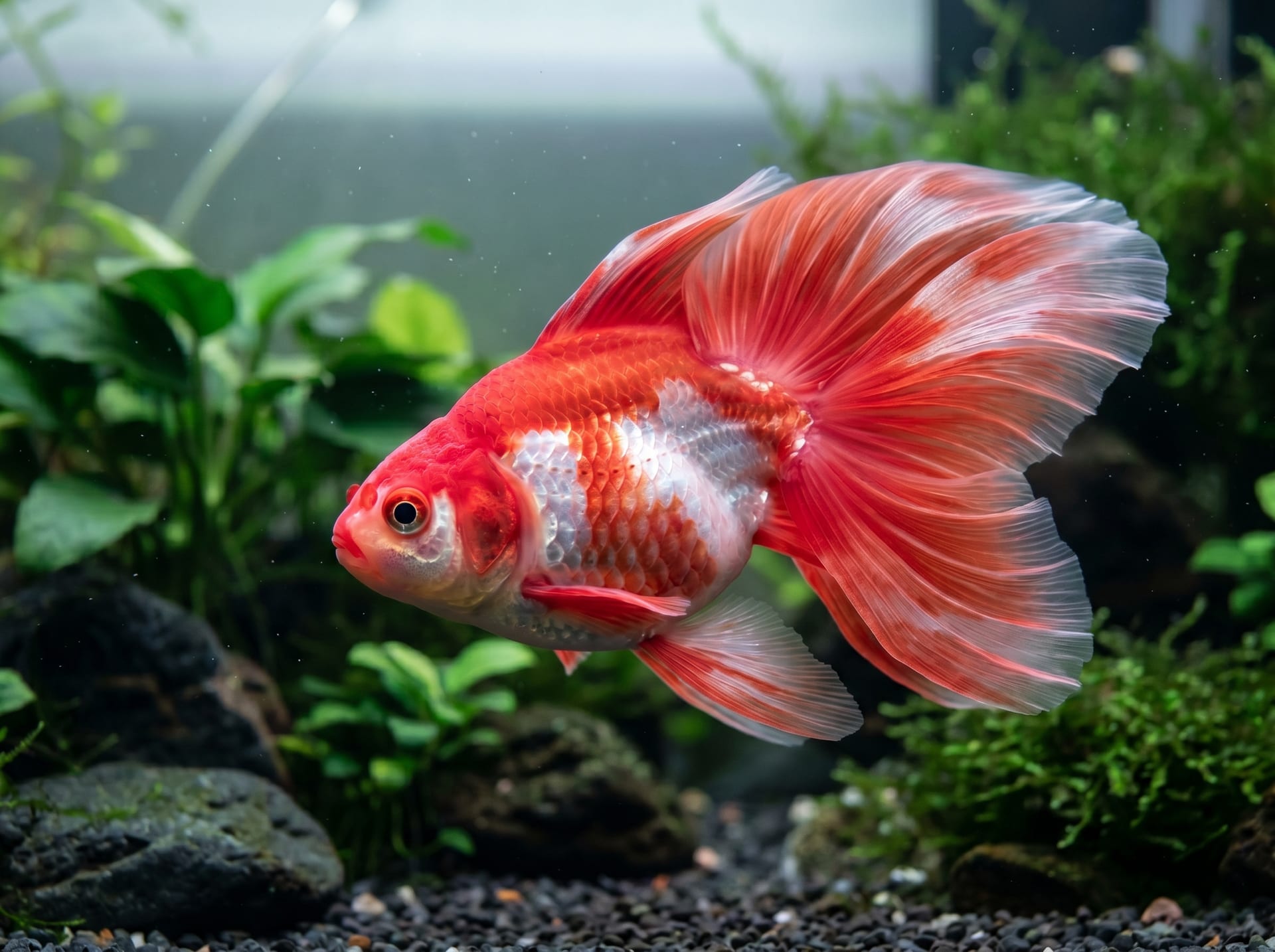
When photographing Sarasa (red and white patterned) goldfish, the trick is to set exposure slightly dark to prevent the white areas from being blown out. It is easier to brighten an image later than to recover overexposed areas.
Background and Composition
Background selection dramatically changes the impression of a photo. Choose backgrounds that complement the goldfish's color and breed.
- Black background: The classic choice that maximizes red goldfish color intensity. Use black containers for top-view or black screen backgrounds for side-view
- White background: Clean and ideal for showing body shape and fin structure clearly. Suited for show record photographs
- Blue background: Creates a cool, refreshing impression with a summer atmosphere. Pairs well with white goldfish
- Japanese aesthetic: For top-view shots, traditional Japanese patterned cloth or wood-grain platforms add an elegant feel
- With plants: Adding a small amount of Cabomba or Elodea creates a natural atmosphere. However, goldfish will eat them, so use only during the shoot
For composition, the centered "bull's-eye" approach is the basic starting point. As you gain experience, apply the rule of thirds, leaving space in the direction the goldfish is swimming to create a sense of movement.
Smartphone Photography Techniques
You do not need an expensive camera; modern smartphones can produce beautifully detailed goldfish photos.
- Portrait mode: Blurring the background makes the goldfish stand out, though it may not work perfectly through tank glass
- Burst mode: Since goldfish are constantly moving, take many shots in burst mode and select the best ones
- Video frame extraction: Shoot in 4K video and capture the best moment as a screenshot
- Exposure compensation: Tank brightness tends to make the goldfish appear dark. Use positive compensation to brighten the fish
- White balance: Manually adjust to match the aquarium light's color for more natural tones
- Editing apps: Fine-tune contrast and saturation after shooting. Keep adjustments subtle to avoid an unnatural look
Timing matters too. Goldfish swim most actively before feeding. For calmer poses, shoot a few hours after a water change when they are relaxed.
Tips for Show Record Photography
Photographs for shows or records prioritize accurately conveying the goldfish's characteristics.
- Document body shape: Always shoot from directly beside and directly above. Ensure the body's balance and symmetry are visible
- Accurate color reproduction: Do not use flash; shoot with high-CRI lighting. Standard color temperature is 5500-6500K
- Sense of scale: Including a ruler or measuring tape in the shot communicates the goldfish's exact size
- Regular documentation: Shooting periodically under the same conditions records growth and color development changes
- Comparison photos: For sibling comparisons or lineage records, photos taken under identical conditions are most useful
Photographs of show goldfish can influence judges' first impressions. Prepare your shooting setup and practice multiple times beforehand.
Find Photogenic Goldfish on BriChoku
On BriChoku, you can purchase beautiful goldfish lovingly raised by dedicated breeders. You can assess individual characteristics through photos taken by the breeders themselves, and sometimes receive photography advice as well. Find your perfect goldfish and try your hand at photography.