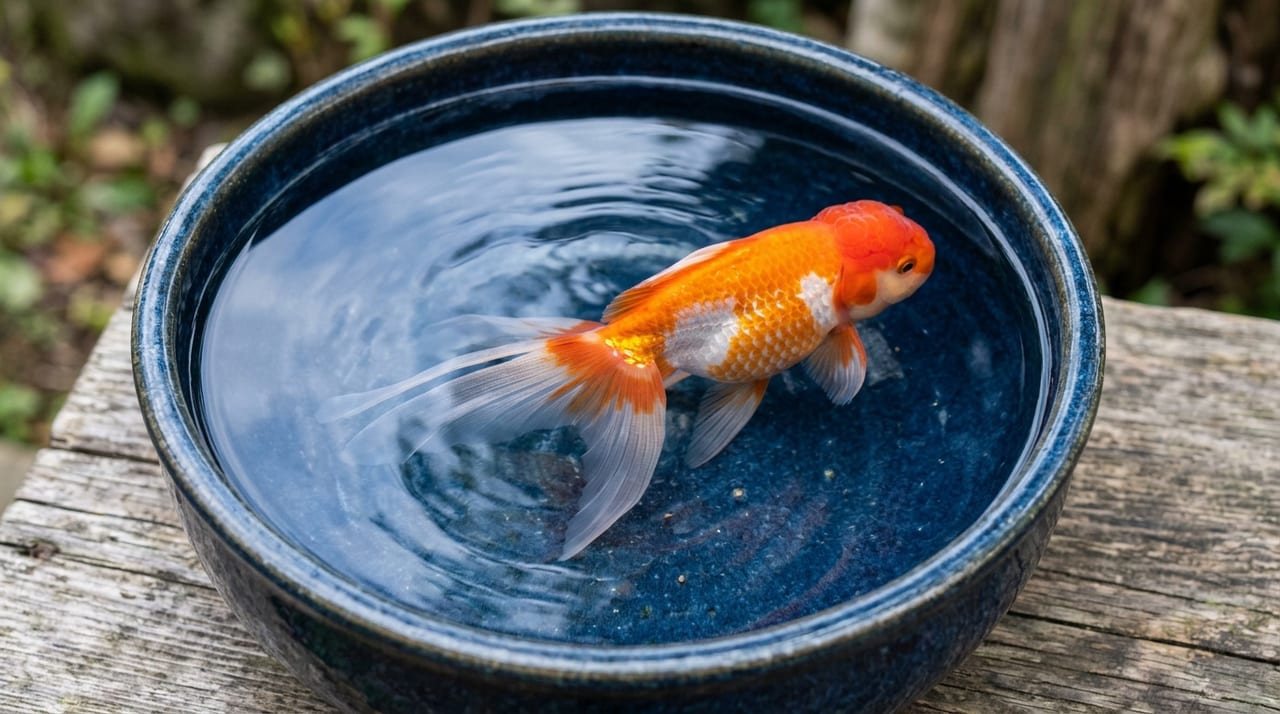
How to treat common goldfish diseases with medication baths: choosing the right treatment for white spot, fin rot, dropsy, and parasites, with step-by-step dosing and aftercare instructions.
要點總結
How to treat common goldfish diseases with medication baths: choosing the right treatment for white spot, fin rot, dropsy, and parasites, with step-by-step dosing and aftercare instructions.
When goldfish become ill, choosing the appropriate medication and performing a proper "medication bath" is the fastest path to recovery. However, many owners struggle with questions like "Which medication should I use?" and "What's the correct way to do a medication bath?"
This article provides a detailed explanation of the main goldfish diseases, the medications to use, and the practical steps for performing a medication bath.
A medication bath (yakuyoku) is a treatment method where goldfish are immersed in water mixed with therapeutic medication. It works directly on pathogens (bacteria, parasites, fungi) on the fish's body surface, gills, and internal organs.
When performing a medication bath, the basic approach is to use a separate container (medication bath tank or bucket). Performing the medication bath in the main tank causes: - Beneficial bacteria in the filter to die off - Damage to aquatic plants, shrimp, and snails - Difficulty in managing medication concentration
Symptoms: Small white spots (0.5-1mm) appear on the body surface, gills, and fins. The fish rubs itself restlessly against the substrate and glass.
Cause: Parasitic ciliate protozoan (Ichthyophthirius multifiliis)
Treatment medications: - Methylene Blue: A classic, traditional remedy. Effective against white spot disease and water mold disease - Agten (Malachite Green): A highly effective medication specifically targeting white spot disease - Hicosan Z (Methylene Blue formulation): Easy to handle commercial product
Temperature tip for medication bath: The white spot parasite's maturation and release cycle accelerates at 25-28°C. Raising the water temperature (26-28°C) shortens the treatment period.
Symptoms: The tail fin, dorsal fin, and other fins become white and appear to rot. In severe cases, fins may erode down to the base.
Cause: Bacterial infection (Columnaris bacteria, Aeromonas bacteria, etc.)
Treatment medications: - Green F Gold Liquid (Furazolidone / Nifurpirinol sodium): A standard medication effective against a wide range of bacterial diseases - Elbarge Ace (Oxolinic acid): A powerful antibacterial agent effective against bacterial diseases in general - Parazan D (Sulfamethoxazole formulation): Used for both oral treatment and external therapy
Symptoms: Scales stand on end (resembling a pinecone), abdominal fluid accumulates, and the body becomes bloated.
Cause: Bacterial infection (often Aeromonas bacteria) with accompanying internal organ disease
Treatment medications: - Green F Gold Powder (Furazolidone): Effective when combined with oral medication during the medication bath - Dropsy is difficult to cure completely; early detection is crucial
Symptoms: The fish gasps with its mouth open and stays near the water surface (signs of oxygen deficiency). Gills appear pale or have excess mucus.
Cause: Parasitic monogenetic flatworms (parasitic gill flukes)
Treatment medications: - Rifish (Trichlorfon): Effective against monogenetic flukes and crustacean parasites - Prazipro (Praziquantel): Effective against parasitic flukes. Relatively low toxicity to fish
Symptoms: White, cottony mold-like growth appears on the body surface and wound areas.
Cause: Fungal infection (Saprolegnia species, etc.)
Treatment medications: - Methylene Blue - Agten
1. Prepare the medication bath water: Prepare dechlorinated water (ideally at the same temperature and salinity as the main tank) in the medication bath container. Keep the temperature difference to within 1-2°C.
2. Accurately measure and dissolve the medication: Measure the correct amount according to the instructions, dissolve it in a small amount of water, then add it to the container. Mix well to ensure uniform medication concentration.
3. Transfer the goldfish: Transfer the sick fish to the medication bath container. When transferring, acclimate the fish (gradually adjusting to temperature and water quality) to reduce transfer stress.
4. Management during medication bath: - Keep lighting dim or off (shielding from light is especially important for medications like methylene blue that break down in light) - Supply adequate oxygen through aeration - Do not use a filter (medication will be absorbed or degraded) - Change half the water daily or every two days with fresh medication solution (at the same concentration) - Minimize feeding or skip feeding entirely (to reduce digestive burden and prevent water contamination)
5. Duration of medication bath: White spot disease: 5-10 days; fin rot and gill disease: 5-7 days as a guideline. If there is no improvement, consider changing the medication.
6. Returning to the main tank: After recovery, do not return the fish directly to the main tank. Instead, perform a medication removal period by keeping the fish in clear water for 1-2 days before returning. Be cautious of sudden water quality changes.
Early detection and early treatment are most important for goldfish illness. By regularly observing your goldfish and paying attention to changes in appetite, swimming behavior, and body surface appearance, you can address disease in its early stages.
With proper medication selection and correct medication bath procedure, most diseases can be treated successfully. When in doubt, consult with a specialist shop or veterinarian (one experienced with aquatic animals).
Aquarium Volume Calculator
Calculate water volume, weight, and heater wattage from tank dimensions
Water Quality Checker
Find compatible fish, shrimp, plants & corals based on pH, temperature & hardness
Feeding Guide
Check feeding frequency, portion sizes & supplements by species and growth stage
Compatibility Checker
Check compatibility between two species on a 5-level scale