Degu care guide: characteristics, habitat setup, diet management with sugar restrictions, social keeping, and health tips.
要点总结
Degu care guide: characteristics, habitat setup, diet management with sugar restrictions, social keeping, and health tips.
Degus are small rodents native to Chile, also known as "Andes singing mice," and are highly social animals. They become very attached to humans, and their intellectual side—communicating through a diverse range of vocalizations—is their charm. Popularity for keeping them as pets has risen in recent years in Japan as well. However, they have a unique physiology for carbohydrate metabolism, making special attention necessary for their diet management. This article comprehensively explains the knowledge necessary for a fulfilling life with degus.
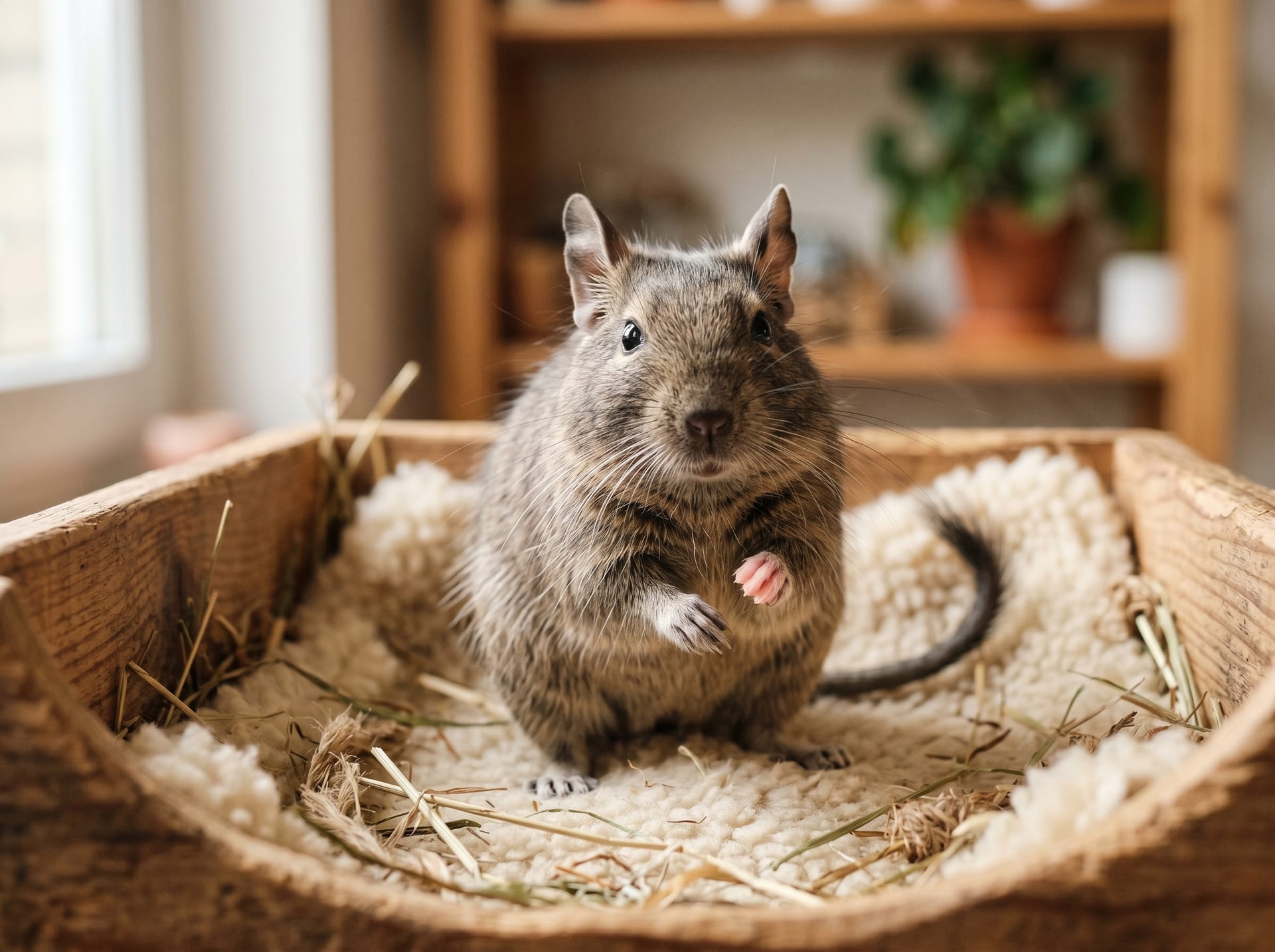
Degus are rodents measuring 12-20 centimeters in body length and weighing approximately 170-350 grams. With proper care, their lifespan is 5-8 years, and long-lived individuals can live nearly 10 years. Their coat color is primarily the wild-type agouti (brown), but color variations like blue, sand, and pied also exist.
Their greatest appeal is their sociability and communication ability. Degus are said to distinguish between more than 15 different vocalizations, producing different sounds when happy, angry, vigilant, or calling to companions. They remember their owner's voice and footsteps, and their charming behavior of vocalizing and welcoming them as they approach is delightful.
Being diurnal is also a major advantage in terms of ease of care. Unlike hamsters and sugar gliders, they are active during the day like humans, making it easy to synchronize daily schedules. They are intelligent and responsive to training, and some individuals will come close when called by name or learn simple tricks.
Because degus are active animals, they need a spacious cage. Provide at least 60cm width × 45cm depth × 60cm height. Choose a cage with adequate height and install stages (shelves) and ladders to create a three-dimensional activity space. Wire cages are common, but since degus have strong chewing power, choose sturdy stainless steel models.
Hardwood wood chips or paper-based bedding are suitable for substrate. Avoid conifer (cedar and cypress) chips as their phenol content negatively affects respiratory health. A sand bath container and degu-specific sand (chinchilla sand can also be used) are essential. Instead of water bathing, degus maintain clean coats through sand bathing. Provide sand bathing time daily.
A wheel is essential. Choose one with a diameter of 30cm or more and a safe design. It's important that the structure prevents the tail from getting caught. A degu's tail is extremely delicate, and pulling it hard can cause "degloving," where the skin separates from the tail. Never grab the tail. Chew wood is also essential. Since degu teeth continue to grow throughout their lives, gnawing on hard wood prevents overgrowth.
The most important aspect of degu diet management is carbohydrate restriction. Degus have low insulin secretion and cannot efficiently metabolize carbohydrates. A diet high in carbohydrates leads to diabetes, cataracts, organ damage, and in severe cases, death.
Feed timothy hay (grass) as the primary diet without restriction. Timothy hay is ideal for maintaining degu digestive and dental health due to its high fiber and low carbohydrate content. Provide degu-specific pellets at approximately 5% of body weight per day. Since hamster and rabbit pellets often contain sugar and grains, always use degu-specific pellets.
Generally avoid most fruits as they are too high in carbohydrates. Also avoid carrots and sweet potatoes due to their high carbohydrate content. Vegetables that can be provided include komatsuna, bok choy, broccoli, parsley, and celery leaves. Dried herbs (dandelion leaves, plantain) and rosehips are recommended treats. Sunflower seeds and nuts are high in fat, so offer them very rarely and only in small amounts.
Since degus are herd animals, multiple-animal housing is ideal if possible. With single housing, the owner must provide sufficient social interaction. However, if you are frequently away due to work or other reasons, multiple-animal housing with at least two degus is strongly recommended.
When starting multiple-animal housing, same-sex pairs are easiest to manage. Males may fight over territory as they mature, but brothers raised together from a young age are relatively stable. Mixed-sex pairs have high breeding potential, so consider spaying/neutering to prevent unintended breeding, or keep same-sex pairs.
When introducing a new degu, never place them directly in the same cage as it's dangerous. First, place their cages side by side to let them become accustomed to each other's scent and sounds. After 1-2 weeks, if interactions through the cage are calm, introduce them in a neutral space (neither's territory). If fighting occurs, immediately separate them and retry after several days.
Daily observation is fundamental to degu health management. Routinely check activity level, appetite, fecal condition, and coat shine. Weigh them once weekly to confirm there are no sudden weight changes.
The most important disease to watch for is diabetes. Early symptoms include polydipsia and polyuria (excessive drinking and increased urination). As it progresses, cataracts develop and the eyes become cloudy. Since diabetes is preventable through diet management, proper daily nutrition is the greatest preventive measure. Dental overgrowth (malocclusion) is also a common condition; if degus don't eat enough hay, their teeth grow too long. Suspect dental problems if drooling increases or appetite decreases.
Fungal infections (fungal skin disease) can occur as a skin problem. If circular hair loss or dandruff is observed, visit an animal hospital promptly. Since tail injuries (degloving) are irreversible, the most important preventive measure is to never grab the tail and to ensure it doesn't get caught in cage gaps.
At Br-choku, you can welcome degus directly from breeders experienced in breeding and caring for them. Breeders know the health status of parent animals and can select healthy lineages without a family history of diabetes. You can also receive advance advice about dietary preferences and personality, making it possible to start with confidence even for first-time degu owners.
Feeding Guide
Check feeding frequency, portion sizes & supplements by species and growth stage
Care Cost Calculator
Estimate initial setup costs and monthly running costs by category
Environment Checker
Get pet & plant recommendations based on room temperature, space & time
Seasonal Care Calendar
Monthly care events and seasonal management tips at a glance