Source: Wikimedia Commons
Tiger Lotus
BeginnerNymphaea lotus
A water lily relative with beautiful round leaves featuring red-brown spots. Creates accent in tank midground.
Dificuldade
Beginner
Temperatura
22〜30℃
Expectativa de vida
Bulb plant
Tamanho
15-40cm
Dieta
Root tabs
Sobre
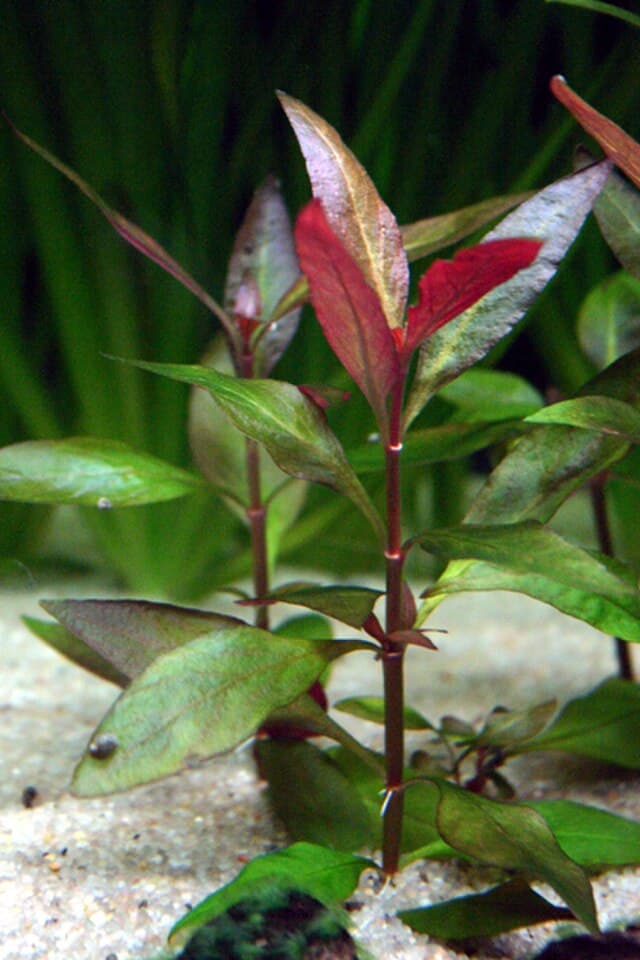
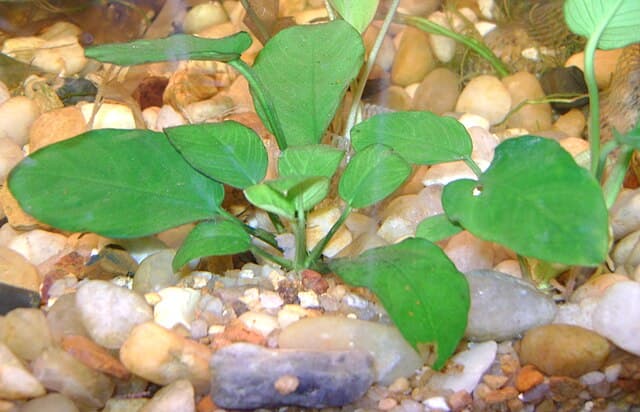
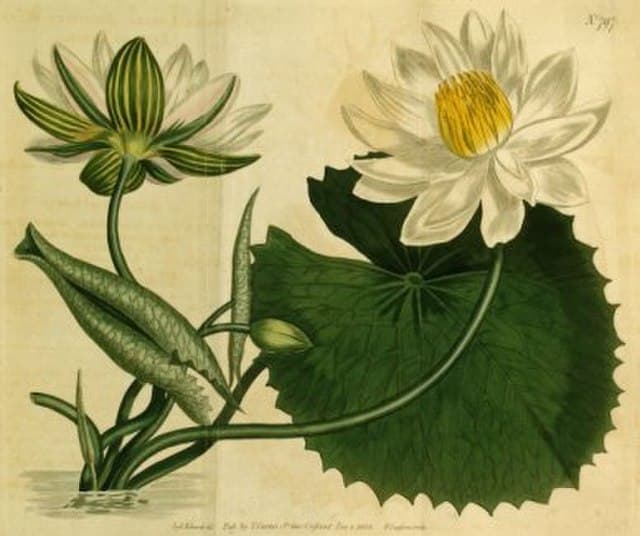
Nymphaea lotus — known in the hobby as tiger lotus or Egyptian water lily — is a bulbous aquatic plant in the family Nymphaeaceae, native to East Africa (including Egypt) and distributed across Southeast Asia. Two primary forms are cultivated: the red tiger lotus with distinctive red-spotted foliage, and the green-leaved variety. Plants grow from a bulb, initially producing small submerged leaves that progressively enlarge. To preserve the attractive underwater leaf phase, emerging floating leaves should be promptly removed before they divert the plant's energy to surface growth. Submerged leaves in vivid red to bronze tones create a striking focal point in mid to background positions. CO2 supplementation is not required, but vigorous root uptake means that root-tab fertilization delivers substantial benefits. Due to its potential size, it is best suited to larger aquaria where its dramatic presence can be fully appreciated.
Source: Wikipedia (CC BY-SA 4.0)
Informações básicas
Origem
East Africa (including Egypt) and Southeast Asia
Expectativa de vida
Bulb plant
Tamanho
15-40cm
Temperatura
22〜30℃
Dieta
Root tabs
Guia de Cuidados
Notes
球根から育てる
Notes
CO2無添加でも育つ
Notes
浮き葉を出すので切り取る
Lighting
照明は中程度でOK
Grooming
成長が早く定期的にトリミング
Tiger LotusBulbWater lilyAccent
FAQ de Tiger Lotus
QQual a dificuldade de manter Tiger Lotus?
A
Beginner. Esta é uma espécie amigável para iniciantes. Não é necessário equipamento especial ou experiência, e pode ser mantida com sucesso com uma configuração básica de cuidados.
QQual é a temperatura ideal para Tiger Lotus?
A
A temperatura ideal para Tiger Lotus é 22〜30℃. Evite mudanças bruscas de temperatura e mantenha um ambiente estável.
QQual é a expectativa de vida de Tiger Lotus?
A
Perguntas sobre Tiger Lotus
Encontrar listagens desta espécie