Source: Wikimedia Commons
Anubias Nana
BeginnerAnubias barteri var. nana
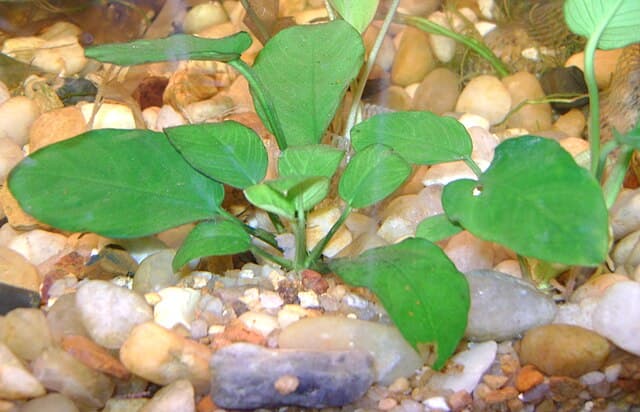
Hardy shade plant from Africa. Typically attached to driftwood or rocks. Thrives without CO2 in low light — ideal for beginners. Very slow growth keeps layouts stable.
Dificuldade
Beginner
Temperatura
20〜30℃
Tamanho
5-15cm
Dieta
Liquid fertilizer 1-2x monthly. Minimal feeding needed
Sobre
Anubias barteri var. nana is a rheophytic aquatic plant in the family Araceae, native to West Africa. First described by Adolf Engler in 1899 and reduced to varietal status in 1979, it produces thick, dark-green leathery leaves from a horizontal rhizome. In the aquarium it must be attached to driftwood or rock using fishing line or aquarium-safe adhesive — burying the rhizome in the substrate causes rot. Its outstanding shade tolerance means it thrives under low to moderate illumination without CO2 supplementation, making it ideal for beginners. Excessive light promotes algae growth on the slow-growing leaves. Remarkably resilient across a wide range of water parameters, this robustness explains its enduring dominance in the hobby worldwide.
Source: Wikipedia (CC BY-SA 4.0)
Informações básicas
Origem
West Africa (Cameroon, Nigeria region)
Tamanho
5-15cm
Temperatura
20〜30℃
Dieta
Liquid fertilizer 1-2x monthly. Minimal feeding needed
Guia de Cuidados
Attachment
Fix to wood or rock with thread/glue. Never bury the rhizome
Lighting
Low to medium light sufficient. Strong light encourages algae
CO2
Not needed. CO2 slightly speeds growth if provided
Notes
Leaves attract algae (esp. black beard). Shrimp help control it
Beginner-friendlyShade plantAttachedNo CO2 needed
FAQ de Anubias Nana
QQual a dificuldade de manter Anubias Nana?
A
Beginner. Esta é uma espécie amigável para iniciantes. Não é necessário equipamento especial ou experiência, e pode ser mantida com sucesso com uma configuração básica de cuidados.
QQual é a temperatura ideal para Anubias Nana?
A
A temperatura ideal para Anubias Nana é 20〜30℃. Evite mudanças bruscas de temperatura e mantenha um ambiente estável.
QQual o tamanho que Anubias Nana atinge?
A
Perguntas sobre Anubias Nana
Encontrar listagens desta espécie