Source: Wikimedia Commons
Ferocactus
IntermediateA large cactus with thick sharp spines radiating overwhelming presence. Dignity of a desert king.
Difficulty
Intermediate
Temperature
5〜35℃
Lifespan
Perennial (decades)
Size
20-100cm
Humidity
30〜50%
Diet
Minimal
About
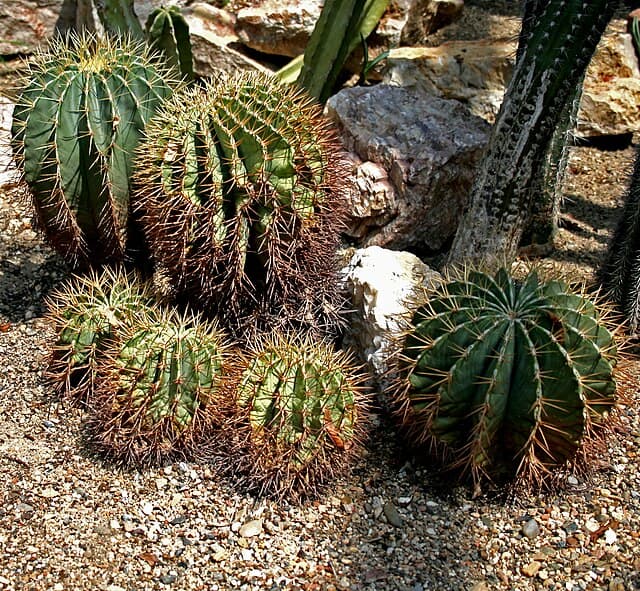
Ferocactus is a genus of about 30 large, barrel-shaped cactus species native to desert and semi-arid habitats in the southwestern United States and northwestern Mexico. The genus is characterized by prominently ribbed, globe-to-cylindrical bodies armed with large, often hooked spines in striking colors—red, yellow, or white—which are a major part of the plant's ornamental appeal. Mature specimens range from 20 to 100 cm in diameter, achieved over many decades of very slow growth. Full sun is essential to maintain vibrant spine color. Watering should be minimal even during the growing season, with near-complete drought in winter; excellent drainage is mandatory. Cold tolerance varies by species, with some withstanding temperatures below −10°C. Propagation is from seed. Ferocactus are popular both as specimen plants in arid landscape gardens and as large container subjects for collectors.
Source: Wikipedia (CC BY-SA 4.0)
Basic Info
Origin
the southwestern United States and northwestern Mexico
Lifespan
Perennial (decades)
Size
20-100cm
Temperature
5〜35℃
Humidity
30〜50%
Diet
Minimal
Care Guide
Lighting
Direct sunlight required
Watering
Very drought tolerant. Minimal watering
Spines
Thick sharp spines are dangerous to touch
Notes
Slow growing but becomes large
FerocactusLarge cactusSharp spinesDesert king
Ferocactus FAQ
QHow difficult is it to keep Ferocactus?
A
Intermediate. This is an intermediate-level species. Some prior experience and knowledge of environmental management are recommended.
QWhat is the ideal temperature for Ferocactus?
A
The ideal temperature for Ferocactus is 5〜35℃. Recommended humidity is 30〜50%. Avoid sudden temperature changes and maintain a stable environment.
QWhat is the lifespan of Ferocactus?
A
The average lifespan of Ferocactus is Perennial (decades). With proper care and nutrition, they can live a long and healthy life.
Ferocactus Q&A
Find listings for this species