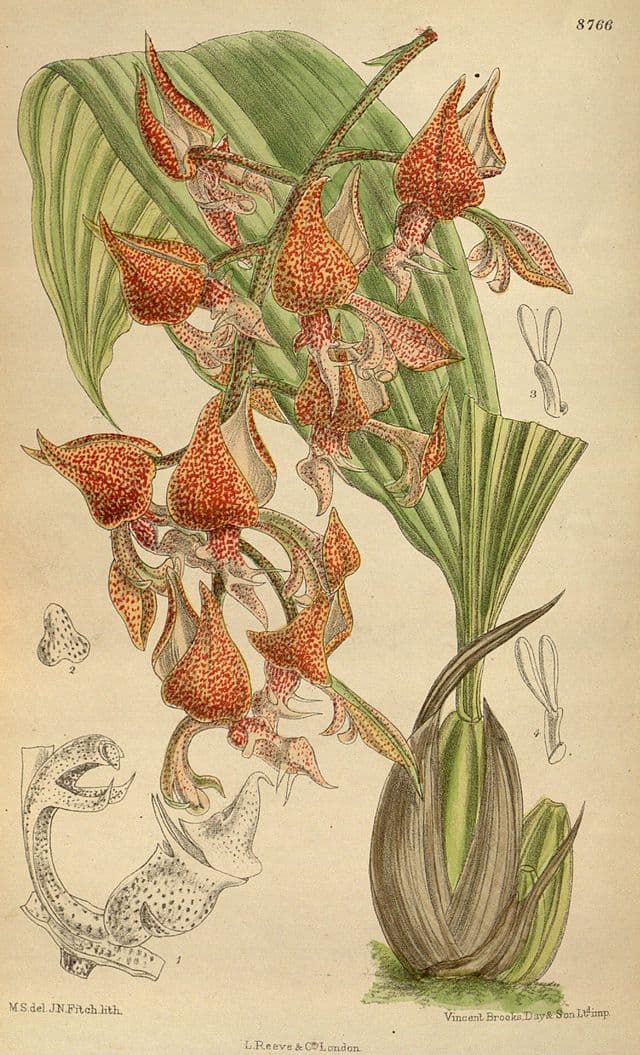
Source: Wikimedia Commons
Gongora
IntermediateAn orchid with complex flowers in pendant spikes, many species with spicy fragrance.
Difficulty
Intermediate
Temperature
15〜30℃
Lifespan
10+ years
Size
20-40cm
Humidity
50〜70%
Diet
−
About
Gongora, abbreviated Gga in horticultural trade, is a member of the orchid family (Orchidaceae). It consists of 65 species known from Central America, Trinidad, and tropical South America, with most species found in Colombia. They grow across a wide geographical range, from wet forests at sea level, to mountainous regions in the Andes, as high as 1,800 m.
Source: Wikipedia (CC BY-SA 4.0)
Basic Info
Origin
Colombia
Lifespan
10+ years
Size
20-40cm
Temperature
15〜30℃
Humidity
50〜70%
Diet
−
Care Guide
Spike
Pendant
Fragrance
Spicy fragrance
Culture
Basket culture recommended
Temperature
15-28°C
OrchidGongoraPendantFragrant
Gongora FAQ
QHow difficult is it to keep Gongora?
A
Intermediate. This is an intermediate-level species. Some prior experience and knowledge of environmental management are recommended.
QWhat is the ideal temperature for Gongora?
A
The ideal temperature for Gongora is 15〜30℃. Recommended humidity is 50〜70%. Avoid sudden temperature changes and maintain a stable environment.
QWhat is the lifespan of Gongora?
A
The average lifespan of Gongora is 10+ years. With proper care and nutrition, they can live a long and healthy life.
QHow large does Gongora get?
A
Gongora typically reaches 20-40cm as an adult. Size may vary depending on care conditions and individual genetics.
QWhat should I feed Gongora?
A
Gongora feeds on: −. Aim for a balanced diet with appropriate feeding frequency.
QWhat is the typical price for Gongora?
A
The price of Gongora varies significantly depending on morph, size, and lineage. Check our market price page for the latest pricing information.
Related Species
Find listings for this species
Browse Orchid ListingsRelated Articles
Complete Beginner's Guide to Orchid Growing
Everything beginners need to start growing orchids: placement, watering, fertilizing, repotting, blooming tips, and recommended starter species.
Orchid Encyclopedia — Popular Species & Care Guide
An encyclopedia of popular orchid species with blooming conditions, care difficulty, and fragrance for each.
How Much Does Orchid Growing Cost? Monthly Running Costs Explained
Monthly orchid care costs: sphagnum moss, bark, fertilizer, and chemicals, with cost breakdowns by orchid type.
Orchid Growth Cycles & Time to Bloom by Species
Orchid growth cycles and bloom timelines for phalaenopsis, cattleya, and dendrobium, with tips for reblooming.