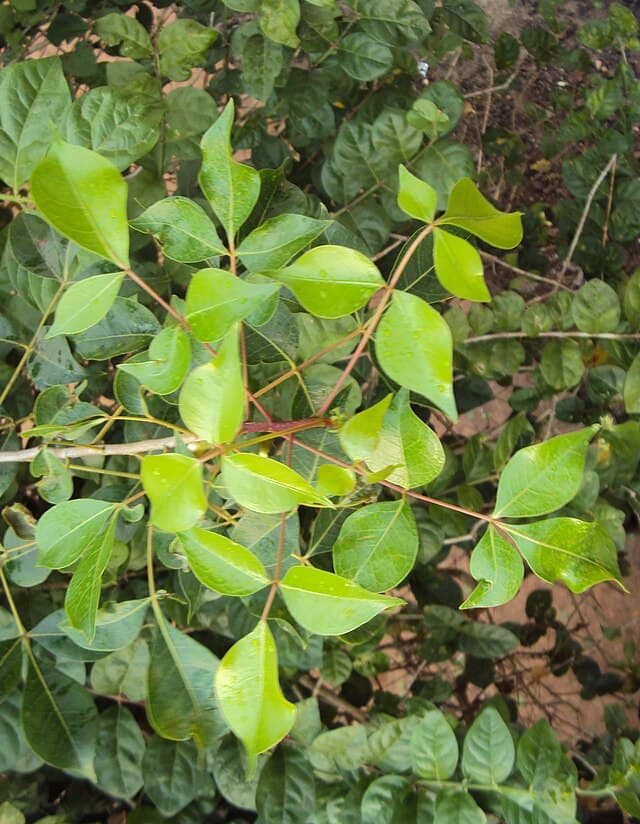
Source: Wikimedia Commons
Commiphora
AdvancedA myrrh-related caudex plant with peeling bark and distinctive trunk from Africa.
Difficulty
Advanced
Temperature
10〜35℃
Lifespan
30+ years
Size
20-60cm
Diet
−
About
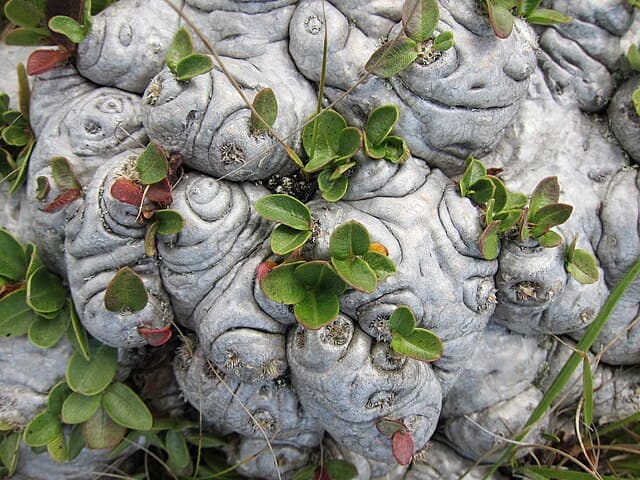
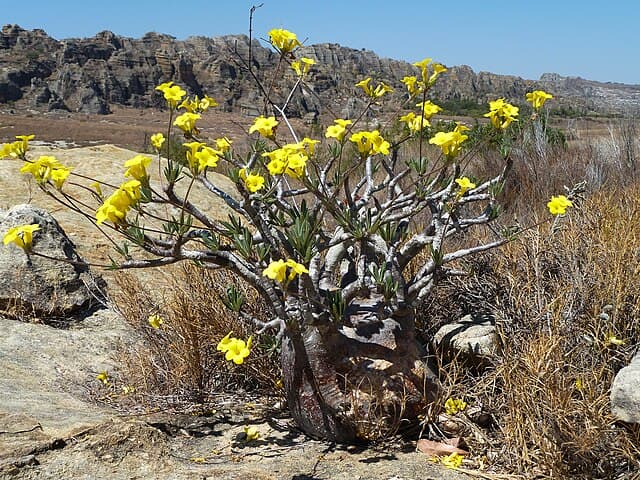
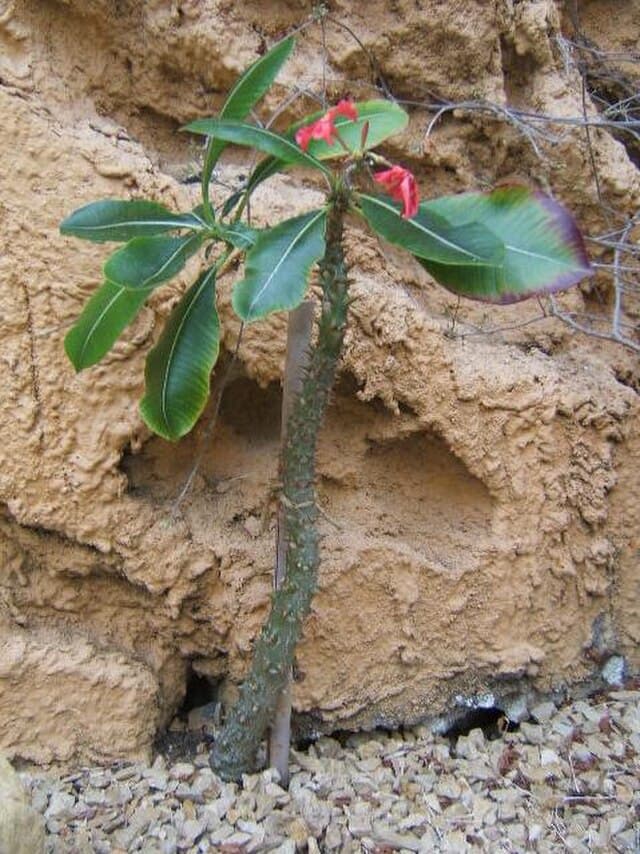
Commiphora is a large genus of approximately 190 species in the Burseraceae family, distributed across sub-tropical Africa, the western Indian Ocean islands, the Arabian Peninsula, India, and South America. The genus has been valued since antiquity as the source of myrrh and other aromatic resins. Species cultivated as caudex plants are prized for their beautifully peeling bark, which varies in color from green and yellow to gray depending on species. The trunk becomes substantially swollen with age, and plants are deciduous, dropping leaves during dry season dormancy. Leaves are typically pinnate, providing lush greenery during the growing season. Growth rate varies by species but is generally slow. All require full sun, highly porous soil, generous watering when growing, and complete drought during winter dormancy. Sensitive to cold and overwatering. The textured peeling bark, fragrant resin, and distinctive trunk forms appeal to discerning caudex collectors.
Source: Wikipedia (CC BY-SA 4.0)
Basic Info
Origin
Africa, Arabian Peninsula, Indian Ocean islands
Lifespan
30+ years
Size
20-60cm
Temperature
10〜35℃
Diet
−
Care Guide
Bark
Peeling bark
Light
Full sun
Watering
Very sparingly
Rarity
Hard to obtain
CaudexCommiphoraMyrrhBark
Commiphora FAQ
QHow difficult is it to keep Commiphora?
A
Advanced. This is an advanced-level species. It requires specialized equipment and advanced husbandry skills with precise environmental control.
QWhat is the ideal temperature for Commiphora?
A
The ideal temperature for Commiphora is 10〜35℃. Avoid sudden temperature changes and maintain a stable environment.
QWhat is the lifespan of Commiphora?
A
The average lifespan of Commiphora is 30+ years. With proper care and nutrition, they can live a long and healthy life.
Commiphora Q&A
Find listings for this species