Source: Wikimedia Commons
Utricularia Alpina
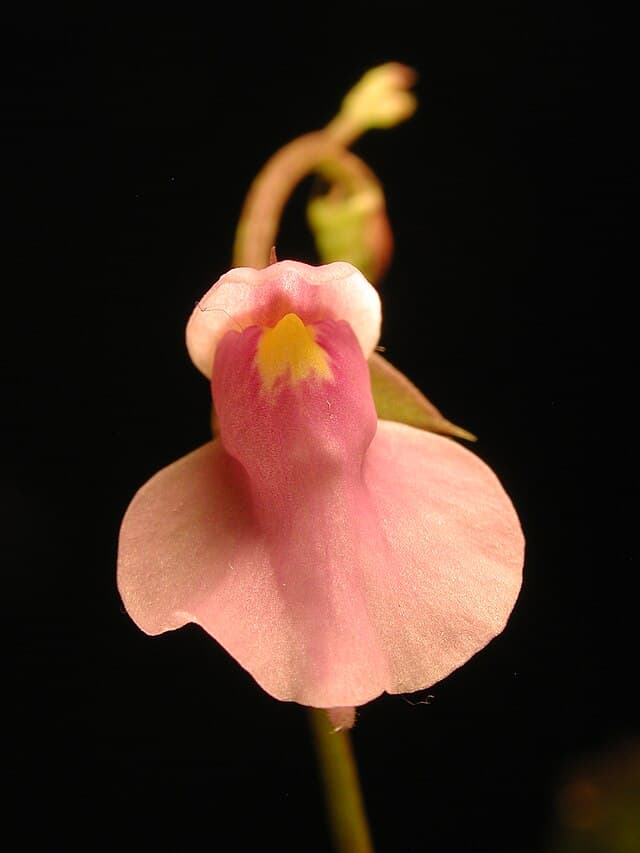
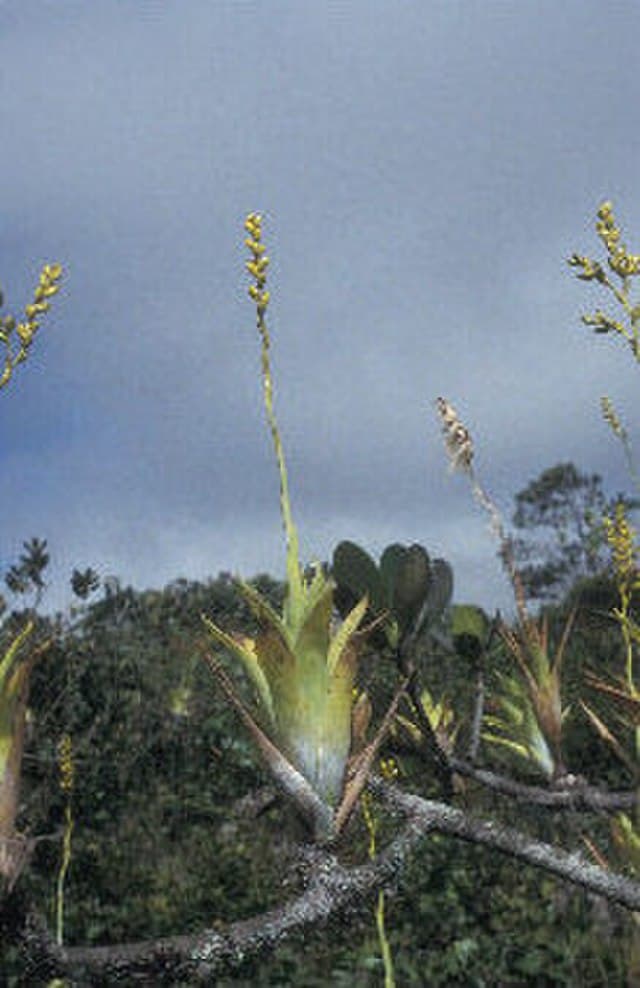
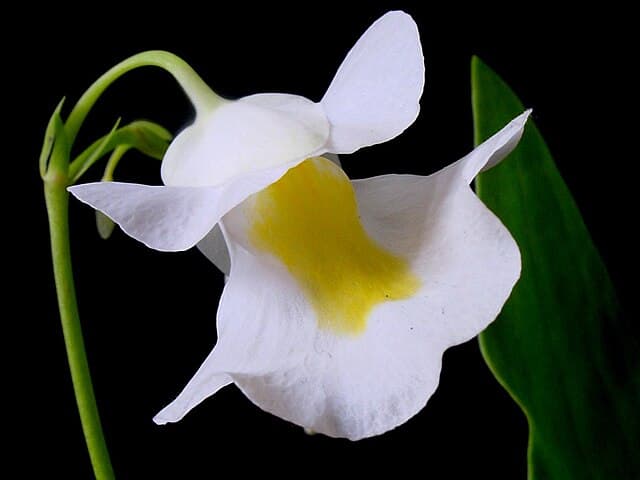
IntermediateAn epiphytic bladderwort from Central/South American highlands with large white flowers, growing on trees like orchids.
Difficulty
Intermediate
Temperature
10〜30℃
Lifespan
5-10 years
Size
10-20cm
Humidity
60〜90%
Diet
Insects (auto-capture)
About
Utricularia alpina is an epiphytic bladderwort native to highland tropical forests of Central and northern South America (Costa Rica, Venezuela, Colombia, and surrounding areas), growing on mossy tree trunks, branches, and moist cliff faces at moderate to high elevations. It produces large, showy white flowers on tall scapes—an unusually orchid-like display for the genus—which has earned it considerable popularity. Below the substrate, stolons bearing tiny suction traps capture soil and moss-dwelling microorganisms. As an epiphyte, it requires well-aerated media (sphagnum moss, bark-sphagnum mixes) and benefits from wet-dry cycles similar to epiphytic orchid culture. Pure or rainwater, bright indirect light, and cool to moderate temperatures (15–25°C) are recommended; prolonged high heat is detrimental.
Basic Info
Origin
Highland tropical forests of Central and northern South America (Costa Rica, Venezuela, Colombia), epiphytic on mossy trees and moist cliff faces
Lifespan
5-10 years
Size
10-20cm
Temperature
10〜30℃
Humidity
60〜90%
Diet
Insects (auto-capture)
Care Guide
Flowers
Large white flowers
Epiphyte
Tree-dwelling
Temperature
Prefers cool conditions
Humidity
High humidity needed
CarnivorousUtriculariaEpiphyteHighland
Utricularia Alpina FAQ
QHow difficult is it to keep Utricularia Alpina?
A
Intermediate. This is an intermediate-level species. Some prior experience and knowledge of environmental management are recommended.
QWhat is the ideal temperature for Utricularia Alpina?
A
The ideal temperature for Utricularia Alpina is 10〜30℃. Recommended humidity is 60〜90%. Avoid sudden temperature changes and maintain a stable environment.
QWhat is the lifespan of Utricularia Alpina?
A
Utricularia Alpina Q&A
Find listings for this species