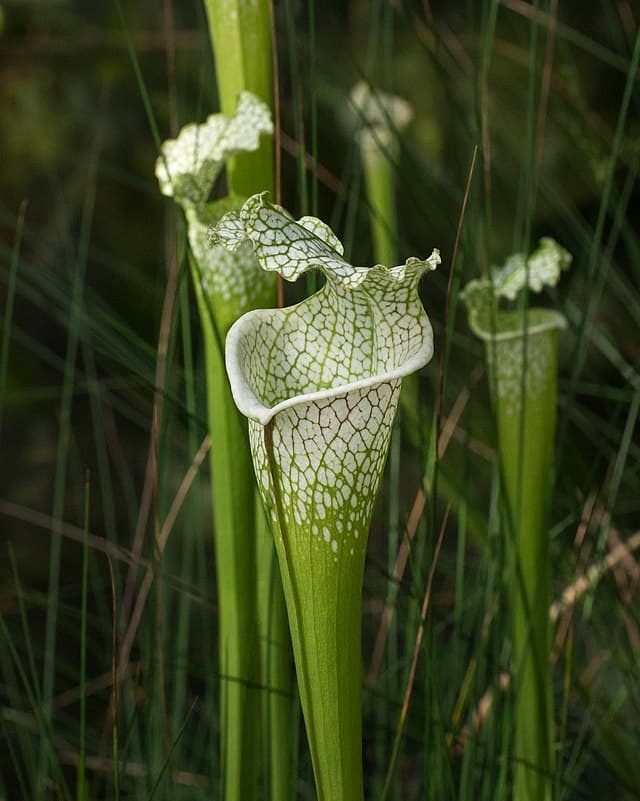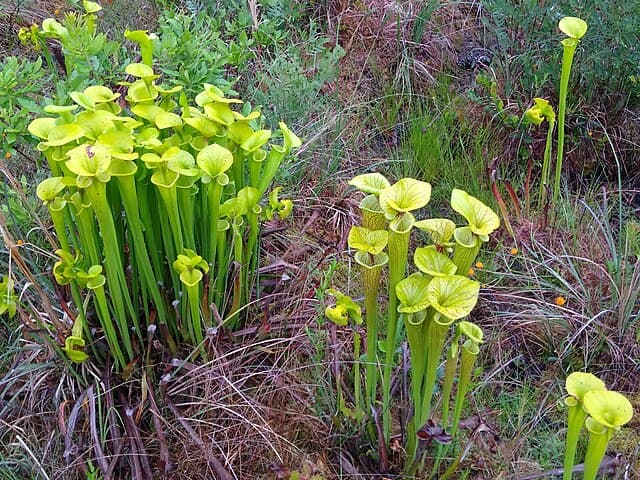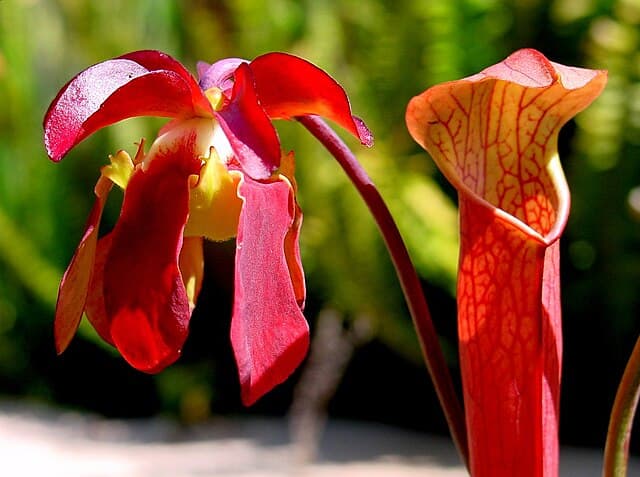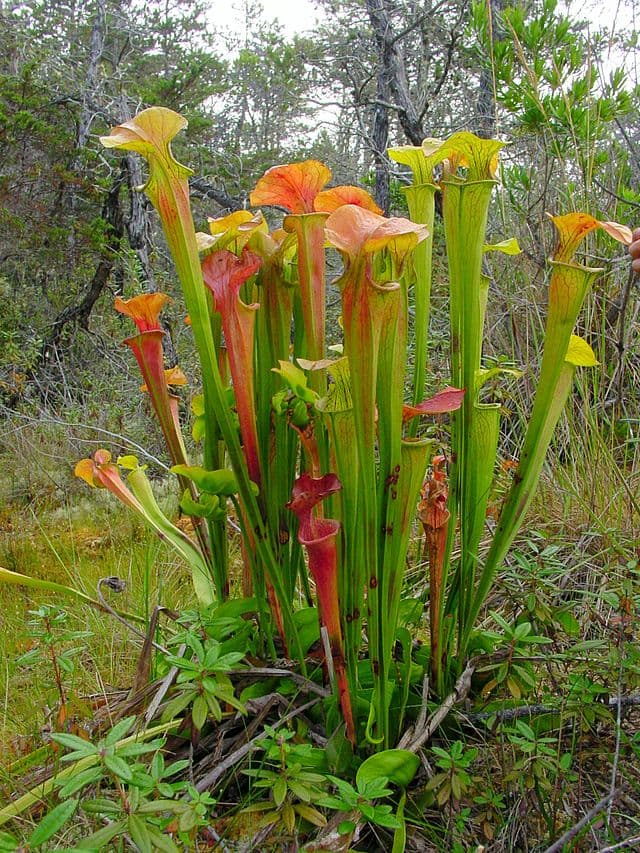
Source: Wikimedia Commons
Sarracenia Purpurea
BeginnerSarracenia purpurea
The most widespread North American Sarracenia with short tubular red-purple pitchers, very cold hardy.
Difficulty
Beginner
Temperature
10〜30℃
Lifespan
10+ years
Size
15-30cm
Humidity
60〜90%
Diet
Insects (auto-capture)
About
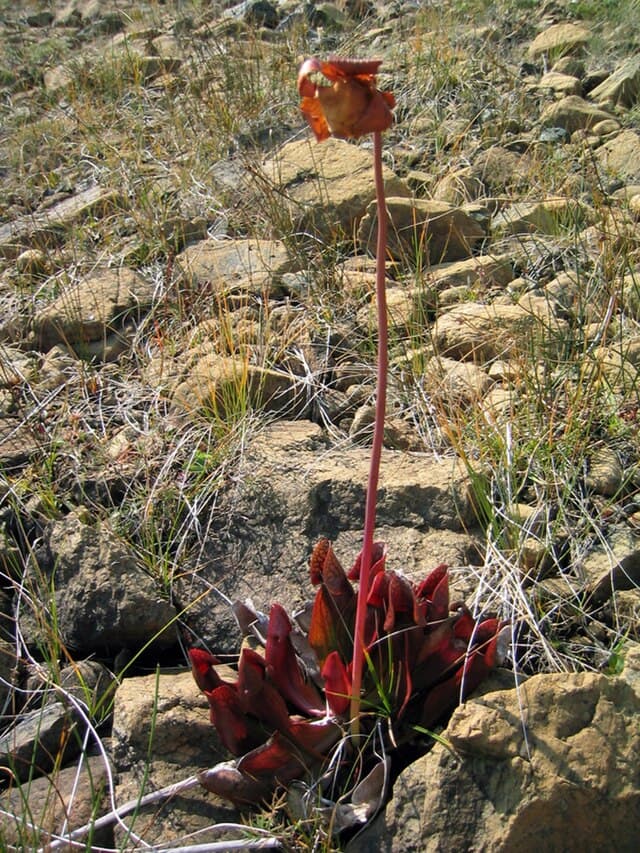
Sarracenia purpurea, the purple pitcher plant, is the most widely distributed Nepenthales carnivore in North America, ranging from the Gulf Coast to subarctic Canada and also naturalized in parts of Europe. Unlike most Sarracenia, its squat, pitcher-shaped leaves have an open, non-functional lid that allows rainwater to accumulate inside. The pitcher fluid is augmented by rainwater and supports a complex microbial ecosystem—including bacteria, protists, and inquiline invertebrates—that assists in prey digestion. Leaf coloration varies from green to deep red-purple. The species produces attractive reddish-purple flowers in spring. It is exceptionally cold-hardy, surviving outdoors in freezing climates. Cultivation requires acidic, nutrient-poor media (sphagnum or peat-perlite), tray watering with pure or rainwater, full sun, and mandatory winter dormancy.
Basic Info
Origin
Eastern North America, from subarctic Canada south to the Gulf Coast, in peat bogs and acidic wetlands
Lifespan
10+ years
Size
15-30cm
Temperature
10〜30℃
Humidity
60〜90%
Diet
Insects (auto-capture)
Care Guide
Cold
Very cold hardy
Light
Full sun
Watering
Tray watering
Dormancy
Winter dormancy
CarnivorousSarraceniaCold HardyPurple
Sarracenia Purpurea FAQ
QHow difficult is it to keep Sarracenia Purpurea?
A
Beginner. This is a beginner-friendly species. No special equipment or experience is required, and it can be kept successfully with basic care setup.
QWhat is the ideal temperature for Sarracenia Purpurea?
A
The ideal temperature for Sarracenia Purpurea is 10〜30℃. Recommended humidity is 60〜90%. Avoid sudden temperature changes and maintain a stable environment.
QWhat is the lifespan of Sarracenia Purpurea?
A
Sarracenia Purpurea Q&A
Find listings for this species